
Reviewed · MUSEUMS
Warwick: British Motor Museum Entry Ticket
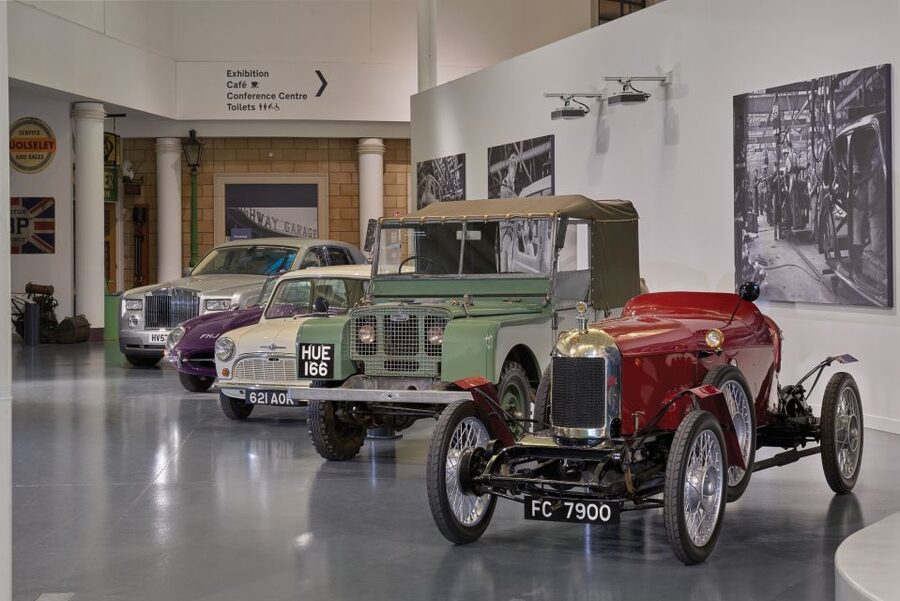
The British Motor Museum is not just a hall of polished old cars. It is a walk through British life, told with motorbikes, family saloons, racing machines, prototypes, and the changing rules of the road. With more than 400 vehicles dating from the 1890s, you can trace how motoring changed work, leisure, design, and the family budget.
I like the Time Road, which links cars to period music and everyday events, and I like the Collections Centre, where you can see how vehicles are conserved. The staff and volunteers add real value, too. Guides such as Trevor have helped visitors understand why a car matters, not just what badge sits on its bonnet.
The main drawback is scale. You can see the museum in around two and a half hours at a steady pace, but four or five hours is more realistic if you read the displays, stop for activities, and chat with volunteers. On hot days, some areas may feel warm, and large rooms can make guided talks hard to hear.
Key points to know before you go
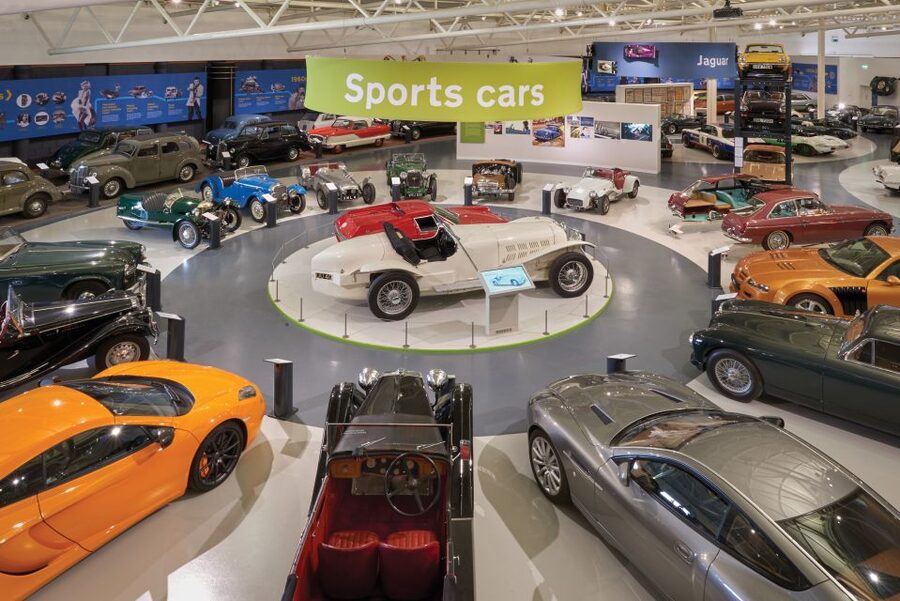
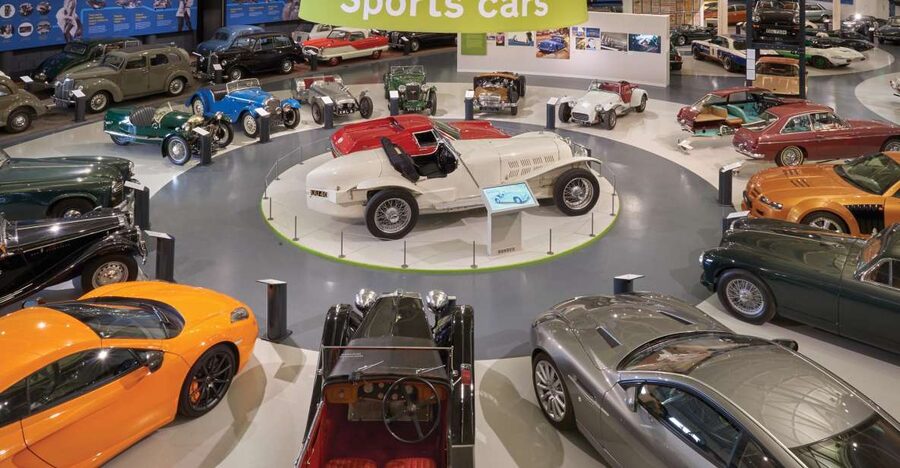
- More than 400 British cars: See vehicles from the 1890s through to near-modern times, including classics, racing cars, film cars, Jaguars, motorcycles, rare prototypes, and one-off designs.
- The Time Road tells a social story: Period music, family scenes, and details such as the arrival of double yellow lines show how motoring fitted into daily life.
- The Collections Centre adds a behind-the-scenes view: You can look at conservation work and speak with volunteers involved in caring for vehicles.
- Interactive displays suit non-car fans: Try exhibits about suspension, rack-and-pinion steering, and power steering rather than simply reading labels.
- Good family value: Museum admission includes family activities, an onsite play area, free parking, a café, toilets, and accessible routes.
- Allow at least half a day: A quick visit takes about two and a half hours, while a slower visit can fill four or five hours.
From pedal power to British motoring
Start with an open mind, especially if you are not the person in your group who knows the difference between a Jaguar model and a Vauxhall model. The museum is arranged to give the cars a setting and a purpose, so you are not left facing row after row of polished metal with no explanation.
The collection reaches back to the 1890s, when cars were still new and uncertain machines. From there, the displays follow the changes in body shape, engineering, manufacturing, and public use. You can see how a vehicle shifted from an expensive curiosity to something tied to commuting, shopping, holidays, and family routines.
That broad time span is one of the ticket’s strongest points. You may arrive for classic cars, then find yourself stopping at the ordinary family vehicles you remember from childhood. A car that seemed unremarkable on the road can become surprisingly moving when it is placed beside the fashions, music, and social habits of its period.
The collection also reaches beyond cars. Motorcycles and pedal bikes help show the wider development of British transport. Racing cars, movie vehicles, and unusual designs provide a change of pace from production models.
More museums and galleries in Britain:
- Liverpool: Liverpool Football Club Museum and Stadium Tour
★ 4.8 · 10,764 reviews - London: Chelsea Football Club Stadium and Museum Tour
★ 4.8 · 4,576 reviews - London Transport Museum Entrance Ticket
★ 4.5 · 1,323 reviews
Walking the Time Road
The Time Road is the museum’s most approachable section. It gives you a decade-by-decade route through motoring and family life, with period music and familiar events woven into the displays.
Look out for details such as the introduction of double yellow lines. A small road rule can tell you a lot about how towns, traffic, and parking changed. This is the kind of detail that keeps the museum from becoming a simple catalogue of cars.
The display works well for mixed groups. A car enthusiast can study the shape, fittings, and engineering, while you can follow the social story without knowing much about engines. Children can connect the exhibits with family life, and older visitors may recognise cars once owned by parents or grandparents.
Give this section time instead of marching straight toward the rarest vehicle. It provides the context that makes later displays more interesting. After seeing how cars entered ordinary homes, you understand why a particular family saloon, estate car, or small runabout mattered.
Making British Cars, from factory floor to future

The Making British Cars section looks at the motor industry as an important part of British work and manufacturing. It explains how cars were designed and produced, and how the industry affected towns, jobs, technology, and national identity.
This section is useful because it shifts your attention from the finished vehicle to the people and systems behind it. The car in front of you is not only a piece of design. It represents factories, engineers, assembly methods, suppliers, and changing ideas about what buyers wanted.
The displays also look toward the future. The museum presents the motor industry as something that continues to change, rather than a closed chapter ending with the great British marques of the past.
You may find this section less instantly dramatic than a room full of racing cars. Still, it helps explain why the British motor industry produced such a wide range of vehicles and why some names survived while others faded.
Under The Skin makes engines less mysterious
Under The Skin is the museum’s hands-on area. It is designed to show how cars work through interactive exhibits, which makes it a good stop for children and for adults who have never felt at home around mechanical jargon.
You can compare different types of steering, including rack-and-pinion and power steering. You can also see how suspension improved over time. These displays turn hidden mechanical systems into things you can understand with your hands and eyes.
That matters because many motor museums rely on appearance alone. Here, you get a better sense of why one car feels different from another and why later designs made driving easier or more comfortable.
I would make this section a priority if you are visiting with children. It gives them something to do beyond looking through barriers, and it makes the museum feel like a place of discovery rather than a storage room for old vehicles.
A few more Britain days worth weighing up
- London: The London Eye Entry Ticket
★ 4.6 · 35,875 reviews - London: Tower Bridge Entry Ticket
★ 4.7 · 15,560 reviews - London: Westminster Abbey Entrance Ticket
★ 4.6 · 11,254 reviews - London: St Paul’s Cathedral Entry Ticket
★ 4.7 · 9,813 reviews
The Collections Centre and conservation work
The Collections Centre offers a look at what happens when a vehicle is not on the main display. You can see behind the scenes at the work involved in conserving cars for future generations.
This is a valuable contrast with the gleaming exhibition halls. A well-presented car can look effortless, but conservation takes planning, care, and technical skill. The Collections Centre helps you see that museums do not simply acquire vehicles and leave them untouched.
The volunteers working in this area can add useful detail. Visitors have had rewarding conversations with people involved in refurbishment, including staff who could explain the history and construction of particular vehicles. If someone is available, ask about the car in front of you rather than rushing past.
The centre also suits anyone interested in craftsmanship. Interiors, fittings, bodywork, and mechanical parts tell their own story. One visitor particularly enjoyed seeing the inside of Jaguar models and hearing about the workmanship involved.
Access to specific conservation areas and displays can vary, so treat this as part of the museum visit rather than a guaranteed private workshop tour. The key attraction is the chance to see that preserving motoring history is active work.
Jaguars, prototypes, film cars, and the unexpected
The British Motor Museum covers a wide range of marques, so you should not expect one brand to dominate every room. Jaguar receives strong attention, and the collection includes cars that appeal to fans of the marque, but the pleasure comes from the variety.
The prototypes are among the most interesting vehicles. These are cars that never reached normal production, so they reveal the ideas manufacturers explored before choosing what to sell. They can look strange, elegant, or slightly impractical, but they make you think about how many possible futures were discarded.
Film cars offer an easy entry point for people who are not devoted to motoring. You can recognise a vehicle from its role on screen, then look more closely at its design and condition. Racing cars bring another change of mood, with shapes built for speed rather than school runs or shopping.
The museum also includes a Silverstone section covering the circuit’s development and its Formula One story. This gives motor racing fans a reason to linger, while the surrounding displays keep the visit from becoming a single-theme attraction.
Collections change, and individual marques are not always represented in the way you might hope. Triumph fans, for example, may find the selection disappointing at times. The museum is best approached as a broad survey of British motoring, not as a guaranteed showcase for every famous badge.
Volunteers bring the cars to life
The cars are the main reason to visit, but the people can change the quality of the day. Museum staff and volunteers are happy to answer questions, and their enthusiasm can supply the missing link between an object and its story.
A guide such as Trevor may explain how a model developed and why it mattered. Volunteers have also offered useful information in the Jaguar collection and refurbishment areas. Jim and Graham are examples of the kind of staff presence that can make a display feel personal rather than formal.
Guided tours can be a highlight when one is running. They add context and point out details you might otherwise miss. The main practical caution is sound. Large rooms can have difficult acoustics, so it may be hard to hear every word unless you stand close to the guide.
I would ask at the start of your visit about any available talks or tours, then plan around them. If hearing is important to you, choose a position near the guide and do not hesitate to move closer.
How long to spend and how to pace the day
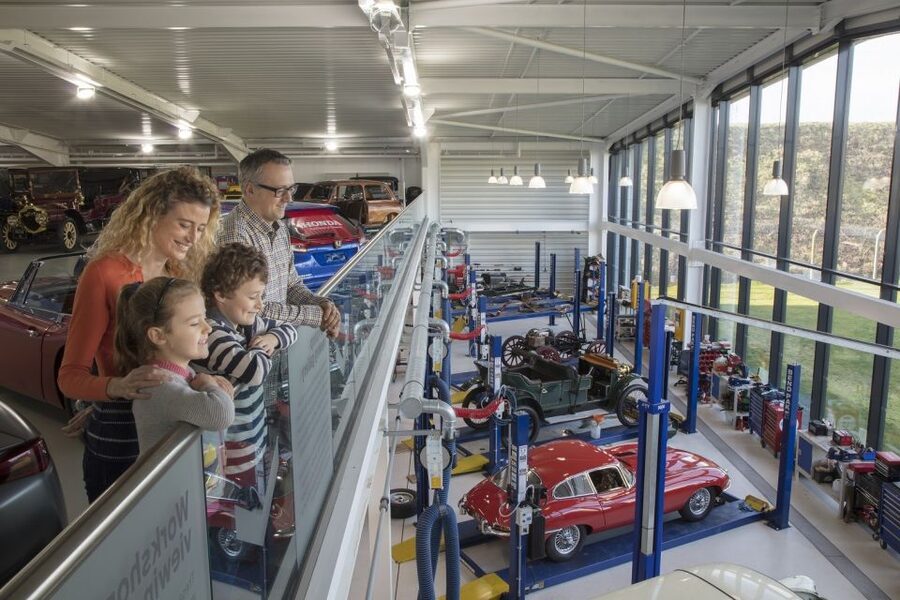
The ticket is valid for one day, so you do not need to race through the collection. A steady visit can take about two and a half hours, but four or five hours is easy if you enjoy reading labels, revisiting favourite cars, taking part in activities, or stopping for lunch.
For a shorter visit, begin with the Time Road, then choose the sections that match your interests. For a longer day, move through the main museum slowly, visit the Collections Centre, and leave time for Under The Skin.
The museum works well in mixed-age groups because people can set their own pace. A serious enthusiast might inspect every model, while another member of the group can focus on family history, design, or film cars.
On a hot day, plan a pause rather than trying to push through. Some areas have been found warm, with limited air circulation. The onsite café gives you a practical break and serves hot and cold meals and snacks.
Café, play area, and useful facilities
Free parking is included, which improves the value of the $24 admission price. You are not paying an additional parking charge after making the trip to Warwickshire.
The café serves hot and cold meals and snacks. Food quality has been praised, though café prices can feel high to some visitors. I would treat it as a useful break built into the day, not the reason to choose the museum.
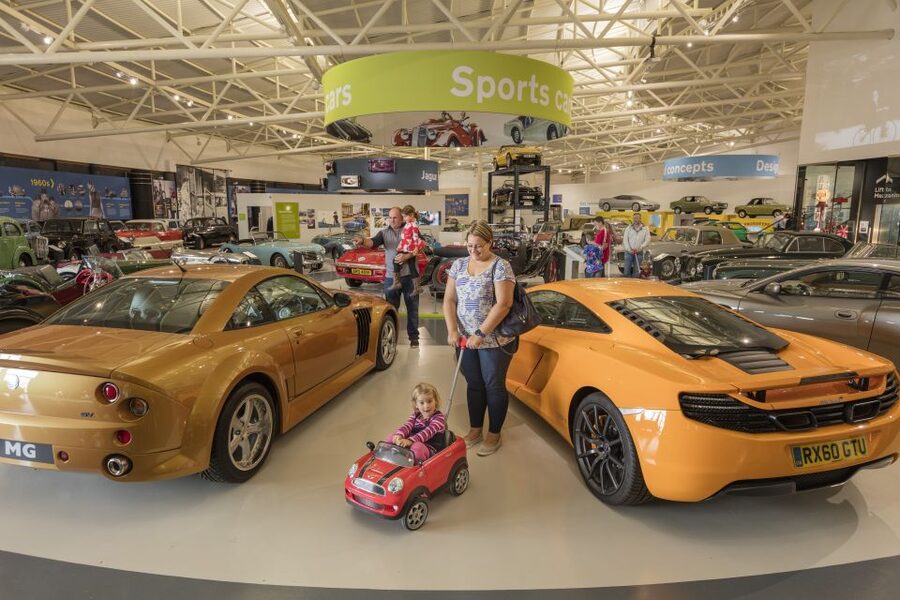
Family activities are included with admission, and there is an onsite play area. Younger children also have small push-along cars to enjoy in parts of the museum. These touches matter because a full museum visit can be a long stretch for children who do not yet care about classic cars.
The buildings are clean and easy to move around. Toilets, lifts, and accessible routes are available, and wheelchair and mobility scooter users can get around the site with relative ease. Pets are not allowed, except for assistance dogs.
Is the $24 ticket good value?
At $24 per person, the ticket is good value if you plan to stay for at least half a day. The collection is large, the ticket covers a full day, family activities are included, and free parking removes one common extra cost.
The value is strongest for families and mixed groups. One person can focus on Jaguars or racing cars, another can follow the social story, and children can use interactive exhibits and the play area.
A shorter visit still works, but the price feels harder to justify if you only want a quick look at a few famous cars. The collection rewards time, especially if you want to speak with volunteers or study the prototypes and conservation work.
Prices and seasonal offers can change. One visit during the Christmas period was considered expensive, so check the current rate and opening details before booking. The booking terms allow cancellation up to 24 hours in advance for a full refund, and you can reserve now and pay later, which helps if your Warwick plans are still moving.
Who should book this museum visit?
You should book if you like classic cars, British design, motor racing, motorcycles, or social history. You should also consider it if you are travelling with someone who loves cars but you do not. The Time Road and interactive areas give non-specialists enough to follow.
Families get strong value from the activities, play area, and wide mix of displays. Older visitors may enjoy the memories attached to familiar family cars, while teenagers can focus on prototypes, film cars, racing vehicles, and hands-on exhibits.
Mobility scooter and wheelchair users should find the site practical, with lifts and accessible routes. If you have hearing concerns, ask about guided tour arrangements because sound in large rooms can be difficult.
You may want to think twice if you are looking for a very specific marque. The collection is broad, but individual brands can be lightly represented or absent from a particular display. It is also not the best choice if you want driving activities, since the former 4×4 track and karting are no longer part of the experience.
Should you book the British Motor Museum?
Book it for a well-priced, full-day museum visit that gives you far more than a row of old cars. The strongest parts are the Time Road, the hands-on Under The Skin displays, the rare prototypes, and the chance to speak with volunteers who care about the vehicles.
Allow at least three hours, and four or five if you want the visit to feel unhurried. Bring the whole family, use the café as a break, and ask about any guided talks when you arrive.
Skip it only if you need a particular marque guaranteed or want track driving. For most people visiting Warwickshire, especially families and mixed-interest groups, the British Motor Museum makes a solid and worthwhile day out.
FAQ
How many cars are in the British Motor Museum?
The museum has more than 400 cars in its collection, dating from the 1890s onward. Displays also include motorcycles, pedal bikes, racing cars, film cars, rare prototypes, and one-off vehicles.
How long is the British Motor Museum ticket valid?
The ticket is valid for one day. A steady visit can take about two and a half hours, while a slower visit with activities and café time can take four to five hours.
Is parking included with admission?
Yes. Free parking is included with museum admission.
Is the British Motor Museum wheelchair accessible?
Yes. The museum is wheelchair accessible, and the site has accessible areas and lifts. Mobility scooter users have also been able to move around the museum easily.
Are family activities included?
Yes. Family activities are included in museum admission, and the site also has an onsite play area and children’s push-along cars.
Can I bring a pet?
Pets are not allowed. Assistance dogs are permitted.
Can I cancel the booking?
You can cancel up to 24 hours in advance for a full refund. A reserve now and pay later option is also available.
Just added around Britain
- London: Wimbledon Tennis Club and Westminster Walking Tour★ 4.5 · 86 reviews
- London: Westminster to Richmond River Thames Cruise★ 4.8 · 23 reviews
- Winchester: Historic Castles and Cathedrals Walking Tour★ 4.9 · 154 reviews
- Westminster Abbey Skip-the-Line Entry and Private Tour★ 4.6 · 4 reviews
- Best of London by LE GRAND – London’s Luxury Bus Tour★ 4.2 · 23 reviews
- Whitby: Guided Distillery Tour with Gin Tasting★ 5.0 · 28 reviews
- London: Westminster Walking Tour & St Paul’s Cathedral Entry★ 4.7 · 7 reviews
- Warwick: Entry Ticket for Warwick Castle★ 4.7 · 215 reviews
Museums, compared.

Liverpool Football Club Museum and Stadium Tour
Read our review →
Chelsea Football Club Stadium and Museum Tour
Read our review →




British Museum Audio Tour & Priority Entrance Ticket
Read our review →Browse the lists this tour appears in