
Reviewed · WALKING TOURS
Birmingham: Discovering Birmingham Guided Walking Tour
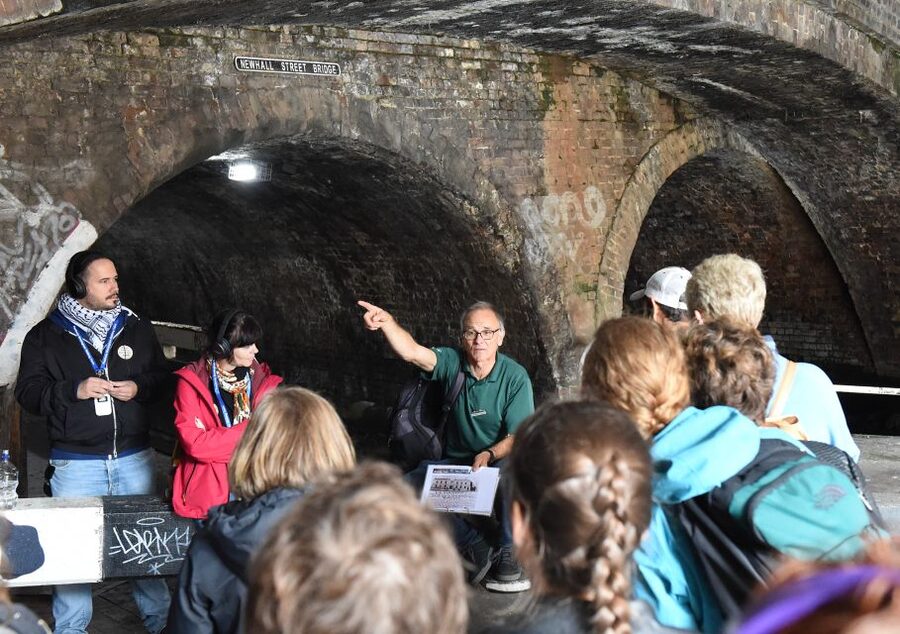
Birmingham’s story makes the most sense beside its canals. This two-hour walk follows the water toward the Jewellery Quarter, then links Georgian industry, Victorian invention, post-war rebuilding, and the city’s present-day revival. It is a useful way to see beyond the shopping streets and understand why Birmingham became known as the workshop of the world.
I like the canal-side route, which gives the tour an atmospheric start and shows how transport helped industry grow. I also like the contrast between old factories, modern Birmingham, and St. Philip’s Cathedral, where the churchyard adds a more difficult human side to the city’s success.
The main consideration is pace. You cover about 3 km in two hours, with a live guide speaking through an audio receiver. Comfortable shoes matter, and you need earphones with a 3.5 mm jack unless you choose to receive a pair in exchange for a small homelessness charity donation.
Key points at a glance
- The walk begins beside Birmingham’s canals, where you learn how the original canal system helped turn a town into an industrial powerhouse.
- The secret canal leads toward the Jewellery Quarter, an area shaped by Georgian and Victorian makers, inventors, and entrepreneurs.
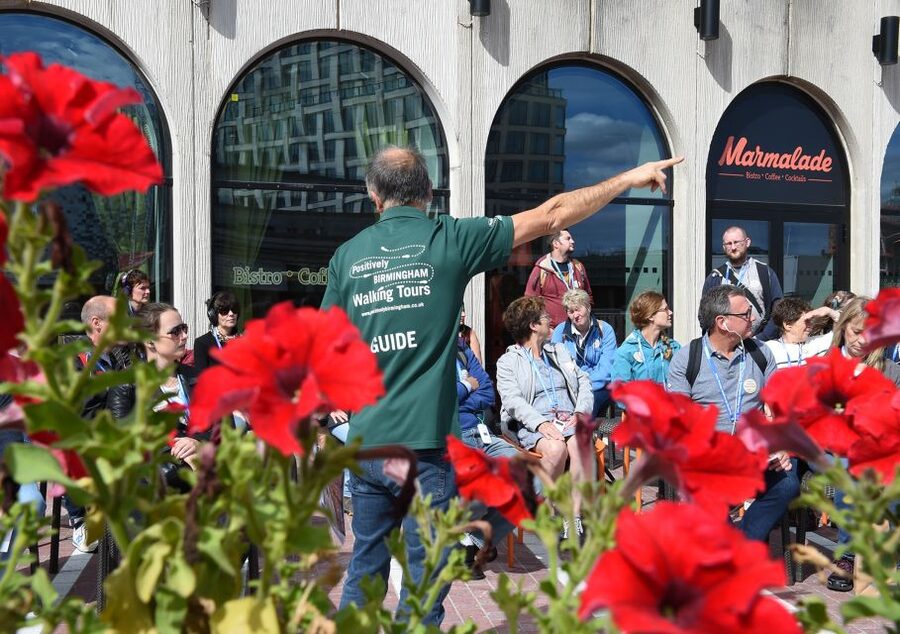
- Jonathan’s lively guiding style brings facts, surprises, and local enthusiasm to the route.
- Post-war redevelopment gets an honest look, including the serious problems caused by some planning decisions.
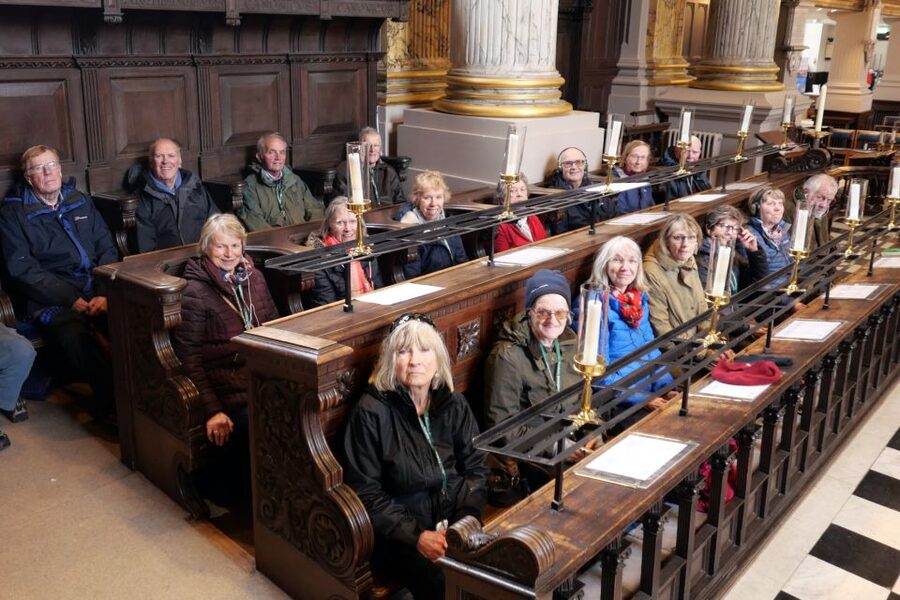
- St. Philip’s Cathedral provides a graceful finish, with English Baroque architecture and a churchyard tied to Birmingham’s harder industrial past.
- The $20 price includes an audio receiver and guidebook, making this a strong-value introduction to the city’s story.
Why Birmingham’s canals are the right place to begin
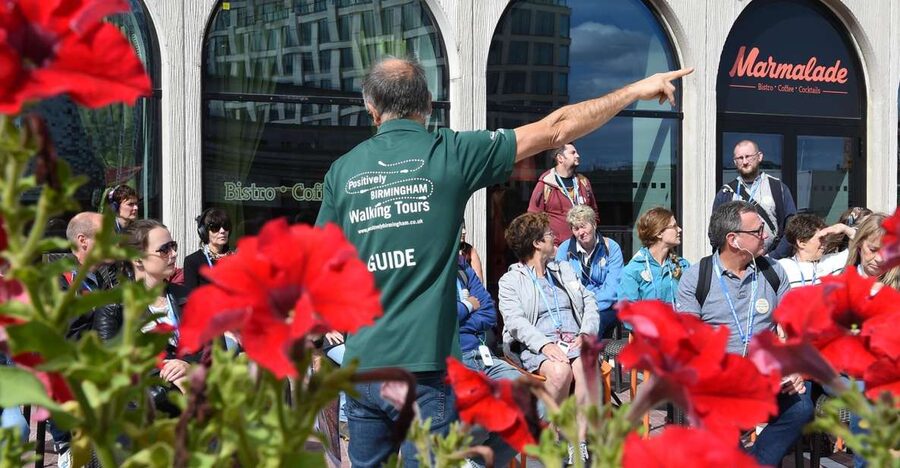
Meet at the front entrance of the Library of Birmingham, normally beside a pop-up stand. From there, the walk heads toward the canals, putting Birmingham’s growth into physical terms before you get lost in dates and names.
The canal system is not just pleasant scenery. It explains how Birmingham’s industries moved goods and materials at a time when roads were slower and less reliable. The tour covers the origins of the original canal and shows how waterways supported the city’s rapid expansion.
I find this opening especially useful if you are new to Birmingham. A first look at the city can leave you with broad roads, modern buildings, shopping areas, and a sense of scale. The canals provide the missing thread. They show how an inland town could connect its workshops and factories to wider trade routes.
You will also hear how older ways of working still shape Birmingham today. That connection between past and present gives the walk more purpose than a simple stroll beside the water.
The route includes a secret canal, a phrase that captures the tucked-away feel of this part of the city. Do not expect a long cruise or a scenic countryside walk. This is an urban history route, with industrial buildings, redeveloped areas, and modern city views sharing the same space.
A few more Birmingham days worth weighing up
- Birmingham: Cadbury World Entry Ticket
★ 4.4 · 230 reviews - Birmingham: Slogging Gangs Guided Walking Tour
★ 4.2 · 216 reviews - From Birmingham: Cotswolds Full-Day Tour
★ 4.7 · 215 reviews
Following the secret canal into the Jewellery Quarter
The canal route leads toward the Jewellery Quarter, Birmingham’s best setting for understanding the city’s industrial character. Its importance began in Georgian times, when the area became a major home for jewellery production and related trades.
The walk explains how the Quarter grew from small-scale work into organized factory production. You learn how inventors and entrepreneurs seized new opportunities, then turned ideas into goods on a large scale and at surprising speed.
That point matters because Birmingham’s story is not only about famous buildings. It is about methods: making things efficiently, adapting quickly, and finding commercial uses for new ideas. The city’s industrial success came from this practical energy.
The guide also adds a few surprises along the way. The supplied information does not list every surprise, so you should not expect a fixed set of named stops. The appeal is the way the route reveals less obvious corners and connects them to the Quarter’s working past.
For me, the Jewellery Quarter is the heart of the walk. It gives the history a human scale. Instead of hearing only about industrial growth in the abstract, you move through the district where makers, workshop owners, and factory operators helped create it.
The route does not present the Quarter as a frozen museum. You see today’s district and learn about its role in the modern city. That balance is important. Birmingham’s past remains visible, but the area is part of a living city rather than a preserved stage set.
From Georgian workshops to Victorian production
The tour continues into the Victorian period, when Birmingham’s industrial reach grew even more powerful. The guide shows how new ideas moved from experiment to production, often in a remarkably short time.
This is where Jonathan’s role matters. He is described as a Birmingham enthusiast with strong local knowledge and a clear passion for the subject. His delivery is meant to be factual but light-hearted, which helps keep the industrial material from becoming a string of dry dates.
The strongest praise for the tour focuses on Jonathan’s information and delivery. That suggests you should book this walk for the guide-led interpretation, not simply for a route you could repeat alone. The canals and streets provide the setting, but the explanation gives them meaning.
You should also expect an interactive tone. One description calls the experience interactive and motivating, while another highlights its combination of facts, humor, and fun. The available information does not spell out specific activities, so I would not treat interactive as a promise of hands-on demonstrations. It is safer to expect questions, discussion, and an engaged presentation.
The included tourist guidebook is a practical bonus. One person singled it out as fabulous, and it gives you something useful to keep after the walk. At $20 per person, the book and audio equipment strengthen the value, especially if this is your first substantial look at Birmingham.
Seeing the Jewellery Quarter as part of modern Birmingham
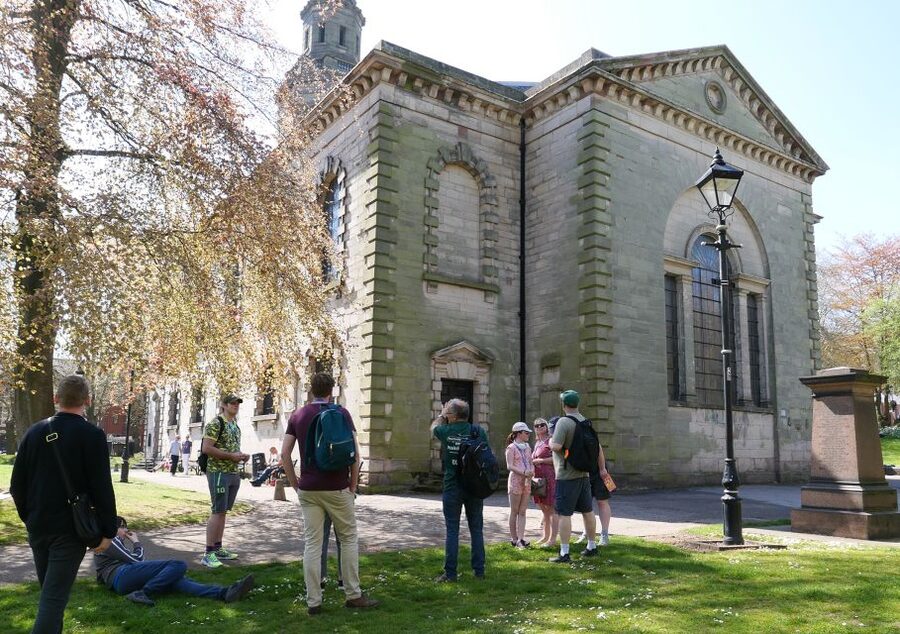
The Jewellery Quarter is not treated as an isolated historic district. The walk explains its place in the modern city, showing how an old industrial area fits into Birmingham’s current identity.
That wider view keeps the experience from becoming a nostalgic tour of old industry. Birmingham is still changing, and the Quarter is part of that process. You will see the contrast between surviving industrial character and the needs of a modern city.
This is also where the tour’s central idea becomes clear: Birmingham has repeatedly reinvented the way it works. Georgian production, Victorian factory growth, post-war redevelopment, and current renewal all belong to the same story.
I like that the tour does not smooth away the awkward parts. A city built on industry has to deal with crowded growth, difficult working conditions, and decisions that shaped daily life for generations. The walk uses the Quarter to show both achievement and cost.
Do not expect the tour to focus mainly on jewellery shopping. The Quarter’s name is important, but the experience is broader. You are learning about production, urban development, invention, and the people who made Birmingham an economic force.
More walking tours in Birmingham:
- Birmingham: Guided City Center Walking Tour (10:30am & 2pm)
★ 4.8 · 147 reviews - Digbeth, Public art and Peaky Film Guided Walking Tour
★ 4.7 · 11 reviews - Birmingham: City Walking Tour and Exploration Game
★ 4.6 · 7 reviews - Birmingham : Must-see Attractions Private Walking Tour
★ 5.0 · 3 reviews
Post-war Birmingham and the price of rebuilding
One of the most valuable sections deals with post-war redevelopment. Birmingham’s rebuilding created a very modern city, but the tour also explains the serious issues caused by those changes.
This part offers a useful corrective to easy praise of modern architecture and wide city roads. Redevelopment can solve one problem while creating another. The walk makes that tension visible, helping you understand why some parts of Birmingham feel disconnected from older neighborhoods.
The contrast between historic canals, industrial districts, and post-war planning gives the tour much of its character. You are not being asked to choose between old and new. Instead, you see how each period left marks on the city.
The tour also points toward Birmingham’s current attempt to renew itself as a modern world city. The idea is not presented as a finished achievement. You see a city still working out how to respect its past while improving its future.
This honest treatment is a strong reason to choose the walk over a simpler sightseeing circuit. It gives you a framework for interpreting Birmingham after the tour. Modern buildings and rebuilt streets become part of an ongoing debate about what cities keep, remove, and replace.
St. Philip’s Cathedral and the harder side of progress
The walk returns toward the city center and ends near St. Philip’s Cathedral. The church offers a change of mood after the canals and industrial districts, with striking English Baroque architecture.
The building gives the route a formal architectural finale, but the churchyard is just as important. It hides some of the difficult issues Birmingham faced as it grew into the workshop of the world.
That phrase carries weight. Industrial success brought jobs, production, and wealth, but it also created serious social pressures. The cathedral and its churchyard help shift the focus from machines and businesses to the wider effects of urban growth.
You will not get a separate cathedral tour based on the information provided. Think of St. Philip’s as a carefully chosen final setting where architecture and social history meet.
I like this ending because it avoids finishing with only a success story. Birmingham’s industrial rise was impressive, but it was not simple or painless. The cathedral helps the tour close on a thoughtful note.
What the $20 price gets you
At $20 per person, this is priced as an accessible introduction rather than a full-day specialist experience. You receive a two-hour live walking tour, an audio receiver, and a tourist guidebook.
The audio receiver is more important than it may sound. City streets can be noisy, and a walking group can spread out. Clear commentary helps you follow Jonathan without having to stay directly beside him or miss key points at the back.
You need to bring earphones with a 3.5 mm jack. If you do not have them, you can receive a pair in exchange for a small donation to a charity supporting homelessness in Birmingham. That is a minor practical detail, but it is worth checking before you arrive.
The guidebook adds value beyond the two hours. It lets you revisit names and themes later, and it gives the experience more staying power than a talk you hear once and leave behind.
The tour does not include food, drinks, transport, or admission to a separate attraction. Since the experience is a walking route through public city areas, the main cost is the guide’s interpretation and the equipment that helps you hear it.
For a first day in Birmingham, I consider that good value. You get context for the canals, Jewellery Quarter, redevelopment, and cathedral in one compact route. If you already know the city well, the value depends more heavily on Jonathan’s local storytelling and the particular surprises along the way.
Who will get the most from this walk
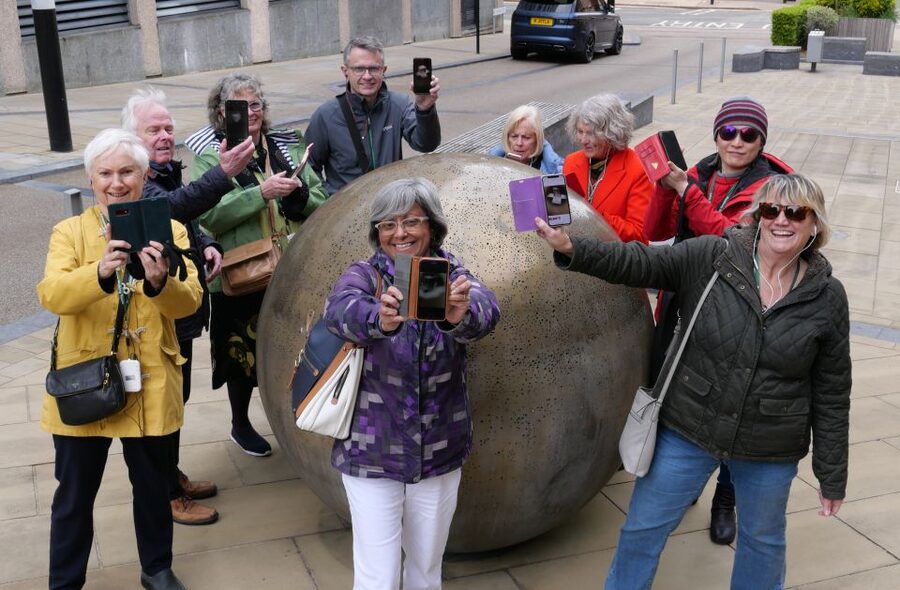
This is a good choice for you if you want Birmingham explained rather than simply photographed. First-time visitors will gain a strong framework for understanding the city center and Jewellery Quarter.
It also suits anyone interested in industrial history, urban planning, canals, architecture, or the link between invention and factory production. The route covers several periods without requiring a full day.
The walk is especially useful early in your stay. Once you understand how the canals, industrial districts, and rebuilt center connect, later independent exploring becomes easier.
You should be comfortable walking 3 km, or about 2 miles, over two hours. Wear comfortable shoes. The route is not presented as strenuous, but it is still a city walk, not a seated lecture.
The English-only format suits people who can follow a live English guide. The audio receiver helps with sound, but it does not change the language of the tour.
Families and mixed-age groups may appreciate the light-hearted presentation, though the subject includes serious social and urban issues. It is not a children’s attraction with a dedicated kids’ format.
A few practical points before you go
Plan to arrive at the front entrance of the Library of Birmingham and look for the pop-up stand. The meeting point is central, but it is still smart to allow a few minutes to find the exact starting spot.
Bring comfortable shoes and compatible earphones. The receiver is supplied, but the earphones are your responsibility unless you accept the charity exchange option.
The tour lasts two hours and begins at scheduled times, so check availability when booking. Free cancellation is available up to 24 hours in advance for a full refund, and you can reserve now and pay later if you want to keep your plans flexible.
The experience is offered in English with a live guide. There is no ticket line to worry about, which keeps the start simple.
The group size is not specified, so I would not assume a private or small-group experience. The audio system is designed to help everyone hear the commentary clearly.
Should you book Discovering Birmingham?
Book this tour if you want the city’s canals, Jewellery Quarter, industrial growth, post-war rebuilding, and current renewal tied into one clear story. The route is short enough to fit into a busy visit, yet substantial enough to change how you see Birmingham.
The biggest reason to choose it is Jonathan’s delivery. His enthusiasm and clear command of Birmingham’s story receive the strongest praise, and the tour seems built around an informed local guide rather than a memorized list of sights.
Skip it if you want a relaxed canal stroll with little commentary, a dedicated jewellery-shopping experience, or a tour in a language other than English. You should also think twice if 3 km of city walking feels uncomfortable.
For most first-time visitors, the $20 cost is sensible. You get a lively two-hour introduction, useful equipment, and a guidebook, with an honest look at both Birmingham’s achievements and its mistakes.
FAQ
Where does the Birmingham walking tour start?
The meeting point is at the front entrance of the Library of Birmingham. There is normally a pop-up stand nearby.
How long does the tour last?
The tour lasts two hours.
How far do you walk?
The total distance is about 3 km, or 2 miles, over the two-hour tour.
What areas does the route visit?
The walk follows Birmingham’s canals, continues through the Jewellery Quarter, explores post-war redevelopment, and returns to the city center near St. Philip’s Cathedral.
Is the tour conducted in English?
Yes. The tour is offered in English with a live guide.
Who leads the tour?
Jonathan is identified as the guide associated with the experience. His Birmingham enthusiasm and delivery are central to the tour.
Is an audio device provided?
Yes. An audio receiver is provided so you can hear the live commentary clearly.
Do I need to bring earphones?
Yes. Bring earphones with a 3.5 mm jack. If you do not have any, you can receive a pair in exchange for a small donation to a homelessness charity in the city.
What is included in the price?
The price includes the guided walking tour, an audio receiver, and a tourist guidebook.
What should I wear?
Bring comfortable shoes, since the experience covers about 3 km on foot.
Can I cancel the booking?
Yes. You can cancel up to 24 hours in advance for a full refund.
Can I reserve without paying immediately?
Yes. The reserve now and pay later option lets you hold a place without paying at the time of booking.
Just added around Birmingham
- Birmingham: City Center Highlights Private Guided Tour★ 5.0 · 4 reviews
- MATRIX VR – Virtual Reality Gaming Experience Session – 1hr★ 4.9 · 7 reviews
- From Birmingham: Stonehenge & Bath Day Tour★ 4.6 · 158 reviews
- Digbeth, Public art and Peaky Film Guided Walking Tour★ 4.7 · 11 reviews
- Birmingham: Victorian Canals and Modern-Day Birmingham Tour★ 4.7 · 92 reviews
- Birmingham: Guided City Center Walking Tour (10:30am & 2pm)★ 4.8 · 147 reviews
- Birmingham: Legoland Discovery Centre Entry Ticket★ 4.1 · 74 reviews
- Birmingham : Must-see Attractions Private Walking Tour★ 5.0 · 3 reviews
Walking Tours, compared.

Magical London: Harry Potter Guided Walking Tour
Read our review →

University and City Walking Tour with Alumni Guide
Read our review →
Harry Potter Movies Walking Tour (Kids Go Free)
Read our review →
The Great British Rock and Roll Music Walking Tour
Read our review →
Jack the Ripper Walking Tour – Ripper Vision Tours
Read our review →

Browse the lists this tour appears in