
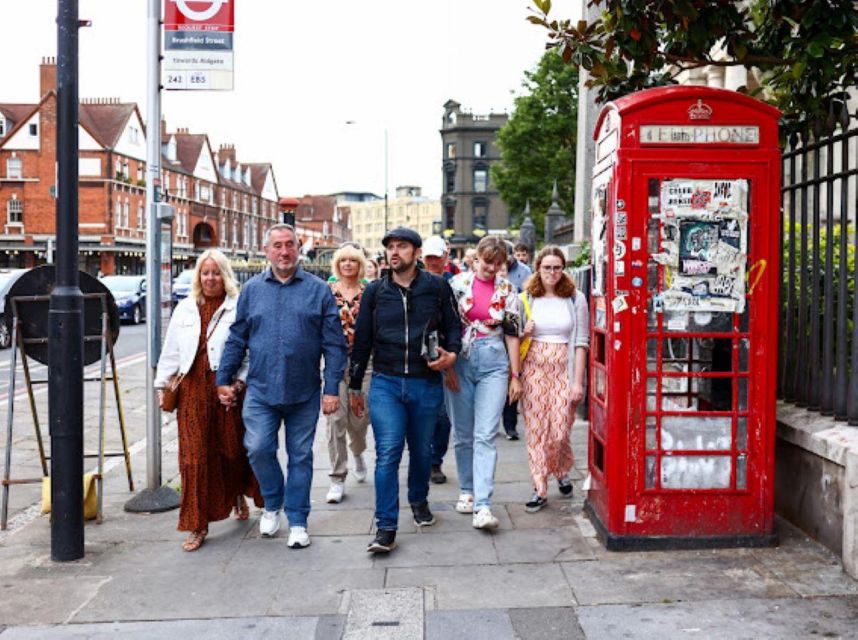
Reviewed · JACK THE RIPPER TOURS
Jack the Ripper and Victorian London: Beyond the Shadows
Jack the Ripper and Victorian London: Beyond the Shadows is less a spooky stroll than a sharp, thoughtful walk through one of London’s most misunderstood chapters. You follow the route from Braham Street through Brick Lane, Hanbury Street, Mitre Square, and Goulston Street, while guide Nick places the murders beside the hard social realities of Victorian East London.
I like two things right away: the tour treats the women involved as people rather than props in a crime story, and it uses humor and performance to make a grim subject easier to absorb. The main consideration is the length. At 140 minutes, you will be on foot for nearly two and a half hours, often outdoors, so sensible shoes and weather-ready clothing matter.
Key points at a glance
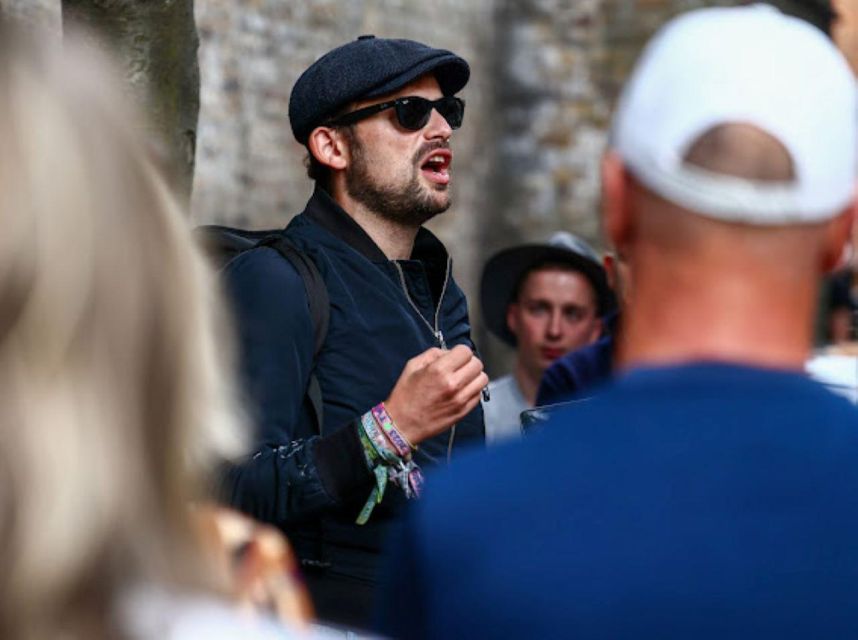
- Nick’s engaging delivery: His background in musical theater gives the walk a lively, carefully timed feel without turning the subject into cheap entertainment.
- A wider view of the murders: You learn about poverty, social class, cultural change, and daily life in the East End, not only names and crime scenes.
- A route through real Whitechapel locations: Brick Lane, Hanbury Street, Mitre Square, Goulston Street, and the old market area give the story a clear sense of place.
- Thoughtful treatment of the victims: The women’s lives and the myths surrounding them receive serious attention.
- A useful ending at Spitalfields: The tour finishes near food, shops, and public transport, making it easy to continue your evening.
- Good booking flexibility: The price is $24 per person, with free cancellation up to 24 hours before the start and a reserve-now, pay-later option.
Why this Jack the Ripper walk feels different
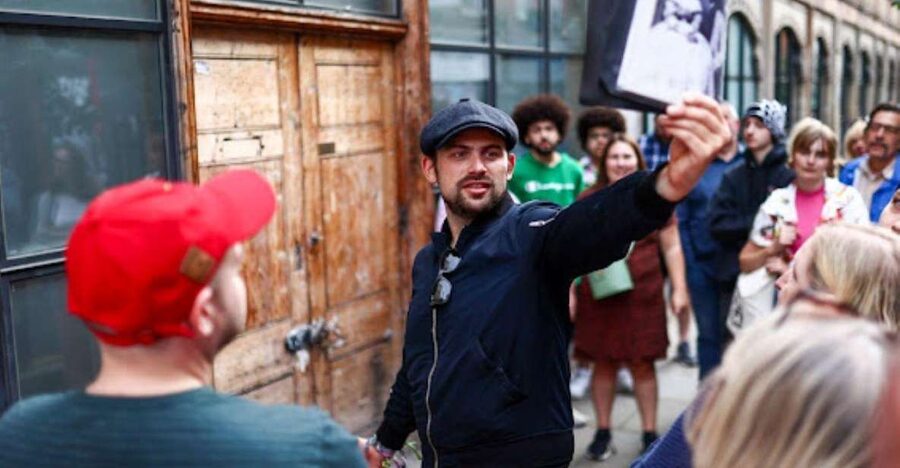
Many Jack the Ripper tours lean hard on fog, alleyways, and grisly detail. This one takes a more measured route. The crimes remain central, but the guide also asks you to think about the people who lived in Whitechapel, the conditions they faced, and the way newspapers shaped public fear.
That change in emphasis matters. The story is not only about an unknown killer. It is also about women trying to survive, working-class communities under pressure, and a city divided by wealth and status. I appreciate that the tour aims to correct misunderstandings instead of repeating every familiar legend as fact.
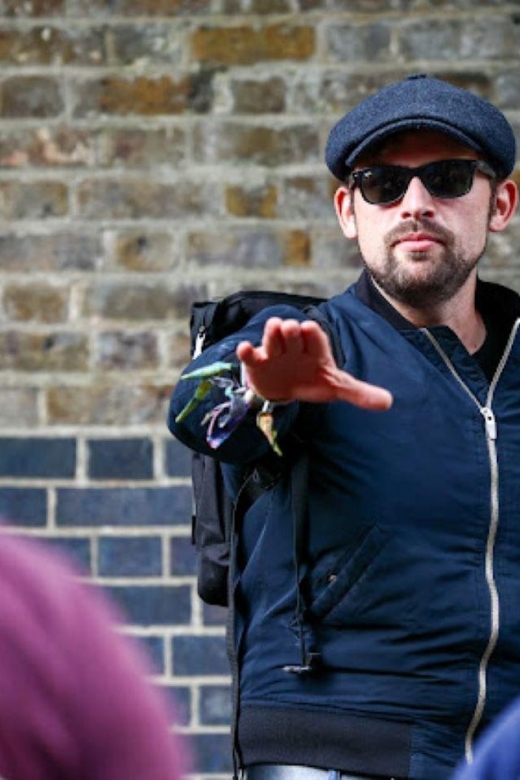
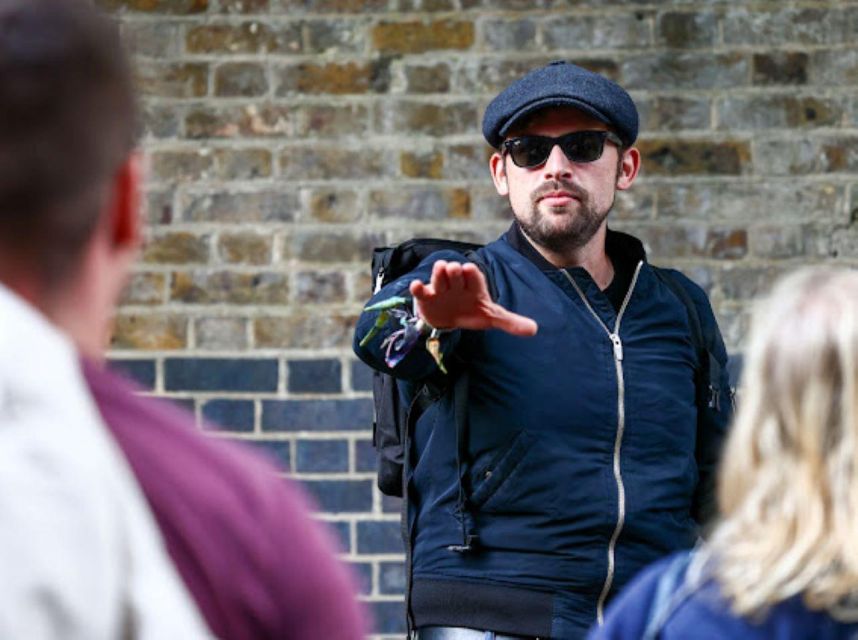
Nick is the guide most closely associated with the experience. His style combines clear explanation, direct questions, humor, and a touch of stagecraft. Several comments about the tour point to his ability to keep the group involved rather than simply reciting dates and theories. You may be asked to weigh evidence and connect details, which makes the walk feel more like a guided investigation than a lecture.
The tone is serious, but not relentlessly bleak. Nick has been praised for making people laugh while still respecting the tragic subject. That balance is useful if you are curious about the case but do not want a tour built around gore or theatrical scares.
More Jack the Ripper walks after dark:
- London: The Original Jack the Ripper Walking Tour
★ 4.7 · 7,833 reviews - London: Jack the Ripper Small Group Tour
★ 4.7 · 3,159 reviews - German Language : Original Jack the Ripper Tour
★ 4.6 · 1,805 reviews
Starting at Braham Street and entering the East End
The walk begins at Braham Street, placing you near the area where the story unfolds. This is a practical starting point because the tour quickly moves into the streets associated with Victorian Whitechapel rather than spending much time on general introductions.
I would arrive ready to walk and listen from the start. The route is built around explanation at several stops, followed by short walks between them. Since the tour lasts 140 minutes, you will get more from it if you treat it as an evening history walk, not a quick photo stop between other plans.
The East End setting gives the subject weight. Modern London is all around you, yet the guide uses individual streets and corners to explain how the area functioned in the 19th century. You are not simply shown a list of locations. You are encouraged to picture the social pressures and cultural differences that shaped life there.
Brick Lane: history beside modern London
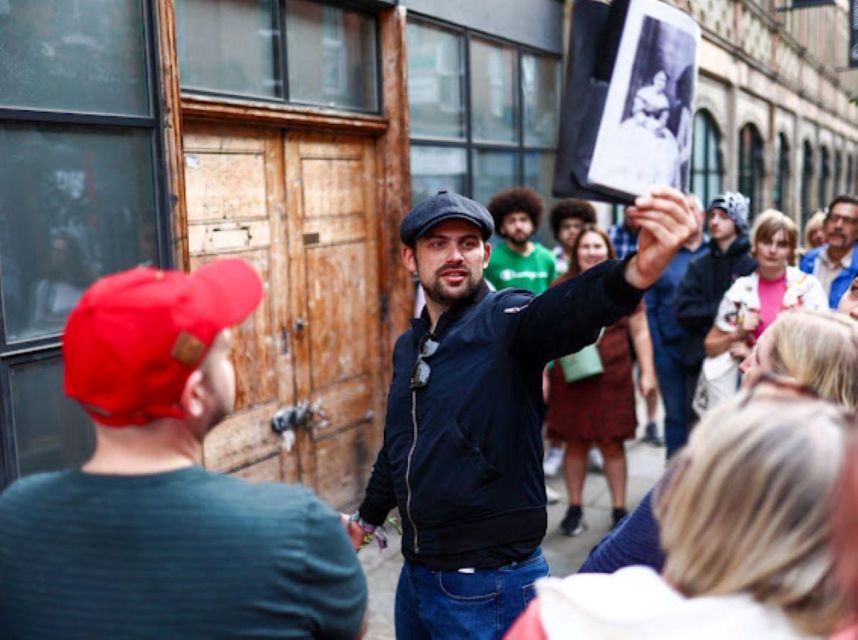
Brick Lane is the first major stop. Today, you may know it for food, markets, street art, and changing neighborhoods. On this tour, it becomes a point of entry into the older East End and its mix of communities.
The contrast between present-day Brick Lane and the Victorian period is part of the interest. You can see how much the area has changed, while the street plan still helps anchor the discussion. The guide uses this setting to explain the social world in which the crimes took place and the public reaction they caused.
This stop is especially useful if you are new to the subject. Instead of dropping you straight into competing theories about the killer, Nick builds the setting first. That gives later stops more meaning, since you understand that the murders happened within a crowded, unequal urban district rather than on an isolated stage.
Hanbury Street and the human stories behind the headlines
Hanbury Street brings the walk closer to the individual events. Here, the guide traces the route and discusses what is known about the people connected with the case.
The most valuable part is the focus on the women. Their lives have often been reduced to a few lines in crime books, but this tour aims to restore some humanity to the story. You learn about the misunderstandings surrounding them and gain a clearer sense of how poverty and limited choices affected their lives.
The guide does not need to use graphic detail to hold your attention. The power comes from understanding the setting and considering what the surviving accounts can, and cannot, tell us. That approach suits older children and teenagers who have an interest in history, provided they are comfortable with a serious subject.
Hanbury Street is also where the tour’s tone becomes clear. You can expect direct discussion, but not a sensational show. Nick’s humor helps keep the group engaged, while the subject remains treated with care.
A few more London days worth weighing up
- From London: Harry Potter Warner Bros Studio Tour
★ 4.7 · 26,588 reviews - London: Westminster to Greenwich River Thames Cruise
★ 4.5 · 22,836 reviews - Magical London: Harry Potter Guided Walking Tour
★ 4.7 · 22,044 reviews - London: Madame Tussauds London
★ 4.6 · 20,915 reviews
Old Spitalfields Market and the working East End
The route then reaches Old Spitalfields Market. This stop broadens the subject beyond the murder case and places it within the working life of East London.
Markets are useful historical spaces because they reveal how people earned money, bought goods, met one another, and moved through the city. The guide connects the market area with the social and cultural forces that shaped the East End. You get a stronger sense of the district as a community, not just as a backdrop for crime.
I like this part because it gives the tour a needed change of scale. The earlier stops focus on specific people and events. Spitalfields opens the view to the wider city, including the gap between poverty-stricken streets and the halls of power. That contrast helps explain why Victorian London could feel both packed with opportunity and brutally restrictive.
The market is also a natural place to pause and reorient yourself. It may be active and crowded in modern life, but the guide keeps the focus on how the area functioned in the period being discussed. You should expect walking and standing rather than a long indoor visit.
Goulston Street and the problem of certainty
Goulston Street is one of the stops where the tour’s emphasis on evidence and myth becomes most useful. Rather than presenting every popular claim as settled truth, Nick helps you consider what is documented and what has been added through later storytelling.
That critical approach is one of the strongest reasons to choose this experience. Jack the Ripper has generated layers of books, theories, films, and dramatic retellings. It is easy for fact and invention to blur together. A guide who separates known events from speculation gives you a much sounder understanding of the case.
You will also hear more about the public mood of the era. Fear spread through newspapers and conversation, while police work and public expectations were shaped by the limits of Victorian institutions. The tour’s value comes from showing how the case affected the city, not simply from repeating possible identities for the killer.
If you want a firm answer about who Jack the Ripper was, this may frustrate you. The experience is better suited to people who enjoy weighing evidence and accepting that some questions remain unresolved.
Mitre Square and the darkest point on the route
Mitre Square is the most strongly associated crime location on the walk. The guide explains its place in the case and the events linked to it, while keeping the focus on context rather than shock.
This is likely to be the most solemn stop. The location gives the story a physical point, but modern buildings and city activity can make it feel less visually dramatic than you might expect. That is not a weakness. The gap between an ordinary modern street and the terrible events discussed there is part of what makes the stop unsettling.
Nick’s delivery is important here. The tour works best when the guide handles the material with restraint, and the available information points to an approach that is serious without being unnecessarily graphic. You can expect the guide to encourage thought rather than push fear.
For some people, Mitre Square will be the emotional center of the evening. For others, the social background at Brick Lane or Spitalfields will be more memorable. The tour gives enough room for both reactions.
London Fruit & Wool Exchange and the city around the case
The stop at the London Fruit & Wool Exchange adds another piece to the East End setting. It connects the murder story with trade, work, and the commercial life of London.
This is where the tour reinforces an important point: Victorian London was not one uniform place. Different districts and classes could exist close together while offering very different lives. The East End’s working streets stood in sharp contrast to wealthier parts of the city, and those differences affected housing, work, safety, and public attention.
You get a sense of how the area changed over time, too. The modern city has rebuilt and repurposed many spaces, but the guide uses surviving street names and landmarks to keep the past present. That makes the walk more rewarding than a simple list of crime sites.
Finishing at Spitalfields Market
The tour ends at Spitalfields Market, a convenient finish for an evening in East London. You are left near a useful mix of places to eat, browse, and continue exploring.
Ending here also fits the tour’s wider purpose. You finish not in a theatrical alleyway, but in a living part of London. The setting quietly brings you back to the present after two hours of discussion about fear, poverty, and Victorian society.
I would avoid booking an important dinner immediately after the tour. The end time can vary slightly with the pace of the group and the guide’s discussion, and you may want time to ask a final question or stay in the area.
Nick’s storytelling style and the role of humor
The strongest praise for this experience centers on Nick’s delivery. He is described as warm, funny, well-informed, and able to answer questions while adapting to the group. His past work in musical theater appears to shape the way he uses voice, timing, and performance.
That does not mean you should expect a stage show. The performance element supports the history. Nick uses energy to keep attention during a long outdoor walk, then changes tone when the subject turns tragic or sensitive.
The humor is useful because the topic can become heavy. A serious guide who never gives the group room to breathe may lose people halfway through. Nick’s approach appears to make the material easier to follow without making light of the victims.
The guide has also been praised for offering local tips and speaking from a connection to the area. That can add practical value, especially if this is your first visit to East London. Still, the main attraction is the historical interpretation, not a broad London sightseeing tour.
Price, pace, and who will get the most from it
At $24 per person, the tour offers good value if you want a live guide and a sustained historical walk. You are paying for 140 minutes of explanation, local context, and a route through several important East London locations. Compared with a short, scare-focused walk, this gives you more substance for the money.
The price is less compelling if your only goal is to hear the basic Jack the Ripper story. You could find that in many formats. The value here lies in the extra attention to Victorian society, the women involved, and the difference between evidence and legend.
The tour is a good fit for:
- People who enjoy true crime but want more context than gore
- History fans interested in class, poverty, and daily life in Victorian London
- Families with older teenagers and adults who can handle difficult subject matter
- Visitors who prefer a guide-led walk over a museum display
- People who enjoy asking questions and testing competing explanations
It may not suit you if you dislike outdoor walking, want a short activity, or prefer a purely frightening ghost-story experience. The route is in English, and the live guide format means you need enough English to follow detailed explanations.
The tour is wheelchair accessible, though the supplied information does not describe the exact surface conditions or restroom arrangements. If you use a wheelchair, it is wise to confirm route details before booking. The activity is listed as unsuitable for people over 95, so age restrictions should also be checked when planning.
Weather can shape the experience. One account describes the group continuing in heavy rain, with the guide making extra effort to keep everyone comfortable and engaged. That suggests a flexible spirit, but you should still bring a waterproof layer and shoes that can handle nearly two and a half hours outside.
Booking flexibility and practical planning
You can cancel up to 24 hours before the start for a full refund. The reserve-now, pay-later option is handy if you are still arranging your London schedule.
Starting times vary, so check availability before building your evening around the walk. The tour begins at Braham Street and finishes at Spitalfields Market, which means you should plan your route to the starting point rather than assuming the end point is nearby.
Keep your plans simple around the tour. You will be walking, stopping to listen, and moving between several parts of the East End. A flexible evening lets you stay focused instead of checking the clock.
Should you book Jack the Ripper and Victorian London?
Book this tour if you want a thoughtful East London walk that uses the Jack the Ripper case to explain a larger world. The focus on the women, Victorian poverty, local culture, and unreliable storytelling gives the experience more purpose than a standard crime-themed outing.
I would be especially keen to book if Nick is leading your departure. His mix of humor, stage presence, clear explanation, and critical thinking is the feature that turns a grim subject into a memorable history lesson.
Skip it if you want graphic thrills, a quick itinerary, or a definitive answer about the killer’s identity. For everyone else, $24 is a fair price for a long, well-paced introduction to Whitechapel and the complicated people who lived there.
FAQ
Where does the tour start?
The tour starts at Braham Street.
Where does the tour finish?
It finishes at Spitalfields Market.
How long does the experience last?
The tour lasts 140 minutes.
How much does the tour cost?
The price is $24 per person.
Which locations are included?
The route includes Brick Lane, Hanbury Street, Old Spitalfields Market, Goulston Street, Mitre Square, and the London Fruit & Wool Exchange. It finishes at Spitalfields Market.
What language is the tour in?
The live tour guide speaks English, and English is the listed tour language.
Is the tour wheelchair accessible?
Yes, the activity is listed as wheelchair accessible.
Can I cancel my booking?
Yes. You can cancel up to 24 hours in advance for a full refund.
Can I reserve now and pay later?
Yes. You can reserve your place and pay nothing at the time of booking.
Just added around London
- London: Wimbledon Tennis Club and Westminster Walking Tour★ 4.5 · 86 reviews
- London: Westminster to Richmond River Thames Cruise★ 4.8 · 23 reviews
- Westminster Abbey Skip-the-Line Entry and Private Tour★ 4.6 · 4 reviews
- Best of London by LE GRAND – London’s Luxury Bus Tour★ 4.2 · 23 reviews
- London: Westminster Walking Tour & St Paul’s Cathedral Entry★ 4.7 · 7 reviews
- From London: Oxford, Stratford-upon-Avon & Cotswolds Trip★ 4.5 · 64 reviews
- From London: Warwick, Oxford, Stratford & Cotswolds Day Tour★ 4.0 · 270 reviews
- Warner Bros. Studios and 1-Day London Hop-on Hop-off tour★ 4.7 · 9 reviews
Jack the Ripper Tours, compared.

German Language : Original Jack the Ripper Tour
Read our review →
Jack the Ripper Walking Tour – Ripper Vision Tours
Read our review →

French Language : Original Jack the Ripper Tour
Read our review →
Browse the lists this tour appears in