

Reviewed · JACK THE RIPPER TOURS
Jack the Ripper: Solve the Crime Walking Tour (Kids Free!)
Jack the Ripper’s murders still grip London because the story unfolds in streets that remain part of the city’s daily life. This evening walk takes you through Whitechapel, past former pubs, workplaces, homes, alleyways, and crime scenes linked to the autumn of 1888. You are not just hearing a mystery in a lecture room. You are following the route on foot, in the dark, where atmosphere does much of the work.
I like the use of period images and police evidence, including the letter that gave the killer his famous nickname. I also like the interactive angle: you are invited to act as a detective and consider the evidence before hearing the guide’s own theory. The main caution is clear: this is a gruesome subject, and the photos and descriptions may be too much for young children or anyone uneasy with violent crime.
Key points at a glance
- The route follows the murder sequence, helping you build the story one location at a time.
- The Whitechapel Gallery meeting point is easy to reach from Aldgate East Station, but do not confuse it with Aldgate Station.
- The famous letter is shown during the walk, explaining how the name Jack the Ripper entered public use.
- Police photographs and evidence images give the talk a visual link to the events of 1888.
- Kids join free, making the $29 adult price more attractive for families.
- Harry’s presentation style includes humor, audience interaction, and a portable projector, according to the experience details provided.
Starting at Whitechapel Gallery at 7:30 PM
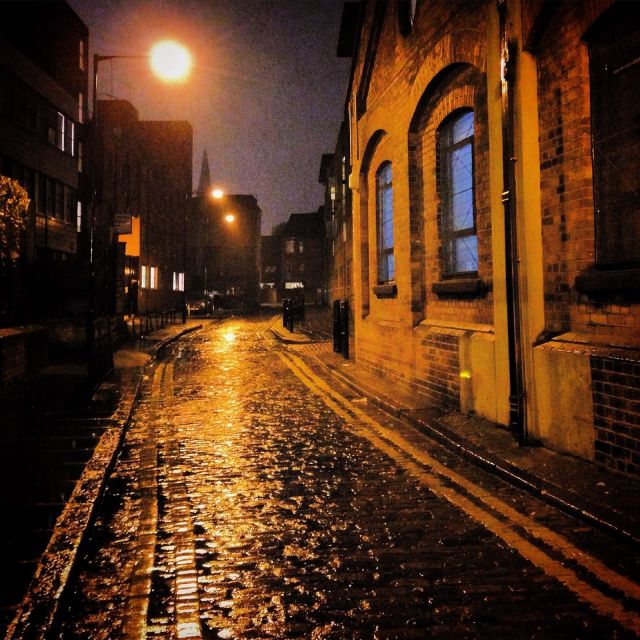
The walk begins at the entrance of Whitechapel Gallery, directly by Exit 3 of Aldgate East Station. That detail matters. London has both Aldgate and Aldgate East stations, and arriving at the wrong one can leave you rushing through unfamiliar streets just as the group is due to leave.
The meeting time is 7:30 PM sharp, so arrive around 10 minutes early. That gives you time to find Exit 3, locate the guide, and get settled before the story begins. Since this is an evening tour, I would also check your route back to your hotel before setting out, even though the walk returns to the gallery.
Whitechapel Gallery itself provides a useful starting marker in modern London, while the subject takes you straight back to the Victorian East End. The contrast is part of the appeal. You begin in a recognizable city setting, then start looking at ordinary streets through the grim lens of 1888.
The tour is in English, with a live guide. Private and small-group formats are available, though the exact group size depends on the option you book. A smaller group should make it easier to ask questions and discuss your own theory, while a larger group may feel more like a traditional guided walk.
More Walking Tours in London
- Magical London: Harry Potter Guided Walking Tour
★ 4.7 · 22,044 reviews - London: The Original Jack the Ripper Walking Tour
★ 4.7 · 7,833 reviews - London: Harry Potter Movies Walking Tour (Kids Go Free)
★ 4.7 · 3,071 reviews
Reconstructing Whitechapel in 1888
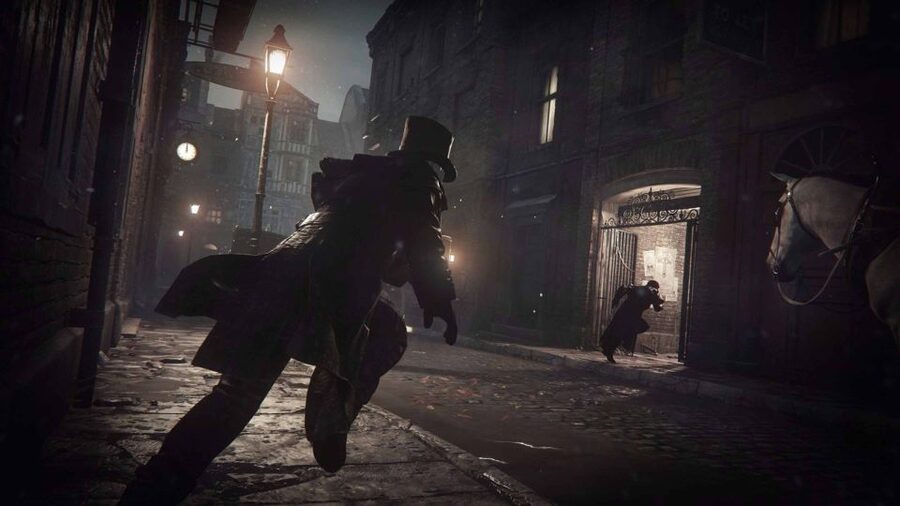
The guide first sets the scene: it is autumn 1888, a killer is active in the East End, and the police and newspapers are struggling to understand what is happening. At first, the murderer is known as the Whitechapel Murderer. The more familiar name comes later, after a mysterious letter is sent to a London news agency.
Seeing a copy of that letter gives the story a useful turning point. It is not simply a spooky prop. It helps explain how the case moved from a series of local murders into a public obsession with an unforgettable name.
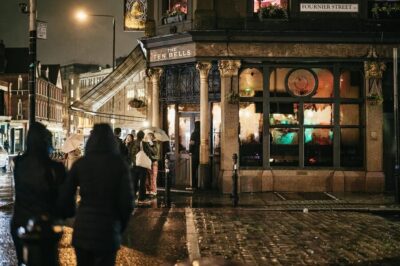
The tour uses the streets themselves as part of the lesson. You pass places connected with where victims lived, worked, drank, were murdered, or were found. Some buildings and routes have changed, while other corners retain enough of their old form to support the guide’s explanation. You should not expect every location to look exactly as it did in 1888. Instead, the value comes from standing in the same part of the East End and understanding how close together these places were.
That physical scale is important. A book can list names and dates, but walking between locations lets you grasp the geography of the case. The murders stop feeling like isolated points on a page and become a sequence within one historic neighborhood.
Following the murders in sequence
The route follows the murders in sequence rather than jumping from one famous clue to another. This is a smart way to handle a complicated case. You begin with the setting and early events, then move through the evidence as the guide explains what happened and how the investigation developed.
At each stop, expect a mix of sightseeing, explanation, and photo viewing. The route includes streets, buildings, and alleyways associated with the case, plus places tied to the victims’ daily lives. The guide also adds stories from the East End beyond the murders, which helps prevent the entire neighborhood from being reduced to one criminal mystery.
I find that balance important. Whitechapel is not merely a stage set for a killer. It was, and remains, a lived-in part of London. The tour’s wider local stories give you a better sense of the area and show what else shaped life there after Jack the Ripper’s appearance.
The walking itself is not described as strenuous, but you should be comfortable on your feet for roughly two to three hours. Wear sensible shoes and bring a layer. Umbrellas are included, a practical touch for London’s uncertain evening weather, though your own waterproof clothing may still be useful.
The photographs, clues, and doorway
The visual material is one of the strongest parts of this experience. You see police photographs of the victims and evidence connected with the investigation. A guide can describe a location well, but an image gives you something concrete to study and compare with the present-day street.
Harry, one of the guides associated with the tour, uses a portable projector to show images during the walk. That approach earned particular praise for making the period feel easier to picture. It also means the guide is not relying only on memory, dates, and spoken description.
The material is disturbing. The tour openly warns that it is not for the faint of heart, and that warning should be taken seriously. Images of murder victims are not casual sightseeing. If you are bringing children because they join free, think about their age and sensitivity first. The family offer is generous, but free admission does not make the subject child-friendly for everyone.
One of the key stops is the doorway where Jack the Ripper’s only clue was discovered. The wording is intentionally cautious: this is a clue connected to the case, not a final answer. You will also see the letter that created the killer’s world-famous nickname, then consider whether it was genuine and what it tells you about the public reaction.
This is where the detective format becomes useful. You are not asked to accept one simple solution. Instead, the evidence is presented as part of an unsolved case, and you can weigh the possibilities yourself.
More Jack the Ripper walks after dark:
- London: Jack the Ripper Small Group Tour
★ 4.7 · 3,159 reviews - German Language : Original Jack the Ripper Tour
★ 4.6 · 1,805 reviews - London: Jack the Ripper Walking Tour – Ripper Vision Tours
★ 4.5 · 1,752 reviews - London: Jack the Ripper Evening Walking Tour
★ 4.9 · 1,449 reviews
A guide-led mystery, not a solved case
The tour’s guide has lived in central London for more than 20 years, including five years in Whitechapel. That local connection helps with more than directions. It gives the guide a feel for how the neighborhood fits together and allows the case to be explained in relation to the streets around you.
The guide also has a personal theory about Jack the Ripper’s identity. I like that this is presented as a theory, not as a proven answer. The case remains unsolved, and a good walking tour should make the uncertainty clear rather than pretend that one dramatic guess settles everything.
The strongest guide style here appears to combine facts with performance. Harry is described as funny, interactive, and full of information, while another guide is noted for creating a convincing sense of 1888 through spoken description. That range matters because a two-hour murder-history walk can become heavy if it is delivered as a list of dates.
You should expect questions, discussion, and some theatrical atmosphere. Still, the tone is not likely to suit someone looking for a quiet architectural walk. The subject drives the experience, and the guide’s job is to keep the mystery moving while explaining what is known, what is disputed, and what remains unclear.
What the East End adds to the experience
The Jack the Ripper story is famous, but the East End gives it context. The pubs, buildings, workplaces, and homes connected with the victims show that the people at the center of the case had ordinary routines before becoming names in crime history.
That focus on daily life makes the tour more worthwhile than a simple hunt for frightening locations. You learn where people spent time, how the area functioned, and how the murders affected the public image of Whitechapel. The guide also discusses stories from the neighborhood after the murders, giving the walk a wider historical frame.
Do not expect a museum-style presentation of preserved interiors. Much of the tour takes place outdoors, and modern London surrounds the old locations. Traffic, pedestrians, new buildings, and city noise may be part of the evening. That can weaken the atmosphere at times, but it also reminds you that this is a real neighborhood rather than a recreated attraction.
The narrow streets and evening timing help create a darker mood. Some people will find that atmospheric. Others may prefer to see the area in daylight and have more time to look at architecture. If you want the full spooky effect, the 7:30 PM departure is well chosen. If you dislike walking after dark, consider that before booking.
Is $29 a fair price?
At $29 per person, the value depends on how much you want from a guided walking experience. You are paying for a live English-language guide, a roughly two to two-and-a-half-hour route, period images, police evidence, local context, and the structure of a carefully ordered mystery.
That is a fair price if you want more than a self-guided stroll. You could walk through Whitechapel on your own, but you would miss the sequence, explanations, images, and guide’s interpretation. The included umbrellas also remove one small worry in wet weather.
The deal becomes much better for families because children join free. An adult traveling with children can bring them without adding a child ticket, though I would judge the age issue carefully because the material is graphic. It is also useful for couples and small groups who enjoy discussing theories as they walk.
Private or small-group options may offer better value if you care about asking questions or setting the pace, though the price and format can vary by booking choice. For a larger group, the guide’s projector and visual approach should help people at the back follow along, but close discussion may be harder.
Flexible booking adds some practical value. You can reserve now and pay later, and cancellation is free up to 24 hours before the tour for a full refund. Those terms help if your London plans are still shifting.
Who should book this walk?
I would recommend it to adults interested in Victorian crime, London social history, and unresolved mysteries. It also suits visitors who have already seen the main sights and want an evening activity in a part of London with a strong historical connection.
Families can consider it because kids are free, but I would not book it automatically for young children. The combination of murder scenes, police photographs, and grim descriptions calls for a sensible age judgment.
It is also a good fit for people who enjoy forming their own opinion. The guide offers theories, but the tour does not claim to solve the case once and for all. Bring your detective hat, as the instructions suggest, and be ready to decide which clues seem convincing.
You may want to skip it if you dislike graphic crime stories, prefer daytime sightseeing, or want a tour centered on art, food, or architecture. Whitechapel has more to offer than the Ripper case, but this walk keeps the murders at its center for most of the evening.
Practical details for a smoother evening
Plan for two to two-and-a-half hours, with the broader route description allowing up to about three hours. Leave enough room afterward rather than scheduling a tight dinner reservation or theater performance.
Meet at the Whitechapel Gallery entrance by Exit 3 of Aldgate East Station. The correct station is Aldgate East, not Aldgate. Arrive 10 minutes before the 7:30 PM departure.
Wear shoes suitable for extended city walking. Bring a light jacket and consider your own rain protection, even though umbrellas are supplied. The tour returns to Whitechapel Gallery, so the start and finish are straightforward to connect with London transport.
The activity is offered in English. If English is not your first language, the photographs and projector may help, but the story depends heavily on spoken explanation and discussion.
Should you book it?
Book this tour if you want a focused, atmospheric walk that combines famous crimes with the streets and buildings of the East End. The strongest reasons are the murder sequence, the visual evidence, the famous letter, and the guide-led debate over the killer’s identity.
I would be more cautious if you are sensitive to graphic images or are choosing an activity mainly for children. For everyone else, the $29 price is reasonable, and the free child places make it especially appealing for families who have considered the subject carefully. You will not leave with a proven name for Jack the Ripper, but you should leave with a clearer sense of the case, the neighborhood, and why this unsolved story still holds London’s attention.
FAQ
Where does the Jack the Ripper walking tour begin?
The meeting point is at the entrance of Whitechapel Gallery, located by Exit 3 of Aldgate East Station.
Which London station should I use?
Use Aldgate East Station. There are two similarly named stations in the area, so do not go to Aldgate Station by mistake.
What time does the tour depart?
The tour departs at 7:30 PM sharp. You should arrive about 10 minutes early.
How long does the walking tour last?
The stated duration is approximately two to two-and-a-half hours. The route description also allows for a visit lasting about three hours, so plan your evening with some extra time.
Is the tour suitable for children?
Children can join free, but the tour includes murder scenes, police photographs of victims, and disturbing evidence. Parents should decide if the subject is suitable for their children.
What language is the tour in?
The live tour guide speaks English.
Are umbrellas included?
Yes. Umbrellas are included as part of the walking tour.
Can I cancel the booking?
You can cancel up to 24 hours before the activity for a full refund. You can also reserve now and pay later.
Just added around London
- London: Wimbledon Tennis Club and Westminster Walking Tour★ 4.5 · 86 reviews
- London: Westminster to Richmond River Thames Cruise★ 4.8 · 23 reviews
- Westminster Abbey Skip-the-Line Entry and Private Tour★ 4.6 · 4 reviews
- Best of London by LE GRAND – London’s Luxury Bus Tour★ 4.2 · 23 reviews
- London: Westminster Walking Tour & St Paul’s Cathedral Entry★ 4.7 · 7 reviews
- From London: Oxford, Stratford-upon-Avon & Cotswolds Trip★ 4.5 · 64 reviews
- From London: Warwick, Oxford, Stratford & Cotswolds Day Tour★ 4.0 · 270 reviews
- Warner Bros. Studios and 1-Day London Hop-on Hop-off tour★ 4.7 · 9 reviews
Jack the Ripper Tours, compared.

German Language : Original Jack the Ripper Tour
Read our review →
Jack the Ripper Walking Tour – Ripper Vision Tours
Read our review →

French Language : Original Jack the Ripper Tour
Read our review →
Browse the lists this tour appears in