
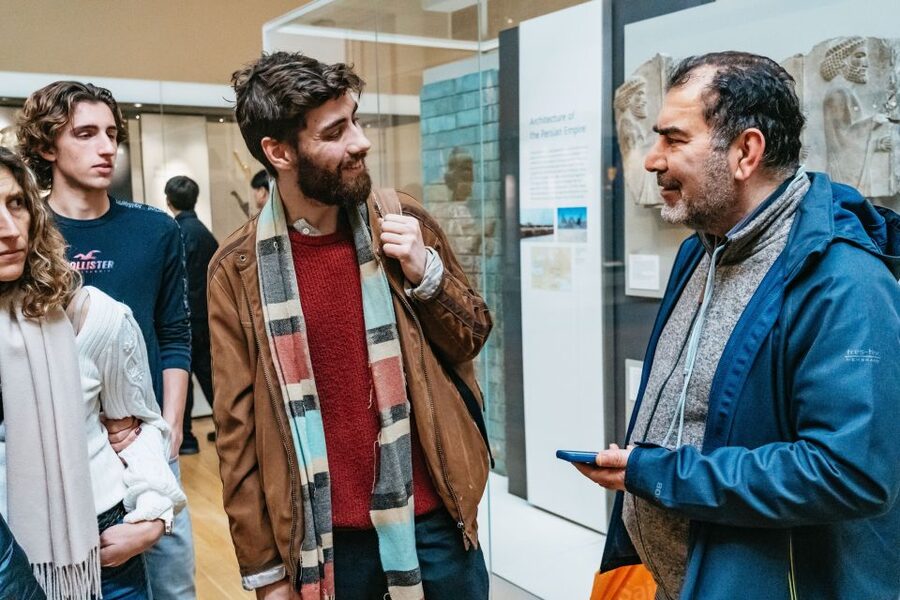
Reviewed · BRITISH MUSEUM TOURS
London: British Museum Guided Tour
The British Museum is so large that walking in without a plan can feel like opening ten history books at once. This two-hour guided route gives you a clear path through Egypt, Greece, Rome, Britain, Easter Island, and other cultures, with a guide explaining why the key objects matter.
I like the sharp focus on the museum’s major sights, especially the Rosetta Stone and Parthenon sculptures. I also like the human touch: guides such as Filomena and Stuart have been praised for adding context, answering questions, and adjusting their pace for families or visitors who are less confident in English. The main drawback is sound. In crowded galleries, a soft-spoken guide may be hard to hear, and this tour does not promise headsets or a microphone.
Key points at a glance

- The Rosetta Stone anchors the Egyptian galleries: Learn how one ancient inscription helped scholars read Egyptian hieroglyphics.
- The Parthenon sculptures bring a cultural debate into the tour: You see famous Greek marble while hearing about its disputed removal from Athens.
- Sutton Hoo adds an early English chapter: Anglo-Saxon objects offer a glimpse into life and craftsmanship in Britain.
- Hoa Hakananai’a widens the story beyond Europe: The Easter Island moai gives the tour a strong Pacific connection.
- The $39 price buys direction, not just entry: The museum is public, but a guide helps you reach important objects quickly.
- The small-group experience can vary: Quiet periods may feel almost private, while busy galleries can make listening harder.
Why a British Museum guide helps
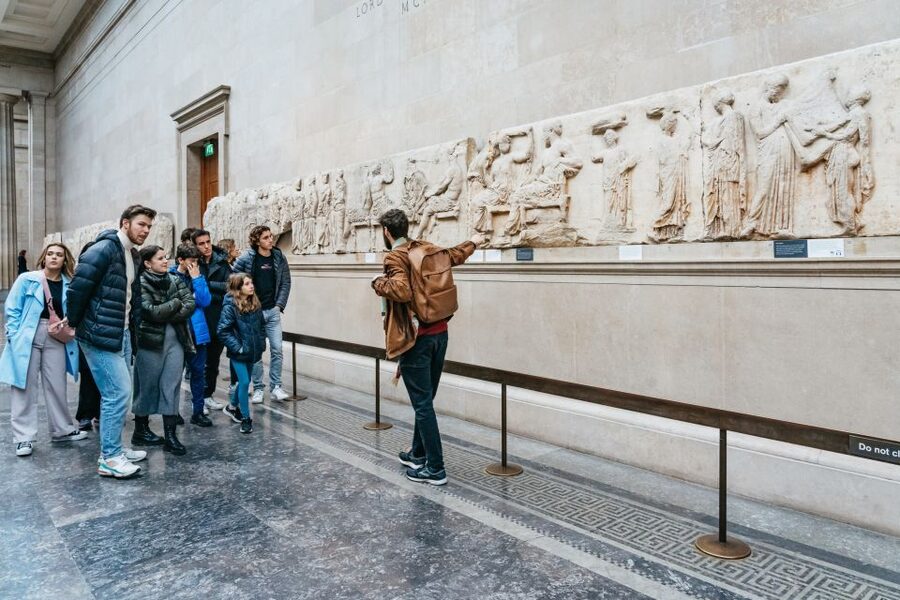
The British Museum is free to enter, but free does not mean easy. Its collection covers human societies across thousands of years, and even a full day would leave plenty unseen. You can certainly wander on your own, but you may spend much of your visit deciding which staircase, gallery, or object deserves your time.
This tour solves that problem with a set route and a live guide. For $39, you are paying for interpretation and orientation rather than admission alone. I think that is a fair price if this is your first visit, if you have only a morning or afternoon in London, or if museum labels tend to blur together after an hour.
The guide-led format also changes the way you look at familiar objects. Instead of seeing the Rosetta Stone as simply an old slab, you learn why its inscriptions mattered. Instead of viewing the Parthenon sculptures as beautiful fragments, you get a chance to consider their original setting and the ongoing argument over how they reached London.
The precise route can vary. The listed highlights cover several major areas, but a two-hour visit cannot give equal attention to every gallery. You should think of this as a strong introduction, not a complete survey of the museum.
More Museum Tours in London
- London: Chelsea Football Club Stadium and Museum Tour
★ 4.8 · 4,576 reviews - London: British Museum Guided Tour
★ 4.3 · 1,182 reviews - London: Jack the Ripper Museum Tickets
★ 4.2 · 894 reviews
Meeting your guide inside the museum
The meeting point is on the stairs in front of the British Museum portals, near the pillars, after you pass security. It is important that this is inside the gates, not outside on the pavement. Tickets are supplied through WhatsApp about one to two hours before the tour, or by email if you do not use WhatsApp.
That ticket timing deserves attention. Check your phone before leaving for the museum and make sure the message has arrived. If you have no WhatsApp account, contact the provider by email ahead of time so the entry ticket can be sent another way.
The tour includes a guide, but not transportation. You make your own way to the museum, and the activity information says you can use an express security check. Wear comfortable shoes and clothing suited to the weather, especially if you expect to wait outside before entering.
The tour is wheelchair accessible. Language options are English, French, and Italian. Depending on demand, two languages may be used during the same tour, so confirm the language arrangement when booking if that matters to you.
Egypt and the Rosetta Stone
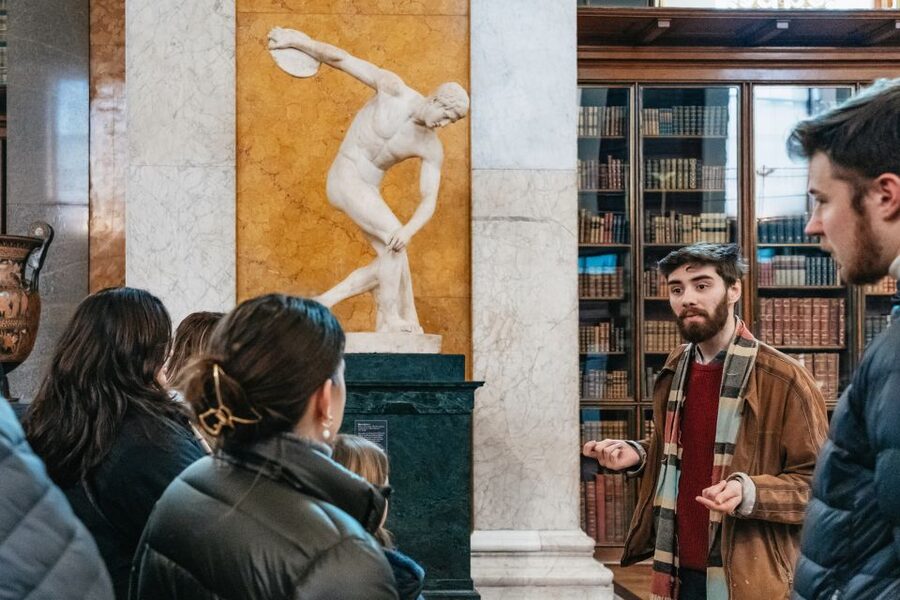
The route begins with ancient Egypt, a sensible choice because the Egyptian galleries give you an immediate sense of the museum’s scale. You might see objects linked to pharaohs, religious practice, writing, and burial customs as your guide explains how Egyptian society recorded its beliefs and daily life.
The star here is the Rosetta Stone. Its importance is not mainly its size or appearance. The stone carries the same decree in three forms of writing, including Greek and two Egyptian scripts. Because scholars could read the Greek section, it helped them work out the meaning of Egyptian hieroglyphics.
That is the sort of connection a guide can make quickly. A label may tell you what the stone is. A good explanation shows why the object changed the study of ancient Egypt and why writing systems matter to our view of the past.
You should expect crowds around famous pieces. The guide may need to position the group carefully, and you may not have long to linger in front of every case. If Egyptian art is your main reason for visiting, treat this tour as an introduction, then return on your own for a slower look.
Ancient Greece and the Parthenon sculptures
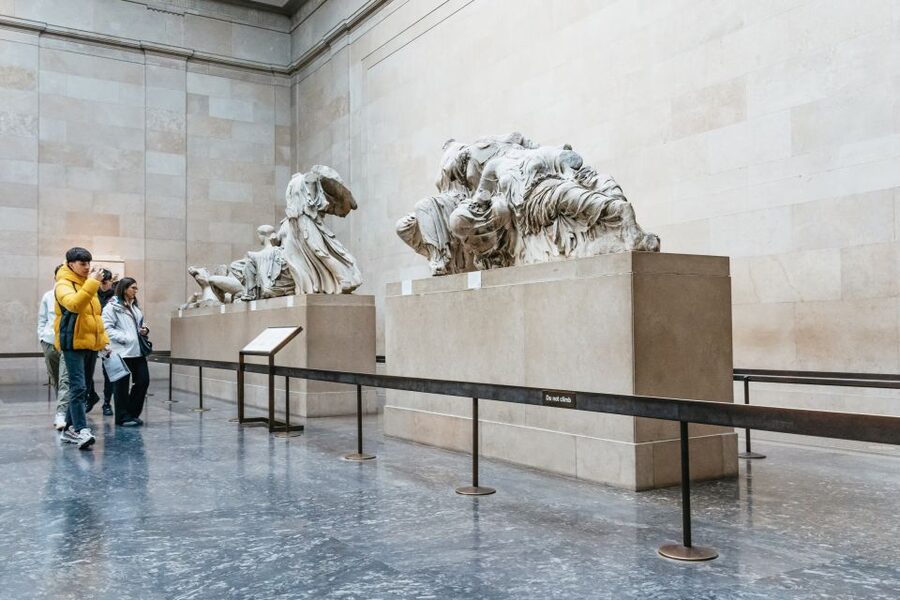
The Greek galleries shift the mood from Egyptian writing and royal power to sculpture, architecture, philosophy, and civic life. The tour highlights the Parthenon sculptures, among the museum’s best-known and most disputed holdings.
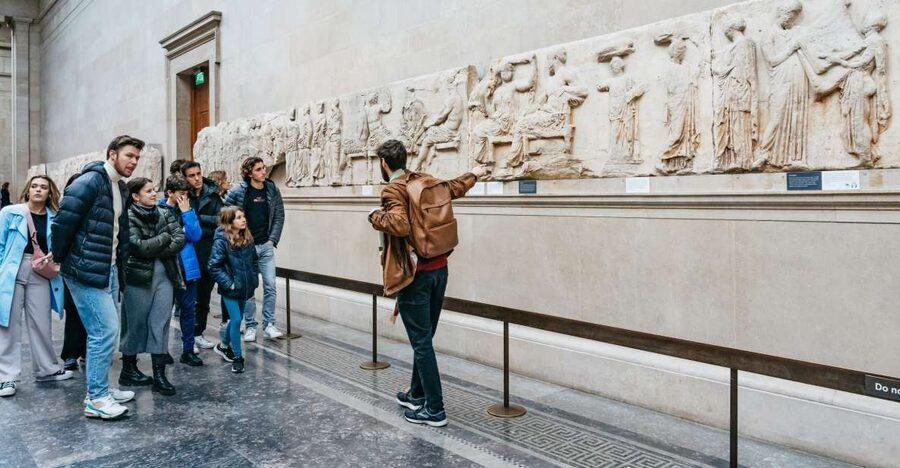
These marble pieces once formed part of the Parthenon in Athens. In London, you can study their carved figures and architectural details at close range. The guide also brings up the question of ownership and removal, often called the Elgin Marbles debate. That discussion is not a side note. It is central to how many people understand the museum today.
I value this part of the tour because it lets you appreciate the art without pretending the surrounding politics do not exist. A thoughtful guide can explain both the sculptural skill and the argument over whether the pieces should remain in Britain or return to Greece.
The Greek section also connects art with ideas. You may hear about inscriptions and the intellectual life of the ancient world, though the exact objects covered depend on the guide and the group’s pace. If you want a long examination of every sculpture, two hours will feel brief. If you want the essential story and a look at the major pieces, the timing works well.
More guided runs through the British Museum:
- London: Tour of the British Museum
★ 4.1 · 678 reviews - London: British Museum Audio Tour & Priority Entrance Ticket
★ 4.5 · 631 reviews - Afternoon Tea at the British Museum
★ 4.2 · 511 reviews - London: British Museum Highlights Guided Small Group Tour
★ 4.9 · 113 reviews
Rome, mosaics, and imperial power
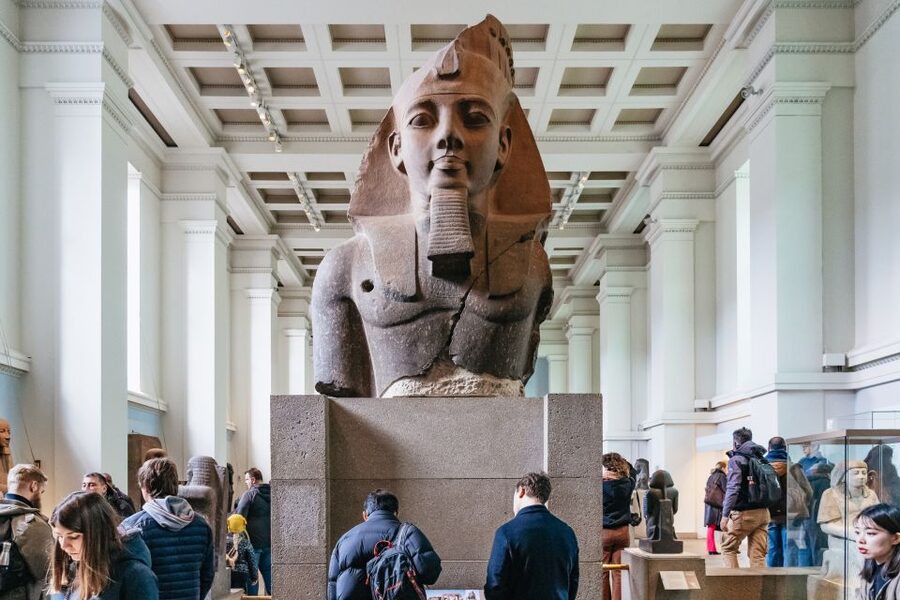
The Roman section adds a different kind of drama. Here, the emphasis moves toward emperors, engineering, domestic decoration, religious images, and the machinery of a large empire.
Expect statues of gods and heroes, along with intricate mosaics. These objects help you see how Roman art worked in public and private settings. A statue could represent power or a deity. A mosaic could turn a floor into a display of wealth, taste, and myth.
I like the Roman stop because it gives the tour a useful bridge between Greece and later European culture. Roman artists borrowed heavily from Greek models, yet Roman society used those forms to project imperial authority and social rank.
This is also an area where a guide’s selection matters. You will not see every Roman object, and you should not expect a full lesson on Roman politics or engineering. The value lies in choosing examples that keep the broad story moving.
Sutton Hoo and early English life
Sutton Hoo brings the focus closer to home. The Anglo-Saxon treasures offer clues about early English life, social rank, burial customs, trade, and metalworking.
For many people, this is one of the most useful stops because it adds a British chapter to a tour otherwise spread across ancient Egypt, Greece, Rome, and the Pacific. The objects are not simply local curiosities. They show that early England was connected to wider networks of power and exchange.
Your guide may point out the fine workmanship and explain what the burial objects suggest about the person or community they came from. That context matters. Without it, a display of weapons, ornaments, and ceremonial pieces can seem like a collection of attractive old things. With it, you begin to picture the society behind the objects.
The Sutton Hoo section also gives the route a welcome change of scale. After monumental sculpture and imperial art, these treasures feel more personal and tied to individual status.
Hoa Hakananai’a and a wider world

The moai known as Hoa Hakananai’a provides one of the tour’s most striking changes of direction. This stone figure from Easter Island embodies the spiritual traditions of a distant Polynesian culture and reminds you that the museum’s story extends far beyond Europe and the Mediterranean.
A moai can be easy to reduce to a famous silhouette. The guide’s role is to connect the figure with the culture that made and used it, rather than presenting it as an isolated oddity. This is one reason a guided visit can be more rewarding than moving from case to case alone.
The object also raises questions about collecting and removal, themes that return throughout the British Museum. The tour’s strongest moments come when it connects beauty, belief, and the difficult circumstances surrounding how objects reached London.
You will not get a full account of Easter Island in a few minutes. Still, Hoa Hakananai’a gives you a memorable stop and broadens the route beyond the familiar ancient civilizations.
A fast route through human cultures
The final part of the tour draws together objects from around the world. The point is not to cover every region in equal detail. Instead, the guide uses selected pieces to show how people have created art, tools, monuments, writing, and religious objects in very different settings.
That wide scope is both the tour’s strength and its limitation. I like leaving a museum with connections between cultures rather than a list of disconnected dates. But you should know that a highlights tour moves quickly. A guide may explain one object for several minutes, then lead you onward before you have had time to read every nearby label.
The best approach is to accept the route as a first look. Note the galleries and objects you want to revisit. Several people have found the museum so large that they needed another visit to see and read everything, which is hardly surprising.
The guides and the feel of the tour
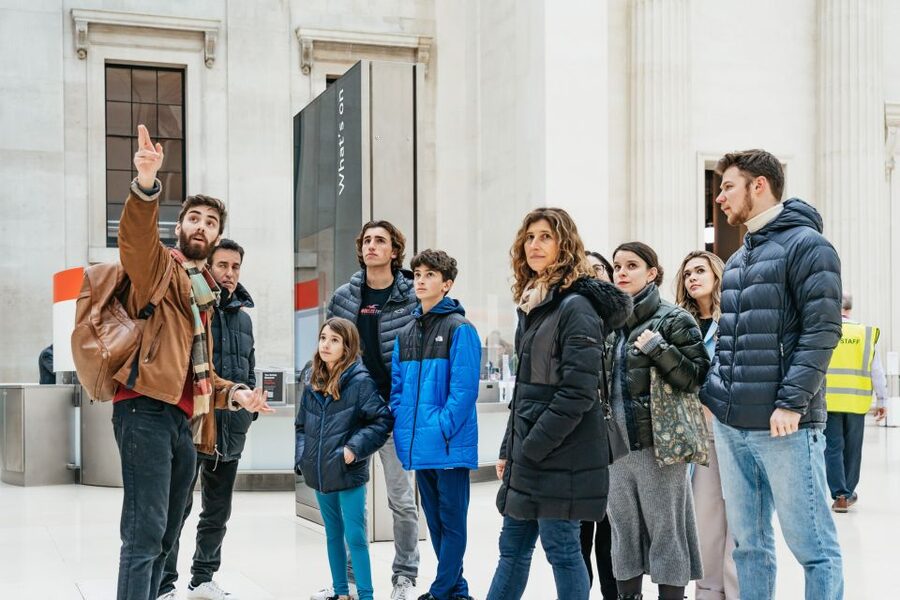
The guide can shape this experience more than any other feature. Filomena has been singled out for her enthusiasm, care, and ability to make visitors feel comfortable. She has also handled tours that became private or nearly private when other participants did not arrive. Stuart has earned praise for his detailed explanations, dry British humor, and ability to point out lesser-known objects alongside the major sights.
Other named guides include Tara, Rebekka, Lucia, Maya, and others working in the available languages. Maya has been especially effective with both children and adults, while some guides have taken extra time when the group wanted to see more.
Do not assume every tour will feel private. Quiet January visits have sometimes left only a couple of people with the guide, but group size and demand can change. A smaller group makes questions easier and can let the guide adjust the pace. A larger group may feel less personal.
The main practical concern is hearing clearly. The museum can be noisy, and one guide was described as too soft-spoken for the crowd. Stay close to the guide and speak up if you are losing the explanation. If you rely on hearing assistance, ask before booking what equipment is available, since microphones and earbuds are not included in the stated details.
Is $39 good value?
The museum itself is public, so you are not buying a standard admission ticket for $39. You are buying a shortcut through a vast collection, along with explanations that can turn famous objects into meaningful ones.
I consider the price good value for a first-time visitor who wants to see the main sights in two hours. It is also useful if you have limited London time or feel unsure about choosing galleries. The experience can become particularly good value when the group is small and the guide can tailor the route.
The price is less compelling for a repeat visitor who already knows the museum or prefers to wander slowly. You may want to spend forty minutes with one object, return to a favorite gallery, or follow your own interests. This tour favors direction and coverage over freedom.
Free cancellation up to 24 hours before the start and the option to reserve now and pay later make the booking less rigid. Those policies are useful if your London plans are still shifting, but the real value question remains simple: do you want interpretation and a planned route, or do you want unhurried independent time?
Who should book this tour?
I would choose this tour for a first visit, a short London stay, families who need a clear route, and anyone who finds giant museums tiring to tackle alone. It also suits you if you want the main objects explained in plain language rather than relying on small labels.
The tour is a good fit for mixed-age groups because guides have worked successfully with children and adults. It can also help if English is not your first language, though you should check the available language and whether two languages will be used together.
I would skip it if you already have a detailed museum plan or want to spend most of your time in one civilization. Two hours is a useful opening chapter, not enough time for every gallery or every label.
FAQ
How long does the British Museum guided tour last?
The tour lasts two hours. Starting times vary, so check availability when choosing a date.
What languages are available?
Tours are offered in English, French, and Italian. Depending on demand, two languages may be used during the same tour.
What does the price include?
The $39 price includes a tour guide. Transportation is not included.
Where do I meet the guide?
Meet on the stairs near the pillars in front of the British Museum portals, after passing the security check. The meeting point is inside the gates, not outside them.
How will I receive my admission ticket?
The ticket is supplied about one to two hours before the tour through WhatsApp. If you do not use WhatsApp, contact the provider by email so the ticket can be sent there.
Is the tour wheelchair accessible?
Yes, the activity is listed as wheelchair accessible.
Can I cancel the booking?
Yes. You can cancel up to 24 hours before the tour for a full refund. You can also reserve now and pay later.
Should you book it?
Book this tour if you want the British Museum’s biggest stories without spending your first hour finding your way around. The Rosetta Stone, Parthenon sculptures, Roman works, Sutton Hoo treasures, and Hoa Hakananai’a give you a strong spread of cultures, while guides such as Filomena and Stuart can add the detail that labels often leave out.
Go at a quieter time if you can, stay near the guide, and expect a brisk pace. If you prefer slow looking and personal discovery, enter independently and keep the $39. For most first-time visitors with limited time, though, this is a practical way to make sense of one of London’s most demanding museums.
More Museums in London
- London: Paradox Museum Entry Ticket
★ 3.9 · 441 reviews - London: National Gallery Guided Tour with Art Expert Guide
★ 4.7 · 440 reviews - London: Postal Museum Entry Ticket and Underground Rail Ride
★ 4.6 · 363 reviews - London: Royal Museums Greenwich Day Pass
★ 4.5 · 309 reviews
Just added around London
- London: Wimbledon Tennis Club and Westminster Walking Tour★ 4.5 · 86 reviews
- London: Westminster to Richmond River Thames Cruise★ 4.8 · 23 reviews
- Westminster Abbey Skip-the-Line Entry and Private Tour★ 4.6 · 4 reviews
- Best of London by LE GRAND – London’s Luxury Bus Tour★ 4.2 · 23 reviews
- London: Westminster Walking Tour & St Paul’s Cathedral Entry★ 4.7 · 7 reviews
- From London: Oxford, Stratford-upon-Avon & Cotswolds Trip★ 4.5 · 64 reviews
- From London: Warwick, Oxford, Stratford & Cotswolds Day Tour★ 4.0 · 270 reviews
- Warner Bros. Studios and 1-Day London Hop-on Hop-off tour★ 4.7 · 9 reviews
British Museum Tours, compared.



British Museum Audio Tour & Priority Entrance Ticket
Read our review →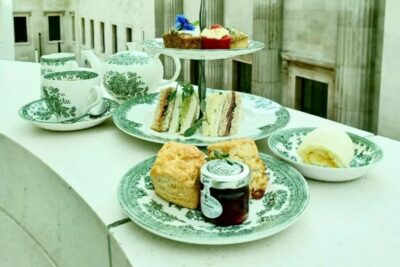
British Museum Archaeology Course and Guided Tour
Read our review →
British Museum Highlights Guided Small Group Tour
Read our review →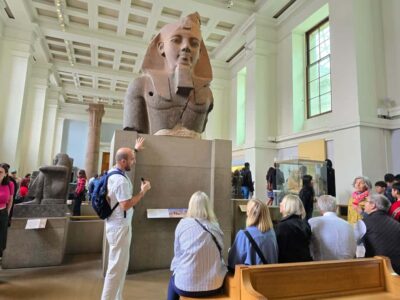
British Museum Guided Tour with Priority Entrance
Read our review →
Browse the lists this tour appears in