
Reviewed · MUSEUMS
London: Florence Nightingale Museum Ticket
Florence Nightingale’s famous lamp is here, along with her medicine chest and the preserved figure of her pet owl, Athena. Those objects give this small museum a human scale. You are not just reading about a reformer from a textbook. You are seeing the tools, keepsakes, and personal details connected to her work.
I like the clear medical focus, especially the way the exhibits explain how Nightingale changed nursing and argued for better healthcare for ordinary people. I also like the central location, inside St Thomas’ Hospital and a short walk from the London Eye and Houses of Parliament. The main drawback is that opening is limited to Tuesday through Sunday, so you need to check the calendar before building it into a packed London day.
Key points to know before you go

- See the actual lamp linked to The Lady with the Lamp, one of the museum’s most important objects.
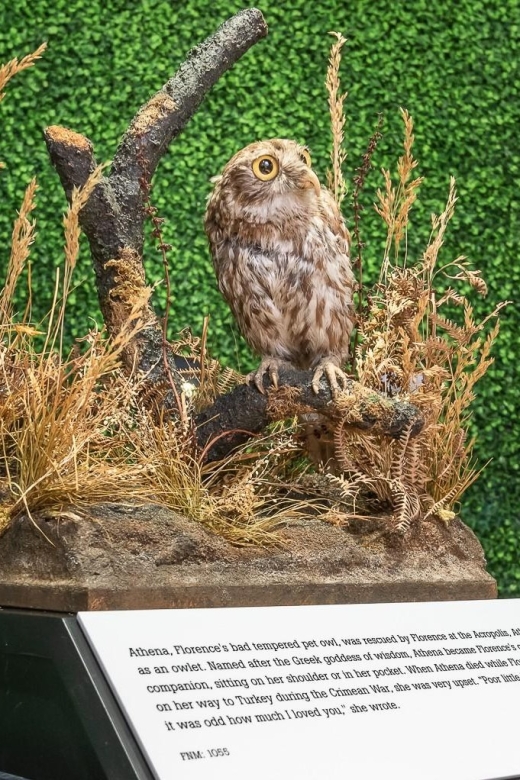
- Meet Athena, Florence Nightingale’s pet owl, a memorable personal detail among the medical displays.
- Follow her story from affluent childhood to Crimean War service, then into her campaign for better healthcare.
- Expect a compact, focused museum, rather than a large general medical collection.
- Visit easily from central London, with St Thomas’ Hospital close to the London Eye and Parliament.
- Plan around Tuesday to Sunday hours, with last admission at 4:30 p.m. except on the monthly late-opening evening.
Why Florence Nightingale’s lamp still matters
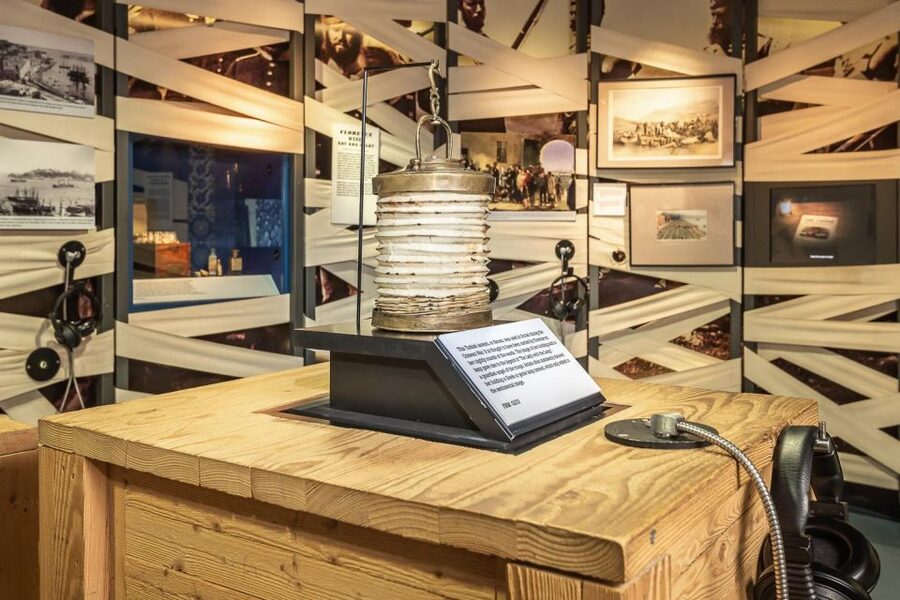
The museum’s best-known object is the lamp associated with Nightingale’s work during the Crimean War. This is the item behind her lasting nickname, The Lady with the Lamp. Seeing it in person gives the story a useful anchor, especially if you know Nightingale mainly as a name from school lessons.
The lamp is not important simply because it is famous. It represents the way her public image grew from practical nursing work. Nightingale became known for visiting wounded soldiers at night, but her influence reached far beyond bedside care. Her work also involved organization, sanitation, training, statistics, and pressure for changes in healthcare.
That wider story is where the museum earns its place. You can connect the familiar image of the lamp with the less familiar work that followed. Nightingale did not stop at helping patients directly. She pushed for better systems that could protect many more people.
The exhibit also helps explain why she remains important to nursing history. Her achievements were not limited to one wartime setting. She contributed to the art and practice of nursing, then campaigned for better treatment of ordinary people. If you want a quick portrait of her public legacy, the lamp is the obvious starting point. If you want to understand her real impact, give the surrounding medical information time.
More Museum Tours in London
- London: Chelsea Football Club Stadium and Museum Tour
★ 4.8 · 4,576 reviews - London: British Museum Guided Tour
★ 4.3 · 1,182 reviews - London: Jack the Ripper Museum Tickets
★ 4.2 · 894 reviews
From wealthy family to determined nurse
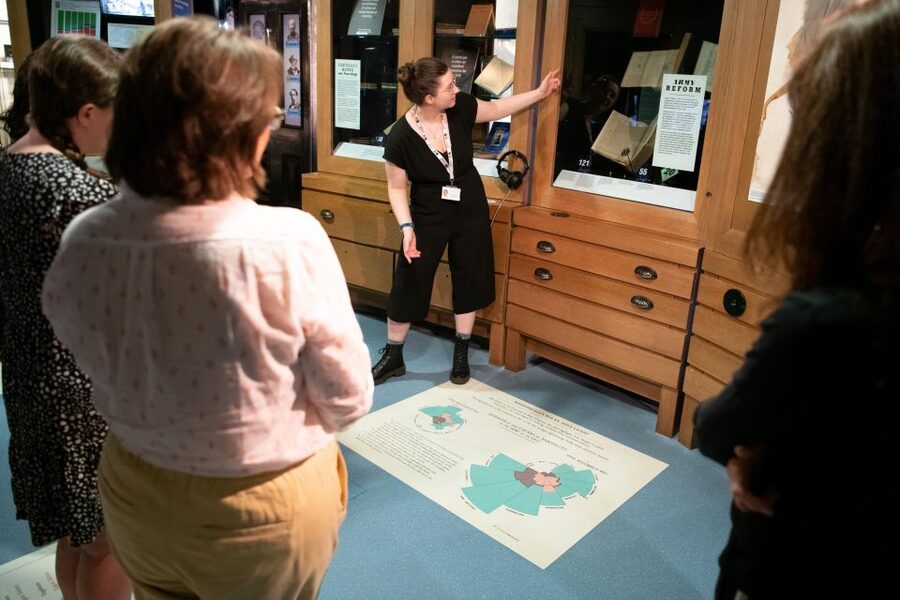
A key part of the museum experience is Nightingale’s early life. She grew up in an affluent family, and her decision to become a nurse went against her parents’ wishes. That detail gives the story some tension. Nursing was not the expected path for a woman from her social position, and her choice required persistence.
The museum places her later work in that personal setting. You see not only the celebrated nurse, but also the young woman who had to fight for the right to follow her own calling. Her family and childhood matter because they help explain how unusual her decision was.
I find this section especially useful for visitors who know the legend but not the person. The story is more than an old-fashioned tale about kindness. Nightingale made a deliberate choice, faced resistance, and built a working life around healthcare when doing so challenged social expectations.
The collection also includes personal objects that bring her private world closer. Athena, her pet owl, is an unexpectedly charming part of the visit. The owl adds a touch of oddness and warmth to a story that can otherwise feel dominated by war, disease, and institutional reform.
The Crimean War story and the work behind the legend
Nightingale’s Crimean War service is central to the museum’s account. You can learn about her work during the war and how the famous public image developed from those experiences. The displays connect her practical nursing role with the broader medical problems she encountered.
This is important because the lamp can make the story sound almost romantic. The museum’s medical information gives you a more serious view. Nightingale’s work was tied to difficult conditions and the need for better care. The strongest part of the experience is the link between the personal story and the medical facts.
One recent visitor particularly valued the extent of the medical information and found the material meaningful as someone living with illness. That points to one of the museum’s strengths. It is not only a biographical display for history fans. The information can also speak to people interested in medicine, nursing, disability, and the way healthcare affects everyday life.
The museum also presents Nightingale’s interaction with very young children. These details help soften the war narrative and show a different side of her work. I would pay attention to the small human moments, not just the famous milestones. They help you picture Florence as a working person dealing with real patients, rather than as a distant historical symbol.
The medicine chest and Florence’s working life
The medicine chest is another object worth seeking out. It gives the collection a practical edge. A lamp can become an icon, but a medicine chest reminds you that nursing depended on equipment, preparation, and hands-on care.
Objects like this also help explain how far medical practice has changed. You can look at the chest and think about what nurses had available in Nightingale’s time, then connect that limited toolkit with her push for better healthcare. The museum does not need a huge number of objects to make that point. A few well-chosen items can carry a lot of meaning.
As you move through the collection, look for the balance between Florence’s family background, her work, and her public campaigns. The visit is most satisfying when you treat it as a story with several stages:
- Her affluent childhood and family setting
- Her decision to pursue nursing against parental wishes
- Her work during the Crimean War
- Her continuing campaign for better healthcare
- Her lasting contribution to nursing
That sequence makes the museum easy to follow. You are not left with isolated facts. You can see how one phase of her life led into the next.
A few more London days worth weighing up
- From London: Harry Potter Warner Bros Studio Tour
★ 4.7 · 26,588 reviews - London: Westminster to Greenwich River Thames Cruise
★ 4.5 · 22,836 reviews - Magical London: Harry Potter Guided Walking Tour
★ 4.7 · 22,044 reviews - London: Madame Tussauds London
★ 4.6 · 20,915 reviews
A small museum with a clear purpose
This is a focused museum, not an all-day institution with several large wings. The ticket is valid for one day, and you can enter at any time during opening hours on your booked date. That flexibility works well if you are combining the museum with nearby sights.
At $16 per person, the value depends on your interest. If you are passionate about nursing, healthcare, social reform, or Victorian history, the price is reasonable for a dedicated collection about one important figure. Families with children may also find the personal objects and owl more approachable than a purely medical display.
If Florence Nightingale is only a vague name to you, the museum can still work as a short, meaningful stop. Just keep your expectations in check. This is not a major London attraction that will fill half a day. It is better viewed as a compact visit that adds depth to a walk along the South Bank.
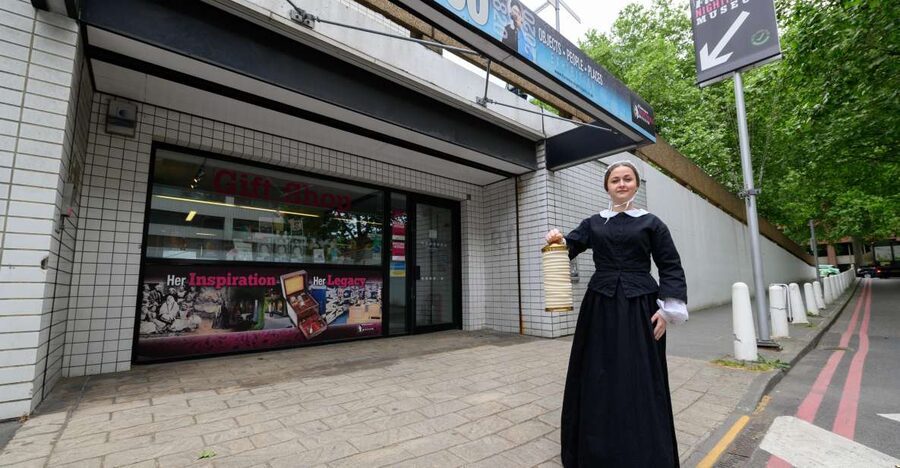
The central setting improves the value. The museum is in the grounds of St Thomas’ Hospital, at parking level, and is a short walk from the London Eye and Houses of Parliament. You can pair it with a riverside outing or visit it before or after other central London plans. The location means you do not need to make a separate journey across the city for it.
How to fit the museum into a London day
The museum opens Tuesday through Sunday from 10 a.m. to 5 p.m., with last entry at 4:30 p.m. It is closed on Mondays according to the stated schedule, so do not assume you can drop in any day of the week.
I would allow enough time to read the medical and biographical material without rushing. No exact visit length is specified, so your time will depend on how closely you study the displays. A visitor who wants only the lamp, owl, and main story can make a shorter stop. Someone interested in nursing history or medical information should leave more breathing room.
The museum opens late until 8 p.m. on the last Thursday of the month, with last admission at 7:30 p.m. There is a cash and card bar in the museum shop from 5 p.m. on that evening. The late opening does not apply in December, so check the date carefully if you are visiting during the holiday season.
Food and drinks are not allowed inside. That is easy to manage, especially with the South Bank nearby, but it is worth knowing before you arrive. Plan your coffee or snack for before or after the visit rather than carrying it into the galleries.
The meeting point is not a separate street-front attraction. Look for St Thomas’ Hospital signage and follow signs to the Florence Nightingale Museum. The museum is located at parking level within the hospital grounds. A little attention to the signs will save you from wandering around a large medical complex.
Who will get the most from this visit
I would recommend the museum most strongly to people with a direct interest in nursing, medicine, public health, or social reform. It also suits anyone studying Florence Nightingale or looking for a quieter historical stop near the main South Bank sights.
Families can use the museum to introduce children to Nightingale through the lamp, the owl Athena, and the story of a young woman who challenged her parents’ wishes. The material may be most useful for older children and teenagers who can connect the personal story with the medical information, though the experience is not limited to school groups.
People with a personal connection to illness or healthcare may also find the medical displays especially significant. One recent visitor found the extent of that information particularly powerful. The museum gives you a chance to think about nursing as both human care and organized medical work.
It is less suitable if you want a grand, highly theatrical attraction or a long guided tour. The ticket provides museum entry, and English is the listed language. There is no named guide included in the information, so you should approach it as a self-guided museum visit rather than a tour led by a specialist.
The activity is listed as a small group with a limit of nine participants, and it is wheelchair accessible. Those details make the setting feel more manageable, though you should still follow the hospital signs carefully when arriving.
Booking flexibility and practical value
The ticket costs $16 per person and can be canceled up to 24 hours in advance for a full refund. You can also reserve now and pay later, which is useful when your London schedule is still changing.
That flexibility matters here because the museum is tied to specific opening days and hours. If you are planning around the London Eye, Parliament, or other South Bank stops, reserving a ticket without paying immediately can help you hold the plan while keeping room for weather and timing changes.
The 4.7 rating from 54 reviews suggests a consistently positive experience, but I would still judge the ticket by your interests. The high marks make sense for a visitor who wants an informative, focused look at Nightingale’s life. They are less useful if you expect a large museum or a full-day attraction.
The strongest praised features are the easy booking process, timely reminders, the quality of the museum information, and the medical content. Those practical details matter. A museum can have an important subject but still be frustrating if the visit is poorly organized. Here, the ability to enter during the booked date and the clear opening times make planning straightforward.
Should you book the Florence Nightingale Museum?
Book it if you want to understand the person behind The Lady with the Lamp. The lamp is the headline object, but the museum’s real value comes from the wider story: an affluent childhood, opposition from her parents, wartime nursing, medical work, and a long campaign for better healthcare.
I especially recommend it if you are already visiting the London Eye or Parliament. The museum is close enough to fit into a South Bank walking plan, and the $16 price is fair for a specialized collection with authentic personal and medical objects.
Skip it if your London schedule is extremely tight, you are visiting on a Monday, or you want a large museum with hours of entertainment. For everyone else, this is a thoughtful short stop with genuine historical weight, a famous lamp, an owl named Athena, and a clear reminder that Nightingale’s greatest contribution was not a nickname, but lasting change in nursing and healthcare.
FAQ
Where is the Florence Nightingale Museum?
The museum is in the grounds of St Thomas’ Hospital at parking level. It is a short walk from the Houses of Parliament and the London Eye. Follow St Thomas’ Hospital signage to find the museum.
What are the museum’s opening hours?
It is open Tuesday through Sunday from 10 a.m. to 5 p.m. Last entry is at 4:30 p.m.
Does the museum open late?
Yes. On the last Thursday of each month, it stays open until 8 p.m., with last admission at 7:30 p.m. There is no late opening in December.
What can I see inside the museum?
You can see authentic artifacts connected with Florence Nightingale, including her famous lamp, medicine chest, and pet owl Athena. Exhibits cover her childhood, family, nursing career, Crimean War work, and healthcare campaigns.
Is the museum wheelchair accessible?
Yes. The activity information states that the Florence Nightingale Museum is wheelchair accessible.
Can I cancel my ticket?
Yes. You can cancel up to 24 hours in advance for a full refund.
Can I reserve now and pay later?
Yes. The ticket can be reserved with payment made later, allowing you to keep your London plans flexible.
More Museums in London
- London: Tour of the British Museum
★ 4.1 · 678 reviews - London: British Museum Audio Tour & Priority Entrance Ticket
★ 4.5 · 631 reviews - Afternoon Tea at the British Museum
★ 4.2 · 511 reviews - London: Paradox Museum Entry Ticket
★ 3.9 · 441 reviews
Just added around London
- London: Wimbledon Tennis Club and Westminster Walking Tour★ 4.5 · 86 reviews
- London: Westminster to Richmond River Thames Cruise★ 4.8 · 23 reviews
- Westminster Abbey Skip-the-Line Entry and Private Tour★ 4.6 · 4 reviews
- Best of London by LE GRAND – London’s Luxury Bus Tour★ 4.2 · 23 reviews
- London: Westminster Walking Tour & St Paul’s Cathedral Entry★ 4.7 · 7 reviews
- From London: Oxford, Stratford-upon-Avon & Cotswolds Trip★ 4.5 · 64 reviews
- From London: Warwick, Oxford, Stratford & Cotswolds Day Tour★ 4.0 · 270 reviews
- Warner Bros. Studios and 1-Day London Hop-on Hop-off tour★ 4.7 · 9 reviews
Museums, compared.
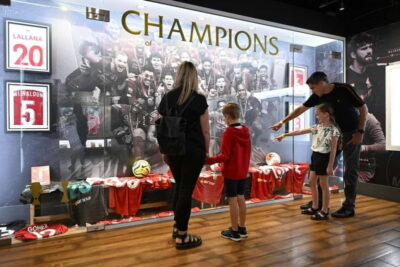
Liverpool Football Club Museum and Stadium Tour
Read our review →
Chelsea Football Club Stadium and Museum Tour
Read our review →




British Museum Audio Tour & Priority Entrance Ticket
Read our review →Browse the lists this tour appears in