
Reviewed · MUSEUMS
London: Household Cavalry Museum Entry Ticket
The most memorable part of the Household Cavalry Museum is not behind a glass case. It is the view into the working 18th-century stables, where you can watch troopers and horses carry on their daily routine inside a building still used by the Household Cavalry. You are looking at an active military headquarters, not only a historical exhibit.
I like the museum’s personal accounts from troopers, which make the training and duties easier to understand. I also like the rare objects and interactive displays, especially because they explain the two senior regiments, the Life Guards and the Blues and Royals, without requiring a long guided tour.
The main drawback is its size. You should allow at least 60 minutes, but this is a compact museum, not a full-day attraction. There is no tour guide or audio guide, and the visit is in English, so readers wanting a large collection or extensive multilingual interpretation may find it too brief.
Key points to know before you go
- See horses in active service: A large glazed partition looks into the original 18th-century stables.
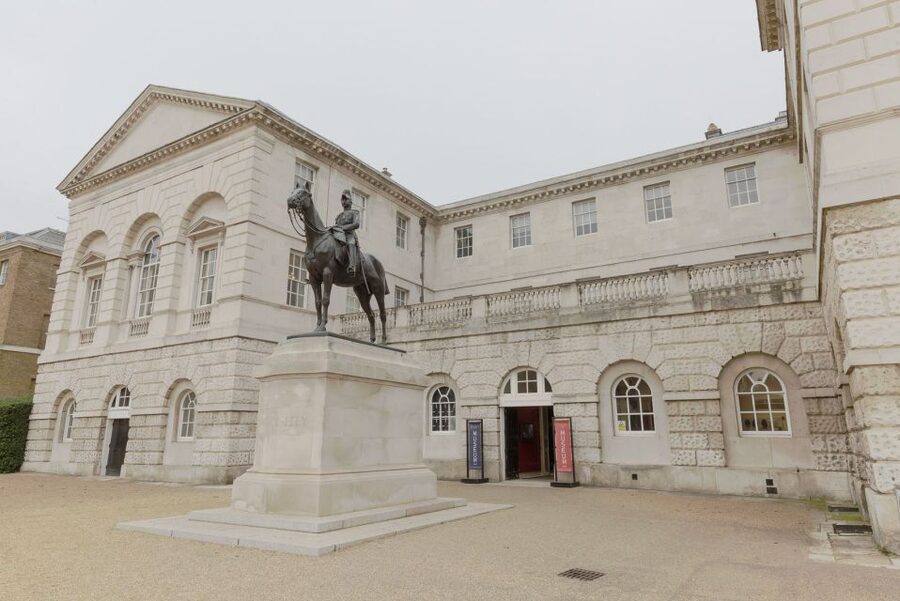
- Explore a 1750 building: Horse Guards remains the headquarters of the Household Division.
- Meet the regiments through their work: Learn about the Life Guards and the Blues and Royals.
- Hear troopers explain the job: Personal accounts cover demanding training and military duties.
- Plan a one-hour visit: The museum is wheelchair accessible and valid for one day, but it is relatively small.
- Expect a self-guided English visit: No guide or audio guide is included.
Inside Horse Guards, where museum and military base meet
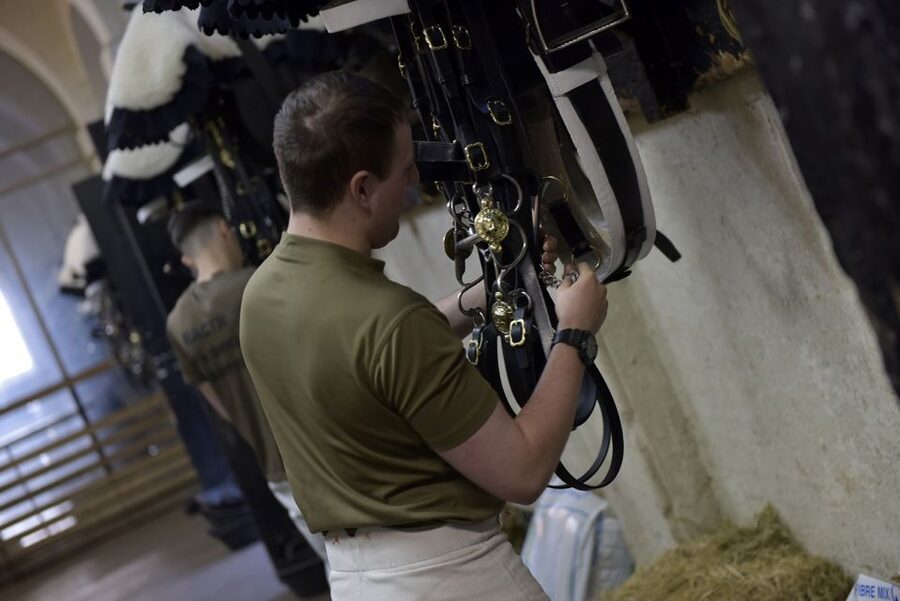
The Household Cavalry Museum sits in Horse Guards on Whitehall, in central London. You meet directly at the museum, so there is no separate coach transfer or complicated meeting arrangement to manage.
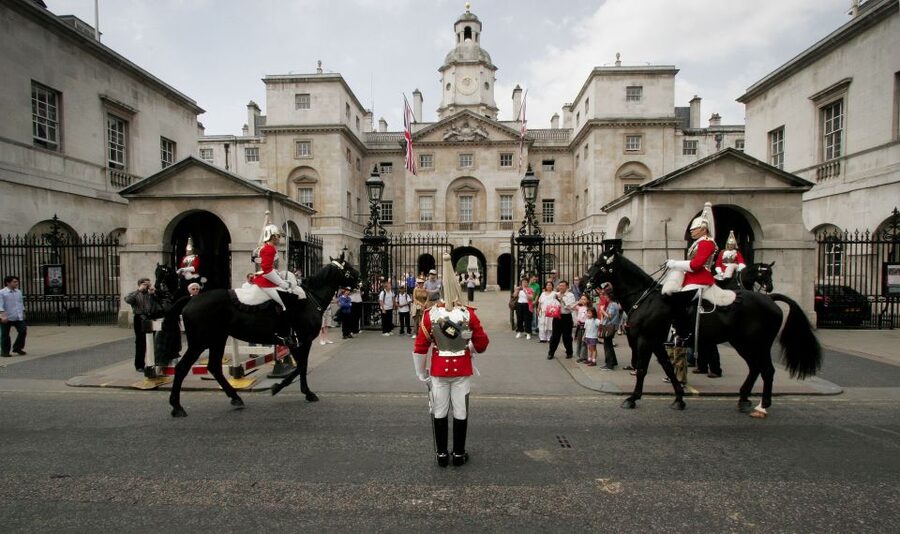
The setting gives this visit its special character. The building dates from 1750, and it still serves as the headquarters of the Household Division. The Household Cavalry has performed the Queen’s Life Guard for more than 350 years, so the rooms around you are tied to a continuing military role rather than a retired chapter of British history.
That distinction matters. You are not simply entering a display hall filled with uniforms and weapons. You are visiting a place connected to the daily work of the mounted guards. The museum lets you look backward while also showing that the institution remains active.
The entrance is at the Household Cavalry Museum itself. Since the ticket is valid for one day rather than a fixed tour time, you can fit it around nearby sights in Whitehall. This is useful if you are already visiting the area and want a short, focused stop rather than another scheduled activity.
More Museum Tours in London
- London: Chelsea Football Club Stadium and Museum Tour
★ 4.8 · 4,576 reviews - London: British Museum Guided Tour
★ 4.3 · 1,182 reviews - London: Jack the Ripper Museum Tickets
★ 4.2 · 894 reviews
The glazed window into the 18th-century stables
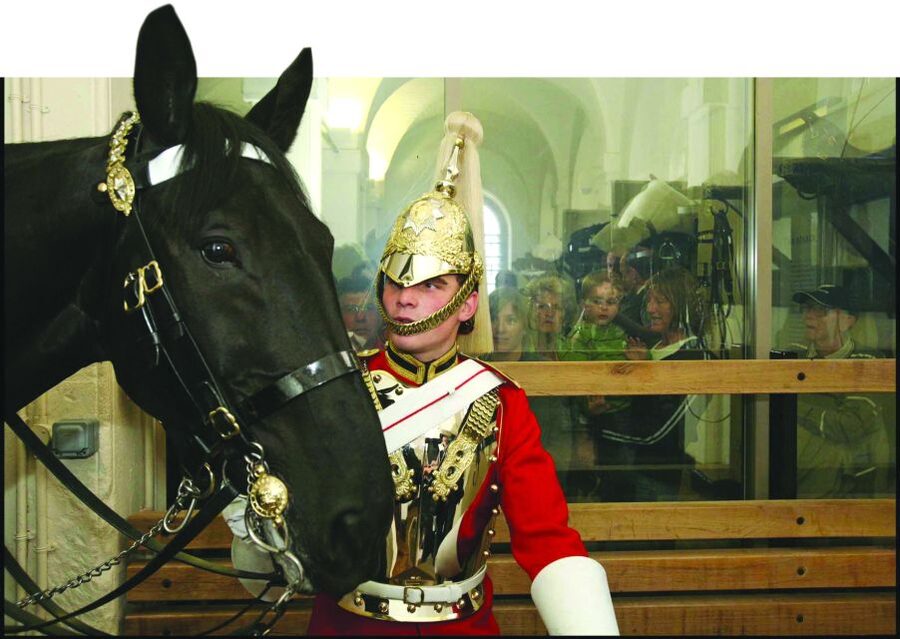
The stables are the heart of the experience. A large glazed partition gives you a view into the original 18th-century stable area, where working troopers and horses can be seen. The glass keeps the public separated from the active stable while still giving you a direct sense of the setting.
This is much more meaningful than looking at a model or a staged display. You can see the kind of space connected with the Household Cavalry’s daily responsibilities. The atmosphere depends on what is happening during your visit, so do not expect a timed performance or a guaranteed horse presentation. The value comes from seeing a working part of the building as it is used.
If you have children with you, this may be the feature that holds their attention first. The horses provide an immediate point of interest, while the displays nearby explain why the animals and riders require such strict training. The museum works best when you move between the real stables and the exhibits that explain them.
There is an important expectation to set. This is not a large public stable tour, and the visitor area does not give you unrestricted access to the horses or troopers. One particularly critical assessment found the museum too small and felt it did not offer enough of a stable experience. That is fair if you are booking mainly for an extended horse encounter.
I would book it for the combination of a working stable view and military interpretation, not for a long hands-on animal visit.
Trooper accounts that explain the demanding training
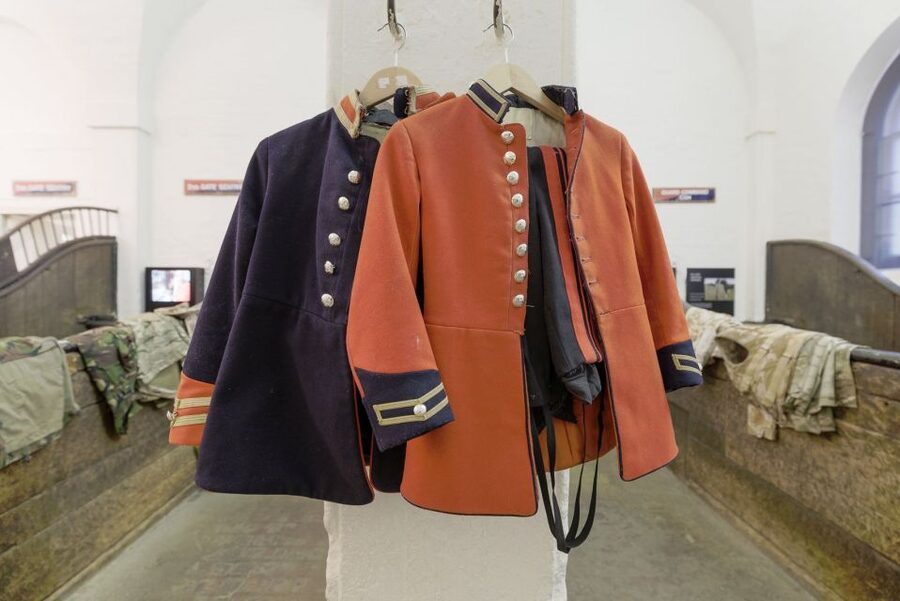
The museum uses personal accounts from troopers to explain the work. These first-hand stories cover rigorous training and the demands placed on members of the Household Cavalry.
That personal angle helps answer questions that uniforms alone cannot. You learn that ceremonial duties depend on preparation, discipline, and physical control. The accounts give the displays a human scale, showing how the job affects the people who perform it.
I find this especially useful for visitors who know the Horse Guards mainly from photographs. The polished uniforms and mounted appearances can make the role look effortless. The museum points you toward the work behind that appearance, including the training needed to manage horses and carry out formal duties.
Because the visit is self-guided, you control the pace. You can spend more time with an account or display that catches your interest, then move on when you have had enough. The tradeoff is that nobody is there to answer questions or add context in person.
The museum does not include a tour guide. It also does not provide an audio guide, and the interpretation is in English. If you want a detailed spoken explanation, you will need to read the displays carefully and bring your own background knowledge.
For most English-speaking visitors with a general interest in British military history, the written material and first-hand accounts should make the visit clear enough. If English is not comfortable for you, allow extra time for reading.
Rare objects and interactive displays
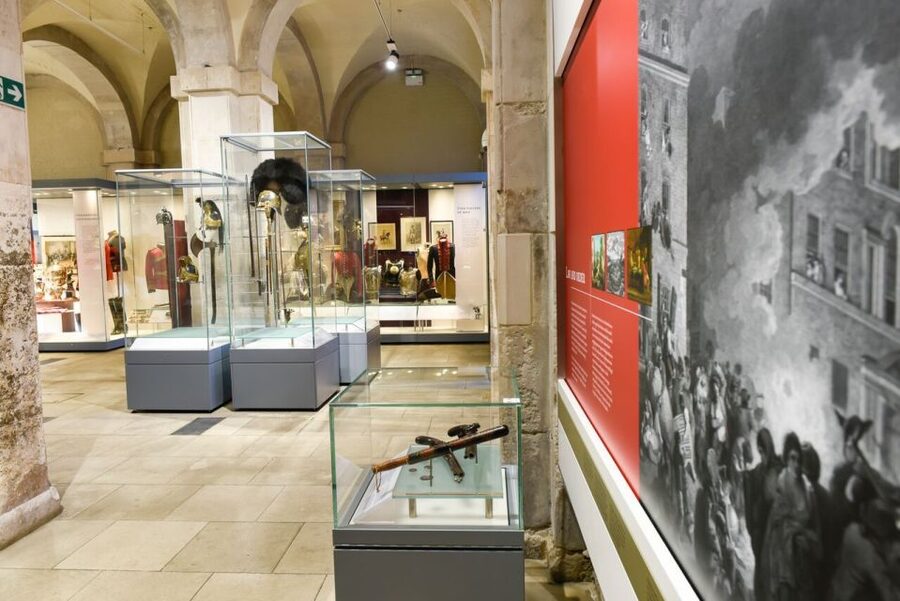
The collection includes rare objects, with some put on public display for the first time. The exact objects on view can change, but the general aim is clear: connect the physical items with the people, buildings, and regiments behind them.
You will also find interactive displays about the story of the building and the Household Cavalry. These are useful because the subject covers several layers at once: royal protection, military service, ceremonial duties, horses, uniforms, and the history of the two regiments.
The Life Guards and the Blues and Royals are the two senior regiments of the British Army featured here. The museum helps you separate their identities and understand their place within the Household Division. You do not need to arrive with a detailed knowledge of British military organization.
The exhibits should appeal most to you if you enjoy objects with a clear connection to service. A rare item is more interesting when you understand who used it and why it mattered. The interactive elements help provide that setting without turning the museum into a purely academic collection.
Still, the museum’s compact size shapes the visit. You will not find the enormous range of a national museum, nor should you expect hours of galleries. One enthusiastic assessment described it as a unique collection and good value, while another found it too limited. Both reactions make sense. Your enjoyment will depend on whether you prefer a short, concentrated museum or a large institution with many rooms.
A few more London days worth weighing up
- From London: Harry Potter Warner Bros Studio Tour
★ 4.7 · 26,588 reviews - London: Westminster to Greenwich River Thames Cruise
★ 4.5 · 22,836 reviews - Magical London: Harry Potter Guided Walking Tour
★ 4.7 · 22,044 reviews - London: Madame Tussauds London
★ 4.6 · 20,915 reviews
A closer look at the Queen’s Life Guard tradition
The Household Cavalry’s role in performing the Queen’s Life Guard for more than 350 years gives the museum a strong sense of continuity. The building, the stables, the uniforms, and the troopers’ accounts all point to a duty that has continued across generations.
This long period also explains why the museum is more than a collection about horses. The mounted guard is part of the British Army and the Household Division, with ceremonial responsibilities linked to the monarchy. The exhibits place those public appearances beside the training and organization that make them possible.
I like this balance. You get the visual appeal of the Horse Guards, but the museum does not stop at uniforms and pageantry. It shows the institution as a working military body. That makes the visit more useful for anyone who wants context rather than a quick photograph outside.
At the same time, the museum cannot cover every part of British military history. Its focus remains narrow: the Household Cavalry, its two senior regiments, its building, its horses, and its duties. If your main interest is a broad account of the British Army, you may want to pair this stop with another museum.
How long to spend and how to fit it into London
The stated minimum visit time is 60 minutes. I would plan about an hour if you read at a steady pace and spend time at the stable window. You may stay longer if a particular account or interactive display catches your attention, but the museum is not designed as a full-day outing.
The one-day validity gives you flexibility. You can visit when it suits your Whitehall plans instead of committing to a tightly timed experience. That is a practical advantage in London, where queues, weather, and nearby attractions can alter your schedule.
The museum works well as part of a central London walking day. Its location in Whitehall places it within an area filled with major government and royal landmarks. The ticket is most useful when you are already planning to be nearby, since the museum itself is a focused stop rather than a destination requiring an entire day.
There is no need to arrive for a specific guided departure. The booking allows access during the selected day, with availability and starting times checked when you reserve. It is still sensible to check the current opening details before setting out, since the attraction is connected to an active military site.
Is the $14 ticket good value?
At $14 per person, the ticket is reasonably priced for a central London museum with access to an active stable area and a historic building. The value is strongest if you are interested in British military history, royal ceremony, uniforms, or working horses.
The price also compares well with the time commitment. You are not paying for a long guided excursion with transport, meals, or a large itinerary. You are paying for a compact museum visit that can fit into an existing day.
I would not call it a bargain for every visitor. If you want a big museum with many galleries, several languages, or a long horse-focused experience, the small scale may leave you wanting more. One critical response described the experience as too little, while strong assessments praised its interest, uniqueness, and family appeal.
That split is useful advice. The ticket is good value when the subject matches your interests. It is less convincing as a general sightseeing purchase made only because the museum is near other attractions.
Who will enjoy the Household Cavalry Museum most?
I would recommend this visit to:
- Families looking for a manageable museum with real horses nearby.
- Anyone interested in the British Army or royal ceremonial traditions.
- Visitors who want a short Whitehall stop with a distinctive setting.
- People curious about how mounted guards train and work.
- Fans of uniforms, military objects, and personal accounts.
- Visitors who prefer to explore independently rather than join a group tour.
I would be more cautious if you need a guide, an audio tour, or non-English interpretation. I would also think twice if you are booking mainly for direct contact with horses. The glass partition provides a valuable view, but it is not the same as entering the stable or meeting the animals.
The museum is wheelchair accessible, which makes it easier to include in a central London day. Pets are not allowed, although assistance dogs are permitted.
You can cancel up to 24 hours in advance for a full refund, and the reserve-now, pay-later option keeps your plans flexible. Those terms are useful in London, where a packed schedule can change quickly, but they do not alter the museum’s basic character: a short, self-guided visit with a strong military focus.
My practical verdict
Book the Household Cavalry Museum if you want to see the working side of the Horse Guards and understand the Life Guards and Blues and Royals beyond the familiar ceremonial image. The glazed stable view, first-hand trooper accounts, rare objects, and 1750 setting give the visit more substance than a quick look at the guards outside.
Skip it if you expect a large museum, a guided tour, or an extended stable encounter. At $14, I see it as a worthwhile one-hour addition to a Whitehall day, especially for families and military-history enthusiasts. Just set your expectations correctly: this is a compact living museum, not a grand national collection.
FAQ
Where is the Household Cavalry Museum?
The museum is in Horse Guards on Whitehall in central London, in South East England. You meet directly at the Household Cavalry Museum.
How long should I allow for the visit?
You should allow at least 60 minutes. The museum is compact, so most visitors will treat it as a short, focused stop rather than a full-day attraction.
Can I see the Household Cavalry horses?
Yes. A large glazed partition provides a view into the original 18th-century working stables, where you may see troopers and horses. The ticket does not provide unrestricted access to the stable area.
Is a tour guide or audio guide included?
No. The ticket provides museum entry only. The visit is self-guided, and the available interpretation is in English. No audio guide is included.
Is the museum wheelchair accessible?
Yes, the activity is wheelchair accessible.
Can I cancel or change my booking?
You can cancel up to 24 hours in advance for a full refund. The reserve-now, pay-later option lets you keep your travel plans flexible.
More Museums in London
- London: Tour of the British Museum
★ 4.1 · 678 reviews - London: British Museum Audio Tour & Priority Entrance Ticket
★ 4.5 · 631 reviews - Afternoon Tea at the British Museum
★ 4.2 · 511 reviews - London: Paradox Museum Entry Ticket
★ 3.9 · 441 reviews
Just added around London
- London: Wimbledon Tennis Club and Westminster Walking Tour★ 4.5 · 86 reviews
- London: Westminster to Richmond River Thames Cruise★ 4.8 · 23 reviews
- Westminster Abbey Skip-the-Line Entry and Private Tour★ 4.6 · 4 reviews
- Best of London by LE GRAND – London’s Luxury Bus Tour★ 4.2 · 23 reviews
- London: Westminster Walking Tour & St Paul’s Cathedral Entry★ 4.7 · 7 reviews
- From London: Oxford, Stratford-upon-Avon & Cotswolds Trip★ 4.5 · 64 reviews
- From London: Warwick, Oxford, Stratford & Cotswolds Day Tour★ 4.0 · 270 reviews
- Warner Bros. Studios and 1-Day London Hop-on Hop-off tour★ 4.7 · 9 reviews
Museums, compared.

Liverpool Football Club Museum and Stadium Tour
Read our review →
Chelsea Football Club Stadium and Museum Tour
Read our review →




British Museum Audio Tour & Priority Entrance Ticket
Read our review →Browse the lists this tour appears in