
Reviewed · MUSEUMS
London: The Moonwalkers: A Journey with Tom Hanks Exhibition
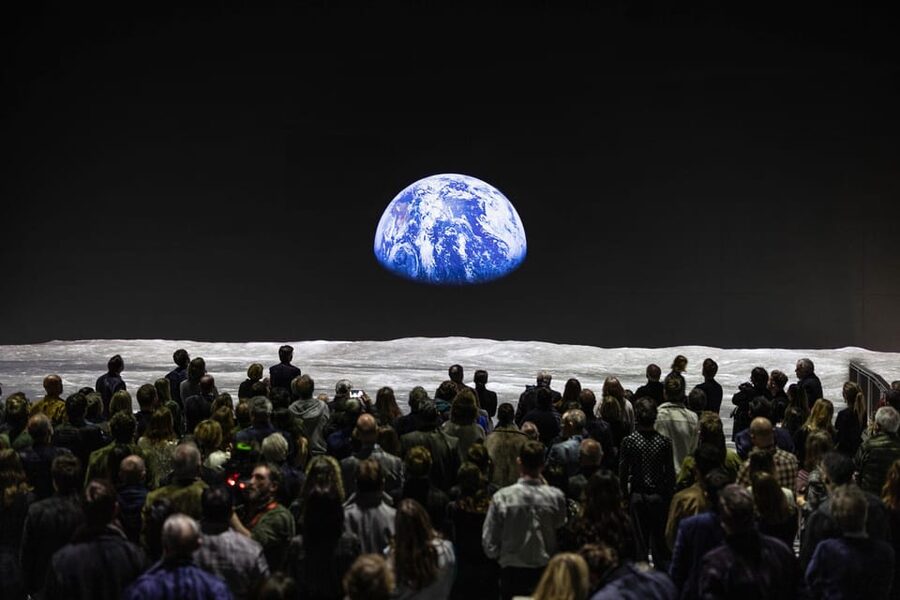
The Moonwalkers turns the Apollo missions into a giant-screen film, with Tom Hanks guiding you from the first lunar voyages toward NASA’s planned return to the Moon. It combines old mission footage, new interviews, Lightroom’s huge projections, and an original score by Anne Nikitin.
I like the personal voice from Hanks, who co-wrote the experience with filmmaker Christopher Riley, and I like the link between Apollo and Artemis. You get both the famous old footage and a look at the next generation of crewed Moon missions. The main drawback is simple: this is a 50-minute audio-visual screening, not a hands-on exhibition, so the price may feel high if you expect displays or a longer visit.
Key points to know before you book
- Tom Hanks narrates and co-wrote the show: His voice gives the Apollo story a familiar, human guide.
- Apollo and Artemis share the same story: The presentation connects the first Moon landings with NASA’s planned return to the lunar surface.
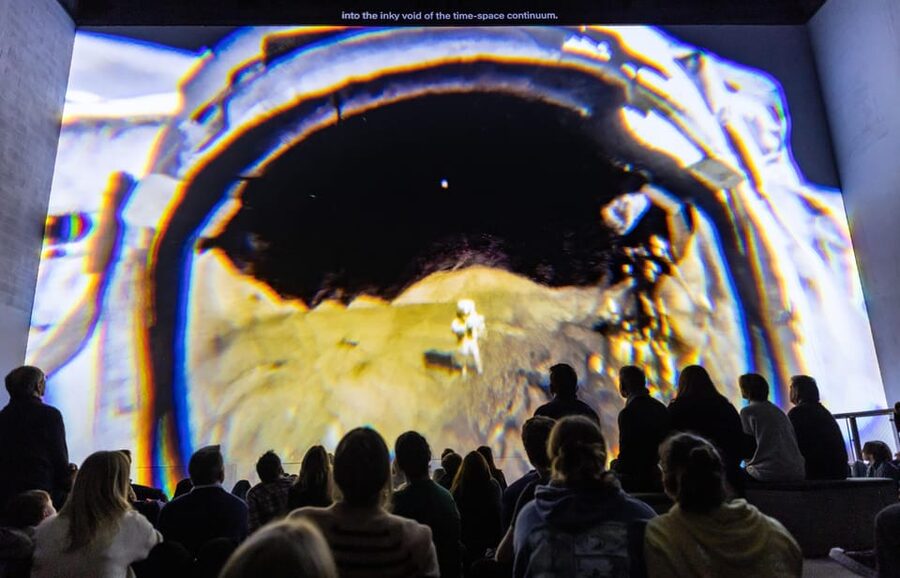
- Lightroom supplies the scale: Powerful projection and sound turn the venue into a giant cinema-like setting.
- Anne Nikitin wrote the original score: Music helps shape the pace and mood of the presentation.
- The main program lasts 50 minutes: Allow about one hour overall, with no food, drinks, or merchandise included.
- Seating may not suit everyone: One point raised about the setup was a wish for seats with backrests.
A giant-screen trip from Apollo to Artemis
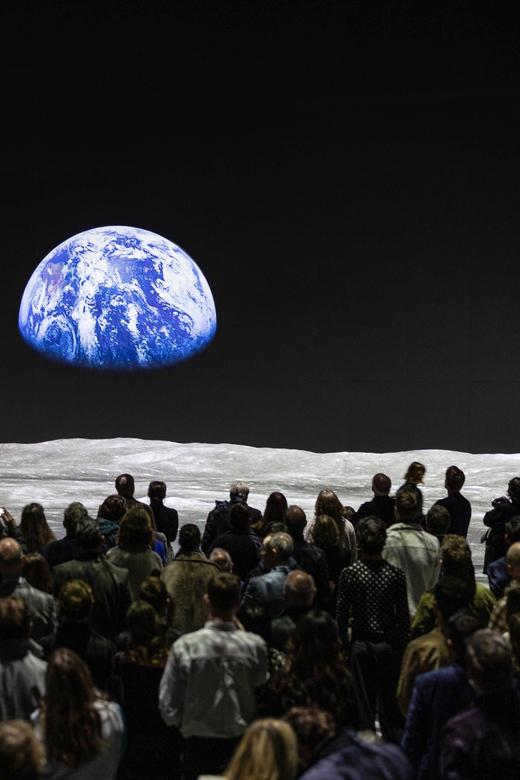
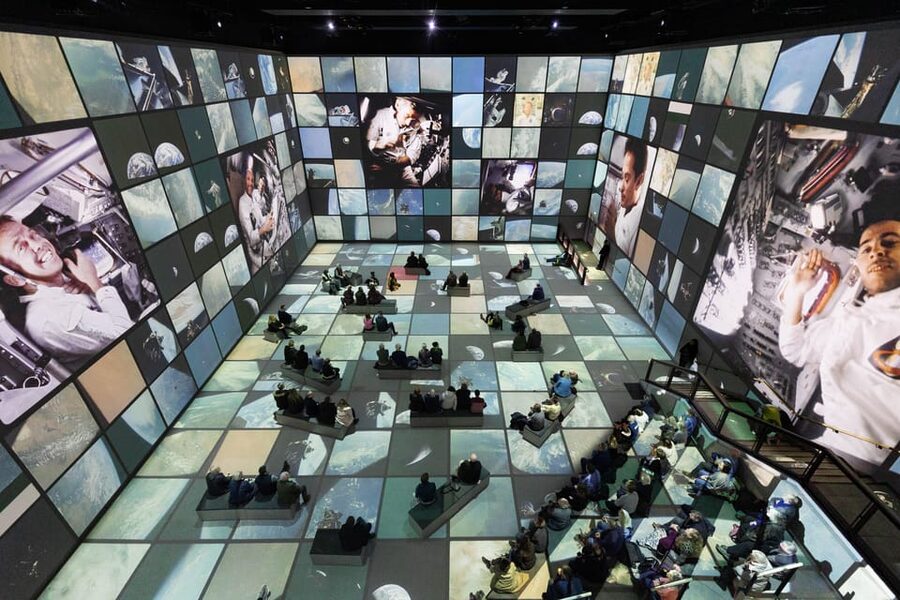
The Moonwalkers is built around a simple idea: tell the story of human voyages to the Moon at a scale that ordinary television cannot match. Instead of moving from case to case in a traditional museum, you watch images spread across Lightroom’s immense projection space.
That difference matters. The Apollo missions are already familiar through books, documentaries, and iconic photographs. The attraction here is the size, sound, and pacing. Lunar images can fill your field of view, while mission footage and narration carry you from one stage of the story to the next.
Tom Hanks is a natural fit for this subject. He has long been associated with popular space storytelling, and his voice gives the production a steady center. You are not following a live guide around a gallery. You are following Hanks through a carefully edited film presentation.
The result should appeal most to people who want a polished, cinematic account of the Moon race. If you prefer buttons to press, spacecraft parts behind glass, or long technical explanations, you may find the format limited.
More Museum Tours in London
- London: Chelsea Football Club Stadium and Museum Tour
★ 4.8 · 4,576 reviews - London: British Museum Guided Tour
★ 4.3 · 1,182 reviews - London: Jack the Ripper Museum Tickets
★ 4.2 · 894 reviews
Apollo missions told through old footage and close detail
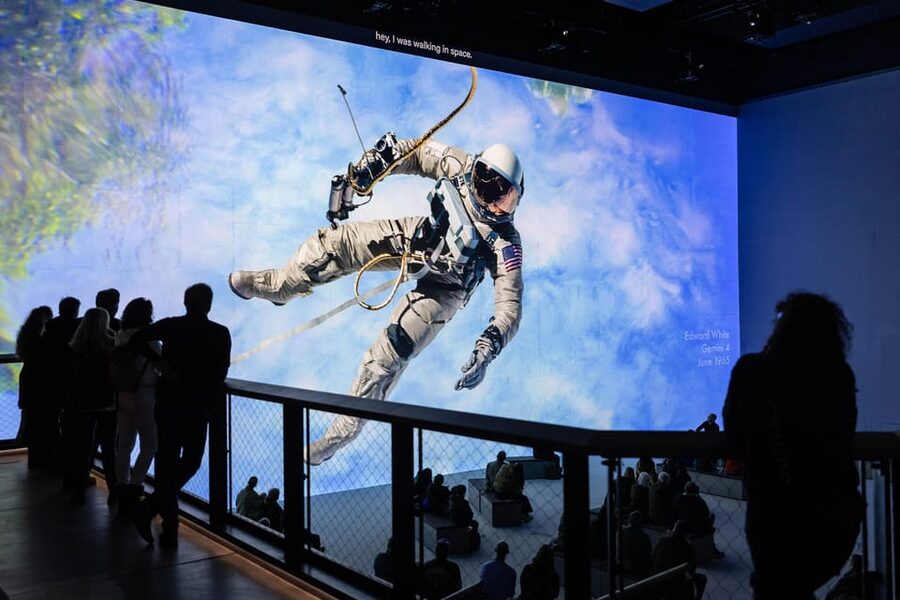
The first major part of the experience focuses on Apollo. The presentation tells the missions in intimate detail, while the projection system gives the material a much larger setting than a standard cinema screen.
You can expect a mix of archival footage and storytelling about the missions themselves. The available information does not provide a mission-by-mission running order, so you should not book this expecting a fixed list of Apollo landings or a detailed technical tour of every spacecraft.
Instead, think of the Apollo section as a broad human story. It looks at the voyages as a sequence of daring attempts, historic achievements, and steps toward a future that is not finished yet. That last point helps keep the show from feeling like a simple celebration of a past era.
I like this approach because it gives the familiar images a fresh setting. You may already know the most famous scenes, but their impact changes when they are part of a continuous presentation across a large room. The soundtrack by Anne Nikitin also gives the story a clear emotional shape without requiring you to read labels or follow a guidebook.
Still, the format asks you to sit and watch. The program lasts 50 minutes, and the experience is closer to a film than to a museum visit. That is useful to know before you spend the money.
Artemis brings the story into the future
The show does not stop with Apollo. It also looks ahead to Artemis, the program connected with the impending return of crewed missions to the lunar surface.
This gives the presentation a useful second half. Apollo can feel like a closed chapter, preserved in grainy footage and famous still images. Artemis changes that feeling by asking what comes next. You are shown the Moon as both a place humans have already reached and a destination they plan to visit again.
The Artemis material includes behind-the-scenes content and interviews between Tom Hanks and Artemis astronauts. The astronauts are not named in the supplied details, but the interview format should give the newer section a direct human voice rather than making it only a technical update.
For me, this Apollo-to-Artemis link is one of the best reasons to book. You are not simply watching a historical film about the 1960s. You are also being introduced to the next stage of lunar exploration, at least in broad terms.
Keep your expectations measured. The description promises insight into Artemis, not a full science lecture or an engineering demonstration. You will likely get context, interviews, and visual storytelling rather than a detailed account of launch systems, mission dates, or astronaut training.
Tom Hanks, Christopher Riley, and Anne Nikitin
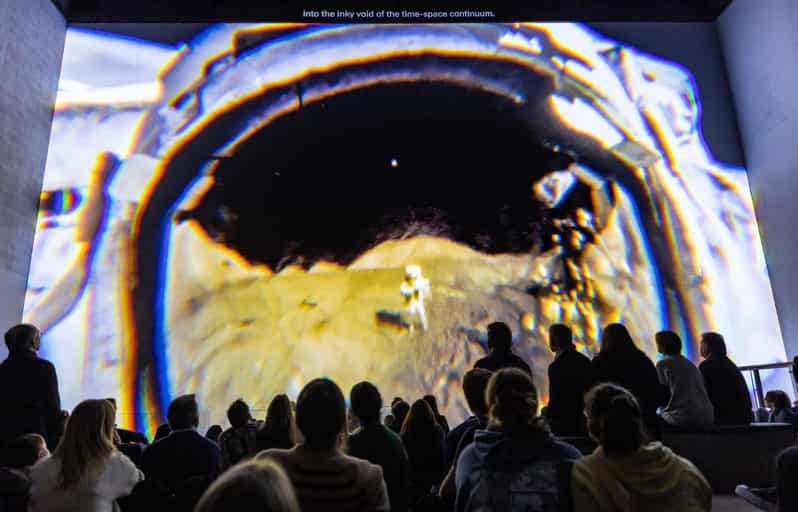
Three names shape the production.
Tom Hanks provides the voiceover and co-wrote the show with Christopher Riley. Hanks brings a familiar, calm presence, while Riley has worked as a writer-director on major space films and television programs for the BBC, Netflix, and PBS. Their partnership suggests a production designed for a general audience, not only for space specialists.
Anne Nikitin wrote the original score. This is more than a small background detail. In a projection-based show, music helps control the rhythm of the experience. It can give quiet images room to breathe, then add momentum when the story shifts toward launch, travel, or the next stage of the program.
You should not expect any of these people to appear in person. Their contribution is through narration, writing, interviews, and music. The live element comes from the room itself, the screen space, and the shared viewing experience.
A few more London days worth weighing up
- From London: Harry Potter Warner Bros Studio Tour
★ 4.7 · 26,588 reviews - London: Westminster to Greenwich River Thames Cruise
★ 4.5 · 22,836 reviews - Magical London: Harry Potter Guided Walking Tour
★ 4.7 · 22,044 reviews - London: Madame Tussauds London
★ 4.6 · 20,915 reviews
Lightroom’s projection room changes the scale
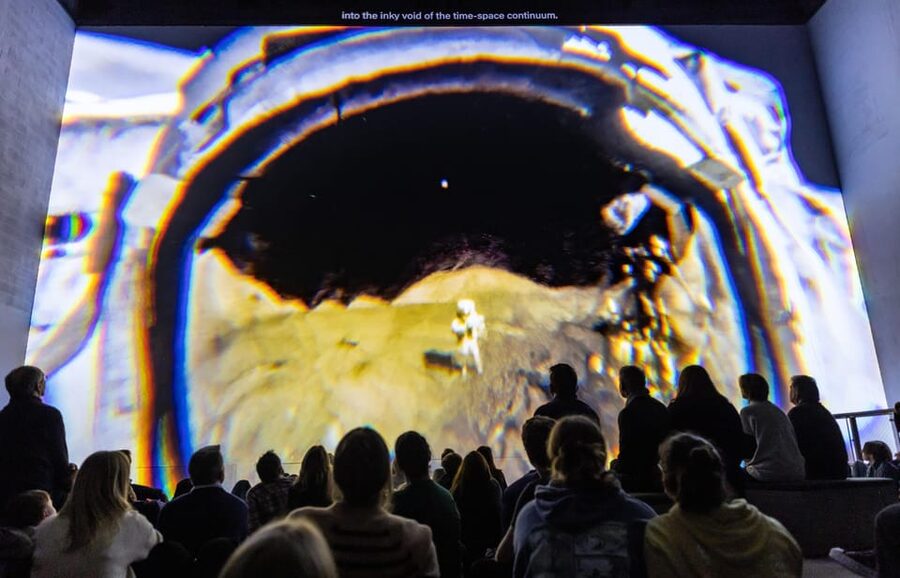
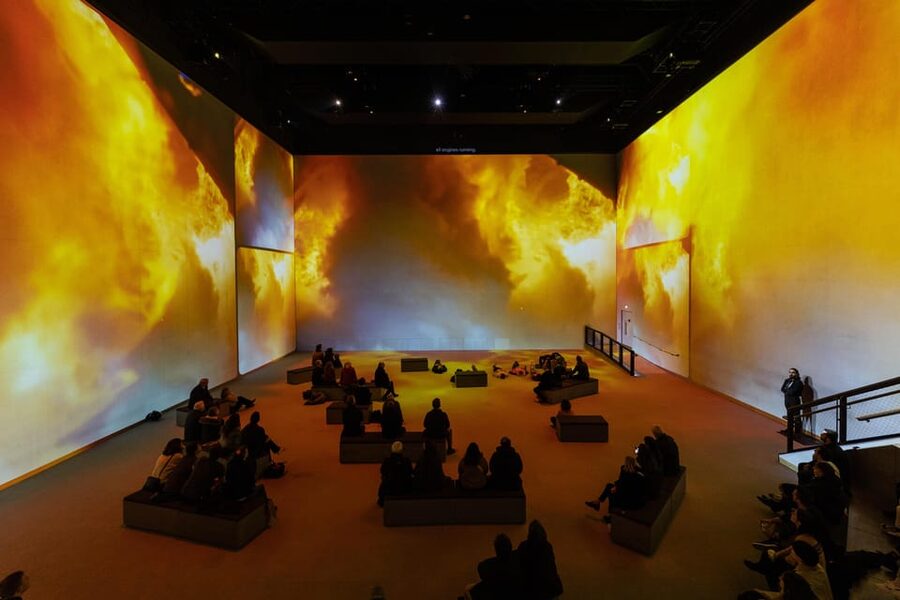
Lightroom’s technology is central to The Moonwalkers. The venue uses large-scale projection and powerful audio to transform the room into a vehicle for the story.
That wording is important. This is not simply a conventional film shown on a large flat screen. The intention is to make the surrounding space part of the presentation. Images can extend across a broad area, giving the Moon, spacecraft, and mission footage a more physical presence.
You should think of the venue as an enormous cinema with a more enveloping picture. The experience depends on light, sound, and scale rather than on objects you can examine up close.
This can be a strong choice for families, couples, and visitors who want a focused indoor activity in London. It also works well for anyone who enjoys documentary films but wants more visual impact than a standard screening offers.
The limitation is that the technology does not turn the program into an interactive attraction. You will not be handling artifacts, inspecting a lunar module, or choosing your own route through the story. Lightroom gives you a set presentation, and everyone watches the same 50-minute program.
What the 50-minute program feels like
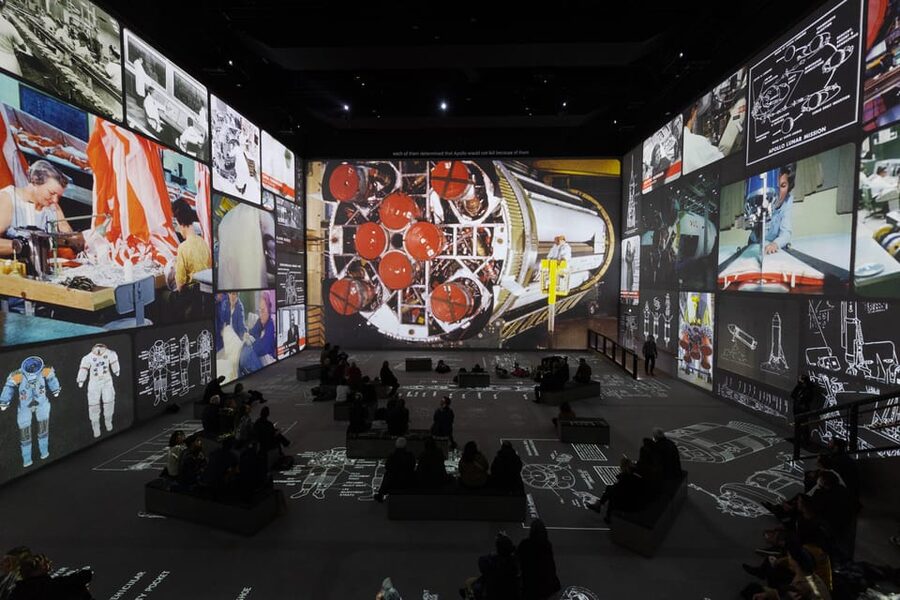
The advertised visit lasts about one hour, with the audio-visual presentation itself running for 50 minutes. That makes this a fairly compact London activity.
You can expect the show to move through the Apollo story, then connect it with Artemis and interviews involving Hanks and Artemis astronauts. The experience is structured for continuous viewing, so it is best to arrive ready to give the program your full attention.
A 50-minute running time has two sides. I like that it fits neatly into a busy day. You can place it between other activities without giving up half a day. It is also long enough to create a sense of occasion without becoming an all-day commitment.
On the other hand, the duration affects the value. At $33.67 per person, you are paying for less than an hour of programmed content. One assessment put the equivalent cost at about £25 and felt that £10 would be more reasonable for a 50-minute screening. That is a fair concern, especially if you judge the attraction by minutes rather than by production scale.
I would book it when the subject and format appeal to you, not simply because you need to fill an hour. If you already enjoy space documentaries, Tom Hanks, or large-format visual shows, the cost may feel easier to justify. If you are looking for a substantial museum visit, you may want to compare it with longer attractions before booking.
Seating, access, and the small-group detail
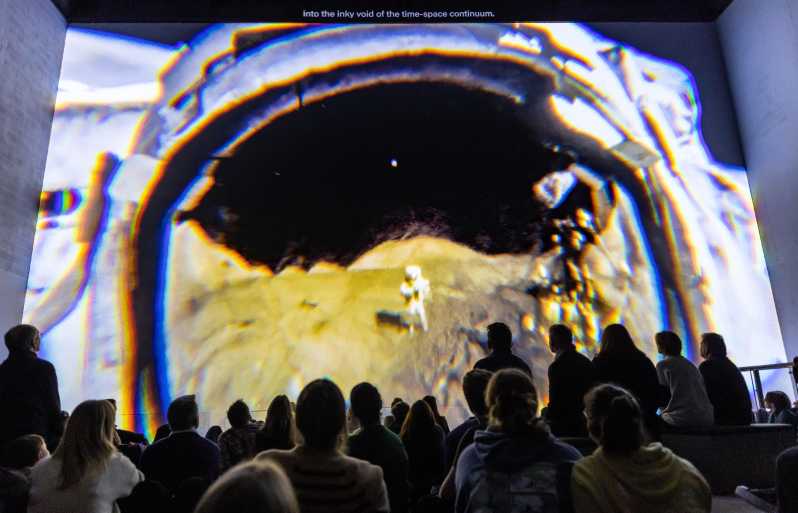
The experience is listed as wheelchair accessible, which makes it a practical option for visitors who need an accessible venue. The provided information does not give detailed seating measurements or describe the exact accessibility arrangements, so you should check with Lightroom if you have specific mobility needs.
The booking information describes the group type as small, limited to nine participants. That can make the visit feel more controlled than a large tour, but the show itself is still a shared screening in a large projection space. The small-group figure should not lead you to expect a private presentation or a personal guide.
Seating is worth considering. A practical criticism of the setup was the lack of backrests on some seats. If you want firm, supported seating for the full 50 minutes, check the current arrangement before you book. This point may matter more to you than the projection technology.
Flash photography is not allowed. Food and drinks are not included, and merchandise is not included either. Those are minor details, but they reinforce the fact that your ticket buys admission to the presentation itself, not a meal, gift, or extended exhibit visit.
Who will get the most from The Moonwalkers
I would recommend this experience to:
- Space fans who want a dramatic presentation of Apollo
- Visitors who enjoy documentary films and large-scale projection
- Families looking for a short, indoor London activity
- People interested in the connection between the Apollo era and Artemis
- Tom Hanks fans who enjoy his narration
- Anyone who wants a planned activity that lasts about an hour
I would be more cautious if you want a traditional museum. The Moonwalkers does not offer a collection of objects, a long route through galleries, or a hands-on program. It gives you a film-led account in a large room.
It may also be less suitable if you dislike fixed seating or find 50 minutes of continuous viewing tiring. Since the seating setup may not include backrests for every seat, this is worth checking in advance.
Is $33.67 good value?
The price is the hardest part to judge. At $33.67 per person, this is not a cheap way to spend an hour in London. You are paying for the venue, the projection system, the audio production, the writing, the score, and the names attached to the presentation.
The value depends on what you compare it with. Compared with a free documentary at home, the ticket is expensive. Compared with a major London attraction that occupies several hours, it offers less time and fewer physical exhibits. Compared with a large-format cinema experience built around Apollo and Artemis, the price may seem more reasonable.
I would treat it as a special presentation rather than a standard museum ticket. The appeal comes from scale and atmosphere, not quantity. You are buying a focused production with Tom Hanks as narrator, not access to a broad collection.
The booking terms soften the decision a little. You can cancel up to 24 hours in advance for a full refund, and you can reserve now and pay later. That gives you some room to adjust your plans, though it does not change the basic question of whether the content suits you.
Planning the visit around your London day
The exact starting times depend on availability, so you should check the schedule before building the rest of your day around it. Since the program lasts 50 minutes, it can fit before dinner, between museums, or alongside another activity in Greater London.
Do not plan around food or shopping at the attraction. Food, drinks, and merchandise are not included. If those matter to you, make separate arrangements rather than expecting the ticket to cover them.
I would also avoid scheduling something that requires you to rush out immediately after the show. The program is short, but you still need time to reach the venue, enter, and get settled. The supplied information does not state a precise arrival requirement, so follow the booking instructions you receive.
If you are traveling with someone who uses a wheelchair, the venue is listed as wheelchair accessible. For more specific needs, contact Lightroom before committing, since the available details do not explain the exact seating or route.
Should you book The Moonwalkers?
Book it if you want a polished, visually large account of Apollo with a clear link to Artemis. Tom Hanks’s narration, Christopher Riley’s co-writing, Anne Nikitin’s score, and Lightroom’s projection technology give the show a strong creative team and a clear identity.
Think twice if you expect a full museum, interactive exhibits, or several hours of content. The program is essentially a 50-minute cinematic presentation, and the price may feel steep for that format. I would especially check the seating if back support matters to you.
For a space enthusiast or a visitor who values presentation over hands-on exhibits, The Moonwalkers can be a memorable hour. For everyone else, book only after accepting exactly what you are buying: a large-scale film journey, not a conventional exhibition.
FAQ
Where does The Moonwalkers take place?
The experience takes place at Lightroom in Greater London, United Kingdom.
How long does The Moonwalkers last?
The activity lasts about one hour, and the audio-visual experience itself runs for 50 minutes.
Who narrates The Moonwalkers?
Tom Hanks provides the voiceover.
Who co-wrote The Moonwalkers?
Tom Hanks co-wrote the show with Christopher Riley.
Who composed the music?
Anne Nikitin wrote the original score.
Does the show cover Artemis as well as Apollo?
Yes. The presentation tells the Apollo story and looks ahead to the Artemis program, including interviews between Tom Hanks and Artemis astronauts.
Is the experience wheelchair accessible?
Yes, The Moonwalkers is listed as wheelchair accessible.
Are food, drinks, or merchandise included?
No. The ticket includes entry to The Moonwalkers at Lightroom and the 50-minute audio-visual experience. Food, drinks, and merchandise are not included.
Can I cancel my booking?
Yes. You can cancel up to 24 hours in advance for a full refund. You can also reserve now and pay later.
More Museums in London
- London: Tour of the British Museum
★ 4.1 · 678 reviews - London: British Museum Audio Tour & Priority Entrance Ticket
★ 4.5 · 631 reviews - Afternoon Tea at the British Museum
★ 4.2 · 511 reviews - London: Paradox Museum Entry Ticket
★ 3.9 · 441 reviews
Just added around London
- London: Wimbledon Tennis Club and Westminster Walking Tour★ 4.5 · 86 reviews
- London: Westminster to Richmond River Thames Cruise★ 4.8 · 23 reviews
- Westminster Abbey Skip-the-Line Entry and Private Tour★ 4.6 · 4 reviews
- Best of London by LE GRAND – London’s Luxury Bus Tour★ 4.2 · 23 reviews
- London: Westminster Walking Tour & St Paul’s Cathedral Entry★ 4.7 · 7 reviews
- From London: Warwick, Oxford, Stratford & Cotswolds Day Tour★ 4.0 · 270 reviews
- From London: Oxford, Stratford-upon-Avon & Cotswolds Trip★ 4.5 · 64 reviews
- Warner Bros. Studios and 1-Day London Hop-on Hop-off tour★ 4.7 · 9 reviews
Museums, compared.

Liverpool Football Club Museum and Stadium Tour
Read our review →
Chelsea Football Club Stadium and Museum Tour
Read our review →





British Museum Audio Tour & Priority Entrance Ticket
Read our review →Browse the lists this tour appears in