
Reviewed · MUSEUMS
National Maritime Museum Private Tour
The most striking part of this private National Maritime Museum tour is the way it links grand naval victories with the human cost behind them. You’ll see Turner’s Battle of Trafalgar, Nelson’s jacket from the day he was killed, and galleries that examine Britain’s maritime power and the Atlantic slave trade.
I like the one-guide, one-group format, which gives you room to ask questions and spend more time on the objects that catch your eye. I also like the mix of famous art, royal vessels, ship models, and difficult subjects. The main drawback is the price: at about $236 per person, or £145 per person for a couple, this makes the most sense if you value private attention.
- Turner’s Battle of Trafalgar: See the famous painting commissioned for a king, but displayed for everyone.
- Nelson’s final jacket: Examine the coat he wore when a sniper shot him in 1805.
- Atlantic Slave Trade Gallery: Face the less comfortable side of Britain’s maritime power.
- Two major Greenwich museums in one walk: The route includes the National Maritime Museum and Queen’s House.
- Private guide Muhsin: A previous booking had the entire tour to itself, allowing concise explanations and plenty of questions.
- Museum café break: Pause midway for tea, coffee, or another drink, though refreshments cost extra.
Starting Beside Nelson’s Ship in a Bottle
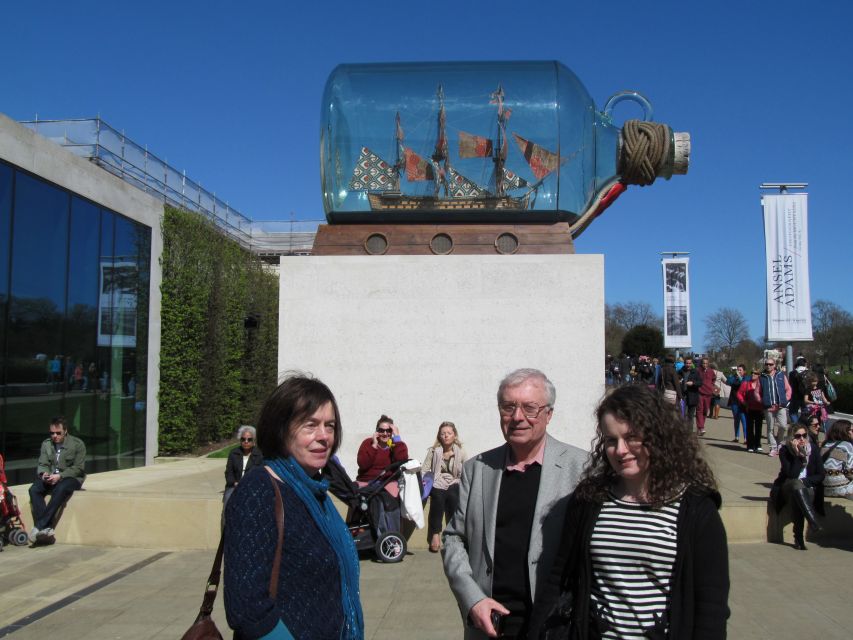
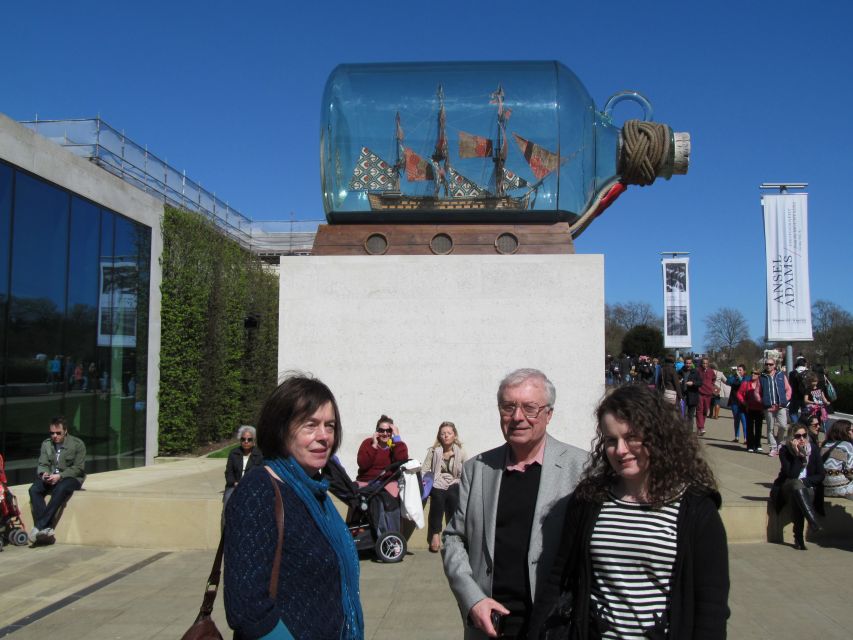
Your tour begins at Nelson’s Ship in a Bottle, outside the southern entrance to the National Maritime Museum on the observatory side of the building. This is a sensible meeting point, but give yourself time to find the correct entrance. Greenwich has several major sights close together, and the museum grounds can feel confusing if you arrive in a hurry.
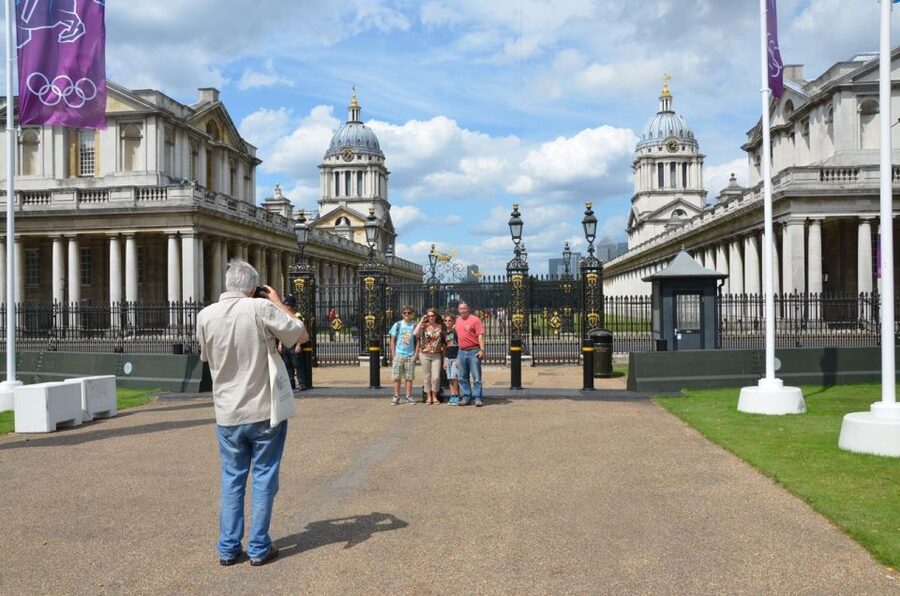
From here, your guide leads a 3.5-hour walking tour through Greenwich. You remain with your private group, rather than joining a large crowd. That matters in a museum filled with paintings, cases, and technical objects. You can ask why a particular ship model matters, pause over an image, or request more detail about Nelson without worrying about holding up dozens of other people.
The tour runs daily from 12:30 p.m. to 4 p.m. That afternoon timing works well if you want to see Greenwich in a single day, though it does mean the museum takes up a substantial block of your schedule. You should also expect to walk and stand for much of the visit, so moderate fitness is required.
Five Hundred Years of Naval Power in Greenwich
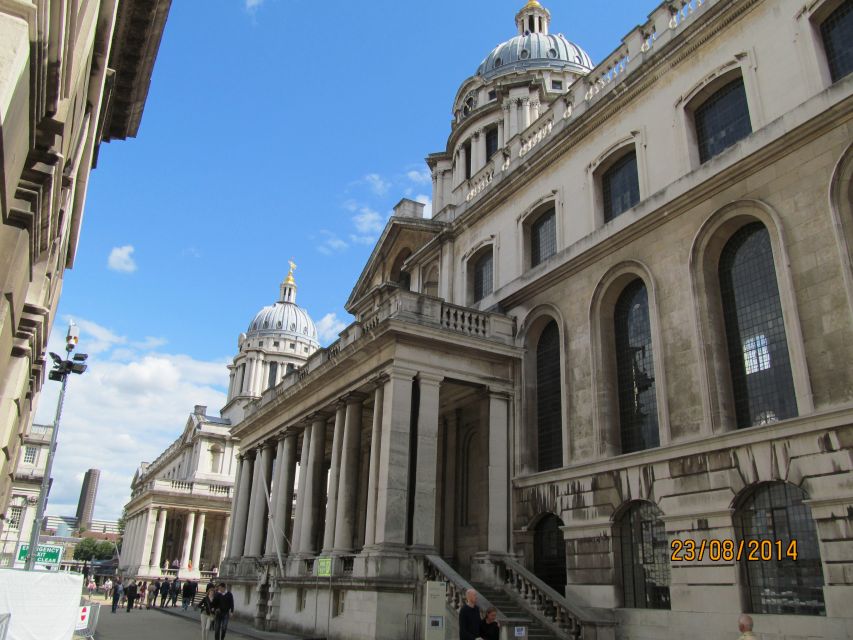
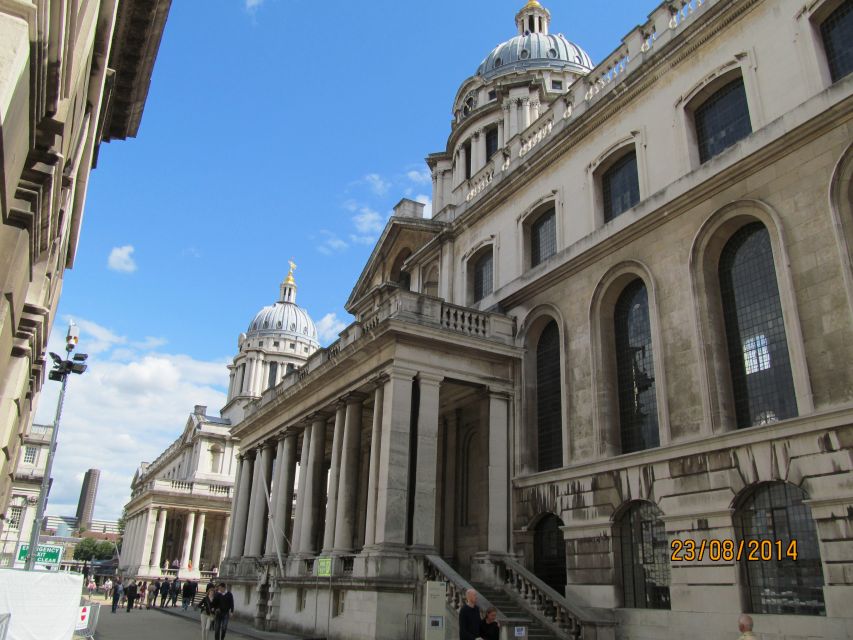
The National Maritime Museum covers around 500 years of British naval power and maritime traditions. Its holdings include more than two million artifacts, though naturally only a portion can appear in the galleries during one visit.
A private tour helps you make sense of that scale. Instead of wandering from object to object, you get a route through selected highlights. The focus is not simply on ships. It is on the people, trade, warfare, royal ceremony, technology, and political choices that shaped Britain’s connection with the sea.
I find that approach more useful than trying to see every case. A museum this large can easily wear you out before you reach the most important galleries. A guide can point out the pieces that give the strongest picture of the museum, then explain how they connect.
Still, you should not expect to see everything. The tour is designed around major highlights, not a full survey of two million objects. If you have one specialist interest, such as ship construction or naval uniforms, tell your guide early so the conversation can follow your priorities when possible.
More museums and galleries in Britain:
- Liverpool: Liverpool Football Club Museum and Stadium Tour
★ 4.8 · 10,764 reviews - London: Chelsea Football Club Stadium and Museum Tour
★ 4.8 · 4,576 reviews - London Transport Museum Entrance Ticket
★ 4.5 · 1,323 reviews
Turner’s Battle of Trafalgar
The painting of the Battle of Trafalgar is one of the tour’s central sights. Turner completed it in the 1820s after the king commissioned the work. The painting did not please the monarch, apparently because Turner showed the horrors of war rather than presenting a clean, glorious victory.
That detail gives you a useful way into the painting. Trafalgar is often treated as a symbol of British naval success, but Turner’s work refuses to keep the violence at a safe distance. Smoke, wreckage, and wounded men make the scene harder to celebrate without thought.
The painting’s public location also adds an amusing twist. Since the king was not impressed, the work did not remain tucked inside a royal palace. You can see it in a public museum instead.
Your guide can help you look beyond the famous name. Ask about the choices Turner made, the reason the painting caused a reaction, and how the image fits the museum’s wider story. The experience is stronger if you treat this as more than a quick photograph stop.
Nelson, Navy, and Nation
The Nelson, Navy, and Nation gallery focuses on Horatio Nelson and the naval world around him. You’ll find paintings, weapons, and displays connected with the admiral and the navy he led.
The most personal object is Nelson’s jacket. He wore it when he was shot and killed by a sniper in 1805. Seeing the actual garment changes the scale of the story. Nelson can seem like a distant figure from school lessons and statues, but the jacket brings the event back to one person, one moment, and one fatal wound.
After Nelson died, his body was brought back to Greenwich and lay in state in the Painted Hall for three days. Thousands of British citizens came to pay their respects. That ceremony shows how strongly the naval victory and Nelson’s death had entered public life.
This part of the tour suits anyone who likes history told through objects rather than dates alone. The weapons and clothing give you something tangible to examine. If naval history is not normally your interest, Nelson’s personal story still provides a clear thread through the displays.
The Atlantic Slave Trade Gallery
The Atlantic Slave Trade Gallery is an important part of the visit because Britain’s maritime story cannot be told honestly through battles and exploration alone. Ships, ports, trade routes, and naval power also supported a system that caused immense suffering.
Expect this section to change the mood. The gallery is poignant, and it asks you to consider the people affected by the Atlantic slave trade rather than viewing ships only as engineering achievements or symbols of national success.
I value its place in the tour because it prevents a one-sided view of British sea power. The same maritime networks that brought wealth and influence also carried people into slavery and helped sustain an inhumane system.
This is not a light museum stop, and you may want a little time to think before moving on. A private format can help here because you can ask your guide for context without having to speak in front of a large group. The listing specifically identifies this gallery as part of the route, but the exact amount of time spent there may depend on the day and your group’s interests.
A few more Britain days worth weighing up
- London: Tower of London Entry & Beefeater Private Audience
★ 4.4 · 1,441 reviews - Liverpool: Private 3-Hour Beatles Classic Tour by Taxi
★ 4.9 · 308 reviews - Bath: Private Bridgerton Walking Tour for upto 20 people
★ 4.9 · 189 reviews - London: Private Photoshoot with Video Clip Option
★ 4.8 · 182 reviews
Royal Barges, Queen’s House, and the Armada Portrait
The itinerary includes Prince Frederick’s Royal Barge, an object that shows how the sea served royal display as well as warfare and commerce. A royal barge is not simply a boat. It reflects ceremony, status, craftsmanship, and the importance of waterborne pageantry.
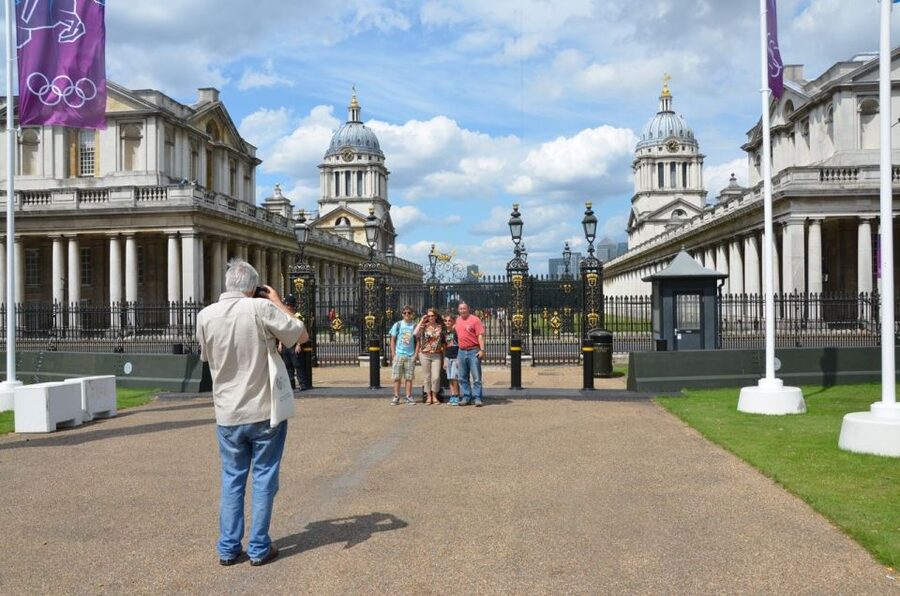
The route also includes Queen’s House, the elegant former royal residence beside the museum. Here you’ll see the famous Armada Portrait of Queen Elizabeth. The portrait connects royal image-making with naval triumph, since the Spanish Armada is central to the story of Elizabethan England.
These stops broaden the tour. You move from Nelson’s military career to royal ceremony, then to the way rulers wanted naval events remembered. I like that balance because it prevents the museum from becoming only a collection of war memorabilia.
Queen’s House is also a useful contrast to the larger museum galleries. You’ll encounter art and royal history in a different setting, and the Armada Portrait gives you a visual statement of power rather than a ship or weapon to inspect.
Ship Models and the Mercury Collection
The museum holds one of the world’s largest collections of ship models, including the Mercury Collection. For many people, these small vessels are among the most rewarding objects in the building.
Models can reveal details that are hard to grasp from a full-size ship or a painting. You can study rigging, decks, hull shapes, and the practical design of vessels at a glance. They also show how shipbuilders and naval planners understood the sea before modern diagrams and digital displays.
The Mercury Collection adds another specialist layer. If you enjoy craftsmanship, naval technology, or miniature objects, you may want to ask your guide for extra time here. The private format gives you a better chance of shaping the visit around these models, rather than simply passing them on the way to Nelson.
Do keep your expectations in check. A 3.5-hour tour has to divide its time among major galleries, Queen’s House, special exhibitions, and outdoor sights. You may see selected highlights from the collection rather than receive a full technical tour of every model.
Winchester Palace and the Clink Prison
The Greenwich route also includes views of the ruins of Winchester Palace and the notorious Clink Prison. These sights add a different layer to the day, shifting attention from naval power to London’s older urban and social story.
The ruins of Winchester Palace remind you that the capital is full of fragments from earlier centuries, often close to modern streets and museums. The Clink Prison has a darker reputation, and even a brief look at its remains can give the walk a slightly grim edge.
These are not the main reason to book the tour. The National Maritime Museum and its collections take center stage. But the nearby ruins help turn the experience into more than an indoor museum visit, especially if you enjoy connecting a major institution with the historic places around it.
The supplied route information does not promise a full interior visit to either site. Think of them as part of the Greenwich walking experience and a chance to see more of the area while moving between the main highlights.
A Private Tour With Room for Questions
Private guiding is the clearest advantage here. You are not sharing the guide with a large tour group, and the only published guest account describes a day when the booking had the tour entirely to itself. The guide, Muhsin, gave concise explanations and answered questions.
That is a useful description of the style to expect. You should get clear commentary without long speeches for their own sake. If you want more detail, ask. If your attention is flagging after several galleries, the guide can keep the pace moving.
The English-language format is straightforward. The activity uses a live English-speaking guide, and children under five can join free. There is a minimum booking of two people, so this is not designed for a solo visitor booking alone.
A private tour also works well for mixed interests. One person can ask about naval battles, another about Turner, and someone else about the slave trade gallery or royal portraits. A large scheduled group rarely gives you that much flexibility.
The Café Pause and Afternoon Pace
Midway through the tour, you stop at the museum café. Tea, coffee, and other refreshments are available, but they are not included in the price.
The pause is practical rather than a major attraction. Three and a half hours is a long stretch in a museum, and a short sit-down can help you stay alert for the final galleries. Bring money for the café if you want a drink, since refreshments are an extra cost.
The 12:30 p.m. start also makes lunch planning important. You may want to eat before meeting your guide, or use the café stop as a late lunch break. The exact timing of the pause can depend on the guide and the flow of the visit, so do not plan a tight meal reservation immediately afterward.
Is $236 Per Person Good Value?
At about $236 per person, this is a premium museum experience. Another price description gives the cost as £145 per person for a couple, with the per-person price dropping as you add more people. Because the published figures use different currencies and booking conditions, check the current total before paying.
The value depends on what you want. Admission to the special exhibitions is included, and you receive 3.5 hours of private guiding through one of the world’s largest maritime museums, Queen’s House, and nearby historic sights. For two people who want personal attention and do not enjoy navigating a huge museum alone, that can justify the cost.
For a larger group, the reduced per-person price may make the arrangement more appealing. A family or group of friends can share one private guide instead of paying for several separate experiences.
If you mainly want to enter the museum and look around at your own pace, the price will feel high. The museum’s scale can be handled independently if you are willing to plan your own route. You are paying for interpretation, structure, questions, and the convenience of having someone select the main sights.
Who Will Enjoy This Greenwich Tour?
I would recommend this tour to you if you have a strong interest in naval history, British royalty, maritime art, or museum collections. It also suits first-time visitors who want the main story without spending hours deciding which rooms to visit.
Families with older children may find the ships, weapons, royal barge, and Nelson displays engaging. Children under five join free, but the moderate walking requirement and 3.5-hour length may be tiring for younger children.
The tour is less suitable if you want a slow, highly specialist study of one collection. It is also not the best fit if you dislike difficult historical subjects. The Atlantic Slave Trade Gallery is an important stop, but it can be emotionally heavy beside the more celebratory naval displays.
Book at least 48 hours in advance. You can cancel up to 24 hours before the start for a full refund, and the reserve-now, pay-later option gives you some flexibility while your plans are still taking shape.
Should You Book the National Maritime Museum Private Tour?
Book it if you want a focused introduction to Greenwich’s maritime collections and value having a guide beside you. Turner’s Trafalgar painting, Nelson’s jacket, the Atlantic Slave Trade Gallery, Queen’s House, and the ship models give you a strong range of subjects in one afternoon.
I would be especially inclined to book for two or more people who plan to ask questions and make use of the private format. Guide Muhsin’s concise approach, noted in the available booking account, sounds well suited to a museum where clear direction matters.
Skip it if the price is hard to justify or you prefer exploring museums alone. In that case, spend your money on extra time in Greenwich and choose your own galleries. But if you want the museum’s major stories explained in a sensible order, this tour offers a convenient and thoughtful way to see them.
FAQ
Where does the National Maritime Museum private tour begin?
The meeting point is Nelson’s Ship in a Bottle, just outside the southern entrance to the National Maritime Museum on the observatory side of the building.
How long does the tour last?
The guided experience lasts 3.5 hours, from 12:30 p.m. to 4 p.m.
Is the tour private?
Yes. The activity is for a private group with a live English-speaking guide.
What language is the tour offered in?
The tour is offered in English.
Are refreshments included?
No. The museum café stop is included in the route, but tea, coffee, and other refreshments must be paid for separately.
Can children join the tour?
Children under five join free. There must be at least two people per booking, and moderate fitness is required for the guided walking tour.
Just added around Britain
- London: Wimbledon Tennis Club and Westminster Walking Tour★ 4.5 · 86 reviews
- London: Westminster to Richmond River Thames Cruise★ 4.8 · 23 reviews
- Winchester: Historic Castles and Cathedrals Walking Tour★ 4.9 · 154 reviews
- Westminster Abbey Skip-the-Line Entry and Private Tour★ 4.6 · 4 reviews
- Best of London by LE GRAND – London’s Luxury Bus Tour★ 4.2 · 23 reviews
- Whitby: Guided Distillery Tour with Gin Tasting★ 5.0 · 28 reviews
- London: Westminster Walking Tour & St Paul’s Cathedral Entry★ 4.7 · 7 reviews
- Warwick: Entry Ticket for Warwick Castle★ 4.7 · 215 reviews
Museums, compared.

Liverpool Football Club Museum and Stadium Tour
Read our review →
Chelsea Football Club Stadium and Museum Tour
Read our review →




British Museum Audio Tour & Priority Entrance Ticket
Read our review →Browse the lists this tour appears in