
Reviewed · BRITISH MUSEUM TOURS
London: 2-Hour Guided Tour of the British Museum and History
The British Museum can swallow an entire day, yet this two-hour highlights tour gives you a clear route through some of its biggest treasures. You move from Egyptian relics and the Rosetta Stone to Greek sculpture, Roman art, Sutton Hoo, and a striking Moai from Easter Island.
I like the way the tour turns a huge museum into a manageable first visit. I also like the chance to hear the stories behind objects such as the Parthenon sculptures and Hoa Hakananai’a instead of simply walking past them. The main caution is crowd noise: one recent experience found the guide hard to hear, and this tour does not promise audio headsets.
Key points at a glance
- The Rosetta Stone starts the story of written language: Your guide uses Egypt’s famous inscription to explain how hieroglyphics were deciphered.
- The route covers several major civilizations: Ancient Egypt, Greece, Rome, Anglo-Saxon England, and Easter Island all feature within two hours.
- Daniel and Filomena have received especially strong praise: Guide assignments vary, but both names have been singled out for lively, detailed storytelling.
- The British Museum’s size makes a guide useful: You get a planned route rather than spending your first hour deciding where to go.
- Crowds can affect the experience: Ask where to stand and stay close if the gallery is noisy.
- The tour suits a first visit best: It gives you a framework, then leaves you free to return to favorite galleries on your own.
Why a short British Museum tour makes sense
The British Museum is free to enter as a public museum, but finding the right objects is not always free in terms of time. The collection covers human culture across thousands of years and many regions, so a first-time visitor can easily spend the morning walking past important rooms without realizing it.
At $37 per person, this tour asks you to pay for a guide, structure, and an entry ticket according to the main activity details. One part of the booking information separately says the entry ticket is not included, so I would confirm that point before paying. If the ticket is included as stated elsewhere, the price is reasonable for a focused introduction. If you already know the museum well, the value is lower.
The two-hour limit is both a strength and a restriction. You will see major highlights quickly, but you will not have time to examine every case or stop for long at each gallery. Think of this as a guided orientation, not a full museum day.
I especially like this format for your first morning in London. You get a sense of the museum’s scale and learn which rooms deserve a return visit. Afterward, you can continue alone with a better plan.
More History Tours in London
- London: Historic Pubs of Central London Walking Tour
★ 4.9 · 1,065 reviews - London: Soho Music and Historic Pubs Walking Tour
★ 4.9 · 836 reviews - London: Rock ‘n’ Roll History Tour
★ 4.6 · 645 reviews
Meeting your guide inside the museum
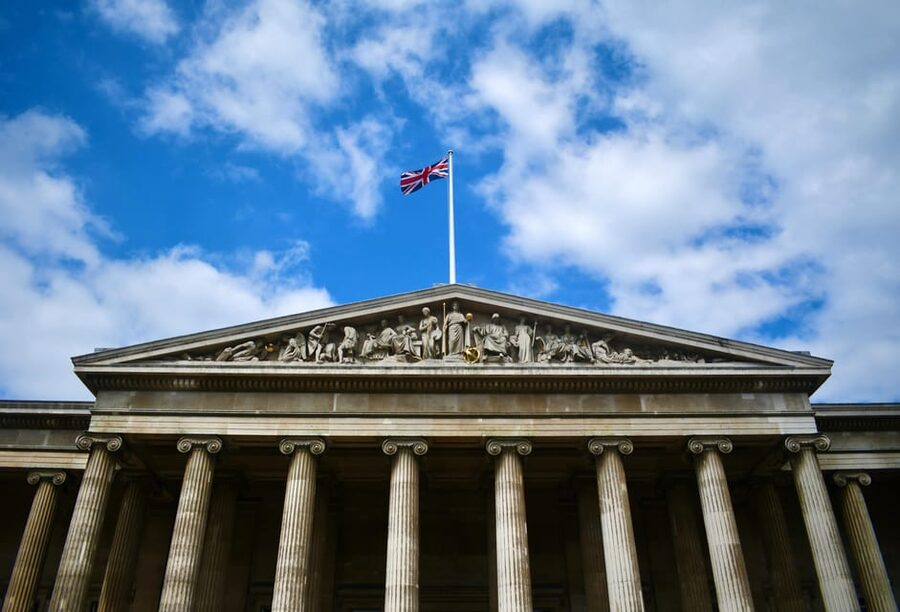
The meeting point needs care. You meet in front of the British Museum portals, on the stairs near the pillars, after passing security. Do not wait outside the gates.
Tickets are sent through WhatsApp one to two hours before the tour. If you do not use WhatsApp, you can contact the provider by email to receive them. Build in enough time to find the museum, pass security, check your messages, and reach the stairs.
This arrangement is less simple than a guide holding a large sign outside. Check your phone before leaving your hotel, and keep the ticket easy to find. The museum is wheelchair accessible, and the tour takes place inside the public museum.
The guide may speak English, French, or Italian. Daniel has been praised for moving smoothly through the large collection while keeping the visit informative and relaxed. Filomena has also received warm praise for unusual anecdotes and her enthusiasm for history. You cannot assume that either guide will lead your particular departure, but the names give you a useful sense of the best-case experience.
Ancient Egypt and the Rosetta Stone
The Egyptian section provides a sensible opening because it introduces one of the museum’s central themes: how objects help us read the past. You will see relics linked with pharaohs and hear about the Rosetta Stone, the object that helped scholars work out Egyptian hieroglyphics.
The Rosetta Stone is important not simply because it is famous. Its inscriptions repeat the same message in different scripts, allowing researchers to compare them. That breakthrough made it possible to read many other Egyptian inscriptions and understand more about the civilization behind them.
Your guide can give this object context that a label cannot always provide. You learn why the stone mattered and how one piece of writing changed the study of ancient Egypt.
There is one practical warning here. A recent poor experience centered on a lengthy explanation of what the visitor understood to be a replica rather than the original Rosetta Stone. The confusion greatly damaged that tour. If the guide points out a reproduction, ask which object you are seeing and why it is being used. That small question can prevent a major misunderstanding.
The Egyptian stop also sets the pace for the rest of the visit. You are not studying one room in depth. You are learning how to look at an object, ask what it was made for, and connect it to a wider story.
Greek sculpture and the Parthenon galleries
The route then moves to ancient Greece, where art, public life, and philosophy shaped much of the Western tradition. The Parthenon sculptures are the main attraction here.
These marble works once formed part of the Parthenon in Athens. In the museum, you can study the carved figures and architectural pieces at close range. The setting gives you a chance to notice details that are difficult to see from ground level on the Acropolis.
The sculptures are also politically sensitive. Their removal from Greece and their place in London remain disputed, which is why many people know them as the Elgin Marbles. A good guide should give you the basic background without turning the stop into a long lecture.
This is one place where the guide’s judgment matters. You need enough time to understand what you are seeing, but not so much that the rest of the museum disappears. The tour promises a selection of remarkable objects rather than a complete study of Greek art.
You may also hear about marble inscriptions and the ideas associated with ancient Greek culture. The value is not only visual. The stop links sculpture, architecture, civic life, and philosophy, helping you see why Greek objects remain so influential.
More Museum Tours in London
- London: Chelsea Football Club Stadium and Museum Tour
★ 4.8 · 4,576 reviews - London: British Museum Guided Tour
★ 4.3 · 1,182 reviews - London: Jack the Ripper Museum Tickets
★ 4.2 · 894 reviews - London: Tour of the British Museum
★ 4.1 · 678 reviews
Ancient Rome through mosaics, statues, and engineering
The Roman section shifts the mood from Greek ideals to the scale of an imperial power. Here, expect mosaics, statues of gods and heroes, and objects that reflect Roman engineering and public life.
Mosaics reward close attention. From a distance, they can look like decorative floors or walls. A guide can point out how small pieces of stone and glass create patterns, figures, and scenes. Statues offer another view of Roman culture, showing the gods, rulers, and heroic figures that shaped public identity.
The Roman stop works best as a comparison with Greece. Roman artists borrowed heavily from Greek models, yet Rome used art within a larger system of empire, ceremony, and administration. In a short tour, you will not cover every difference, but the sequence helps you connect the galleries.
The route also returns to the influence of the Parthenon and ancient Greek art. That repetition is useful rather than wasteful because it shows how later societies carried earlier ideas forward.
Crowding can be most troublesome in famous rooms. Keep near the guide and do not drift behind while taking photographs. If you cannot hear, say so early. A family on one recent departure left after struggling to follow the explanation, and that is a reminder that a quiet position can make or break a museum tour.
Sutton Hoo and early English life
Sutton Hoo brings the story closer to England. The Anglo-Saxon treasures offer clues about early English society, belief, status, and craft.
The display is valuable because it moves you away from the best-known Mediterranean civilizations. After Egypt, Greece, and Rome, Sutton Hoo shows that early England had its own complex artistic and social world. The objects are not just pretty metalwork. They raise questions about burial customs, leadership, trade, and contact between cultures.
This may be a short stop, depending on the guide’s route and the crowd. Still, it gives the tour a stronger connection to the place you are visiting. You are not only looking at famous objects brought from far away. You are also seeing material tied to England’s early past.
I would pay attention to the details your guide chooses to highlight. In a short visit, the story matters more than trying to memorize every object in the case.
Hoa Hakananai’a, a Moai far from Easter Island
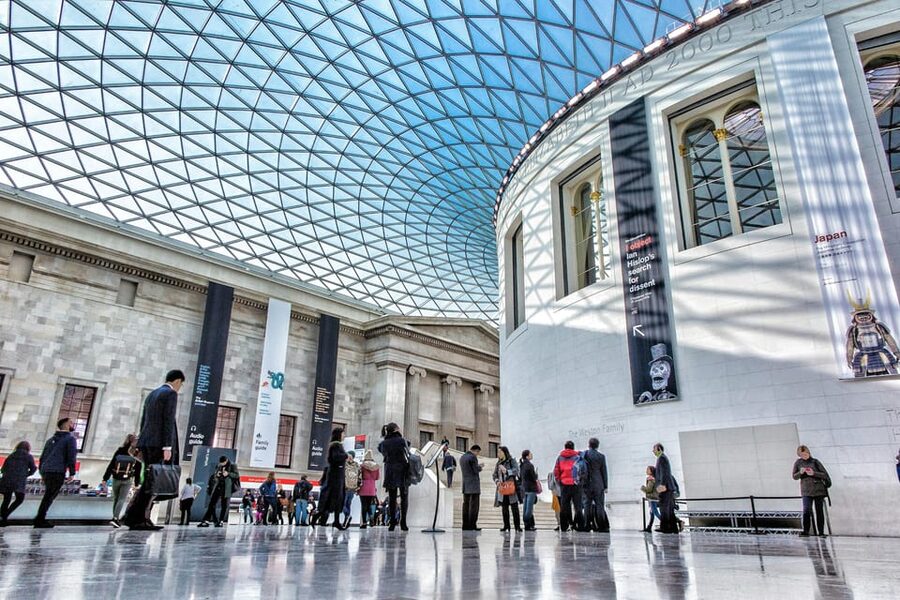
The tour also includes Hoa Hakananai’a, a Moai from Easter Island. Its presence in London can feel surprising after the Roman galleries, and that contrast is part of the appeal.
The Moai embodies the spiritual and artistic traditions of a distant civilization. Its scale and form make it easy to remember, but the important point is the culture behind it. A guide can help you look beyond the familiar image of a giant stone figure and consider what the statue meant within its original society.
This stop broadens the tour’s reach. The visit is not limited to the ancient Mediterranean or European history. It places a Pacific culture within the same human story, while also reminding you that museum collections bring objects far from their original homes.
As with the Parthenon sculptures, the object’s location invites questions about ownership and removal. The tour is only two hours, so do not expect a long treatment of those issues. But it is reasonable to ask your guide for context if this is one of the objects you most want to understand.
What the guide adds, and where the format can fail
The best part of this experience is the human thread between rooms. A guide can tell you why one inscription matters, point out an unusual detail, and explain how one culture influenced another. That is especially helpful in a museum where labels may assume prior knowledge.
Daniel’s tour has been praised for fitting a large number of exhibits into two hours without feeling stiff. Filomena has been praised for using interesting anecdotes and sharing her enthusiasm with adults and school-age children. Those are the qualities you want: clear movement, memorable stories, and enough background to make each object matter.
The weak point is sound. The museum can be crowded, and a strong accent or a guide speaking while facing away from the group may make the commentary difficult to follow. No headphones are promised. If you have hearing concerns, stand close, ask the guide to repeat key points, and consider using the museum’s audio guide afterward for a slower second look.
The tour also depends on the guide’s choices. The description promises a tailor-made visit to the museum’s most remarkable areas, but the exact order and amount of time at each object can vary. You may receive a lively highlights route, or you may find that too much time goes to one less familiar object.
That uncertainty is normal on a live tour, but it matters if your main goal is one specific masterpiece. Tell the guide early which object matters most to you.
Price, timing, and overall value
The listed price is $37 per person, with a two-hour duration. For a visitor who wants an efficient introduction, that can be fair value, especially if the entry ticket is included as stated in the main activity details.
The separate note saying the entry ticket is not included creates a practical contradiction. Check the final booking terms before you commit, and do not assume that the $37 covers everything until the ticket arrangement is clear.
The tour offers reserve now and pay later booking, along with free cancellation up to 24 hours before the start time. Those terms help if your London schedule is still shifting. Starting times vary, so check availability for your date.
You should also allow time beyond the advertised two hours. Security, the meeting point, and the ticket message all require attention before the guide begins. After the tour, you can stay in the museum and continue alone, which improves the value if you have several hours available.
Who should book this British Museum experience?
I would recommend it to a first-time visitor who wants a strong introduction without spending half a day making decisions. Families with school-age children may also like the changing subjects and short stops, though younger children may find the pace and crowds tiring.
It suits you particularly well if you enjoy stories and comparisons more than reading every label. The guide connects Egypt, Greece, Rome, England, and Easter Island in a single route, giving you a broad sense of human creativity and belief.
It is less suitable if you want a quiet, slow examination of one collection. It may also disappoint you if you need guaranteed audio equipment, a guaranteed guide, or a detailed treatment of every famous object.
For a second or third visit, I would probably explore independently unless you want a specialist route in one language. The museum is public, and returning alone lets you choose your own pace.
Should you book it?
Book this tour if you want a fast, guided first look at the British Museum and value the stories behind major objects. Daniel and Filomena have shown the kind of lively approach that can make the two hours worthwhile, but guide quality and audibility can vary.
Before booking, confirm that the entry ticket is included, check the guide language, and plan to stay close in crowded rooms. If the Rosetta Stone, Parthenon sculptures, Sutton Hoo, and Hoa Hakananai’a are all on your wish list, $37 can be a sensible way to get your bearings before exploring the museum on your own.
FAQ
How long is the British Museum guided tour?
The tour lasts two hours.
How much does the tour cost?
The listed price is $37 per person.
Is museum entry included?
The main activity information says that entry tickets are included, but another booking field says the entry ticket is not included. Confirm this detail before booking.
Where do I meet the guide?
Meet on the stairs near the pillars in front of the British Museum portals, after passing security. Do not wait outside the gates.
How will I receive my entry ticket?
The ticket is sent one to two hours before the tour through WhatsApp. If you do not use WhatsApp, contact the provider by email so the ticket can be sent there.
What languages are available?
The live tour guide is available in English, French, and Italian.
Is the British Museum wheelchair accessible?
Yes. The museum is wheelchair accessible.
Can I cancel the booking for a full refund?
Yes. You can cancel up to 24 hours in advance for a full refund.
Can I reserve now and pay later?
Yes. The activity offers reserve now and pay later booking, so you can hold a place without paying at the time of booking.
More Museums in London
- London: Paradox Museum Entry Ticket
★ 3.9 · 441 reviews - London: National Gallery Guided Tour with Art Expert Guide
★ 4.7 · 440 reviews - London: Postal Museum Entry Ticket and Underground Rail Ride
★ 4.6 · 363 reviews - London: Royal Museums Greenwich Day Pass
★ 4.5 · 309 reviews
More British Museum Tours
- London: British Museum Audio Tour & Priority Entrance Ticket
★ 4.5 · 631 reviews - Afternoon Tea at the British Museum
★ 4.2 · 511 reviews - London: British Museum Guided Tour
★ 4.5 · 267 reviews - London: British Museum Highlights Guided Small Group Tour
★ 4.9 · 113 reviews
Just added around London
- London: Wimbledon Tennis Club and Westminster Walking Tour★ 4.5 · 86 reviews
- London: Westminster to Richmond River Thames Cruise★ 4.8 · 23 reviews
- Westminster Abbey Skip-the-Line Entry and Private Tour★ 4.6 · 4 reviews
- Best of London by LE GRAND – London’s Luxury Bus Tour★ 4.2 · 23 reviews
- London: Westminster Walking Tour & St Paul’s Cathedral Entry★ 4.7 · 7 reviews
- From London: Oxford, Stratford-upon-Avon & Cotswolds Trip★ 4.5 · 64 reviews
- From London: Warwick, Oxford, Stratford & Cotswolds Day Tour★ 4.0 · 270 reviews
- Warner Bros. Studios and 1-Day London Hop-on Hop-off tour★ 4.7 · 9 reviews
British Museum Tours, compared.



British Museum Audio Tour & Priority Entrance Ticket
Read our review →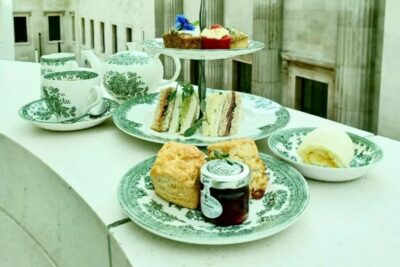
British Museum Archaeology Course and Guided Tour
Read our review →
British Museum Highlights Guided Small Group Tour
Read our review →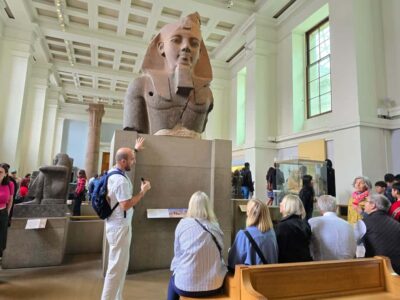
British Museum Guided Tour with Priority Entrance
Read our review →Browse the lists this tour appears in