
Reviewed · BRITISH MUSEUM TOURS
London: British Museum Archaeology Course and Guided Tour
The most unusual thing about this British Museum visit is that it treats the collection as a course in human civilization, not a parade of famous objects. With archaeologist Rossa guiding you, you move from early human tools to Egypt, Mesopotamia, Greece, Rome, the Vikings, and the Aztecs, learning how archaeologists interpret what they find. The Royal Game of Ur adds a welcome bit of play to a serious subject.
I like the clear story line and the focus on how we know what we know. I also like that the tour includes practical archaeology: dating objects, understanding buried sites, and working out ancient writing. The main consideration is the length. Five and a half hours is a lot of museum time, and you will need comfortable shoes, water, and a plan for lunch.
Key points to know before booking
- A five-and-a-half-hour course: This is far more than a quick highlights walk, so set aside most of a day.
- A real archaeologist leads it: Rossa brings specialist training, strong storytelling, and an easy way of explaining difficult subjects.
- The tour follows time: You trace human origins, early cities, writing, empires, and later civilizations in a logical order.
- Famous objects have a purpose: The Rosetta Stone, Parthenon Marbles, Sutton Hoo Helmet, and Lewis Chessmen help explain larger ideas.
- You learn the tools of archaeology: Expect discussion of dating, burial, excavation, and the deciphering of hieroglyphs and cuneiform.
- Plan your break: Lunch is not included, and a 40-minute pause can pass quickly inside a large museum.
Why this British Museum tour feels different
The British Museum can be hard to grasp on your own. Its galleries cover thousands of years and many parts of the world, but the displays do not always provide one continuous story. You can admire a Greek sculpture in one room, walk past Egyptian mummies, and then find yourself among Viking objects without seeing how the pieces fit together.
This tour gives you that structure. Rossa takes you through the development of human society, beginning with early origins in Africa and moving toward the first cities and writing systems. From there, the story reaches the major powers of Egypt, Assyria, Greece, and Rome, then considers what followed when those empires fell.
I especially like the attention to evidence. Instead of simply telling you that an object is old or important, the course asks how archaeologists can establish its age and purpose. You learn how sites become buried, how relics are dated, and why some ancient questions remain open.
That approach changes the way you look at the museum. A small tool is no longer just a small tool. A tablet covered in marks becomes part of the long struggle to record trade, law, belief, and daily life. The experience is aimed at curious people who want context, not just photographs.
More Museum Tours in London
- London: Chelsea Football Club Stadium and Museum Tour
★ 4.8 · 4,576 reviews - London: British Museum Guided Tour
★ 4.3 · 1,182 reviews - London: Jack the Ripper Museum Tickets
★ 4.2 · 894 reviews
Meeting at Russell Square and entering the museum
You meet outside Russell Square Station, where the guide holds an iPad showing the local partner’s name. Arrive 10 minutes early. The walk to the British Museum takes about five minutes, so the start is simple and does not involve a complicated transfer across London.
The museum entrance is free, but this experience includes entry through a separate entrance intended to help you skip the main line. That is useful at busy times, especially on a Saturday when the museum can be crowded. One useful detail from the experience is that Rossa has a strong voice, making it easier to follow even when other people are nearby.
The British Museum is wheelchair accessible, and the activity is suitable for people with limited mobility. Contact the provider in advance if you have special requirements. The tour is conducted in English.
Large bags and luggage are not allowed. A small daypack has been reported as acceptable, but do not arrive with a suitcase or an oversized backpack. Bring comfortable shoes, since the day includes a lot of standing and walking. The museum also has folding stools available at the entrance, a smart choice if standing for long periods is difficult.
Following the human story from early tools to first cities
The first part of the course looks at early human origins and the development of tools. The point is not simply to admire old stone objects. You begin to see how archaeologists use small physical clues to reconstruct the lives of people who left no written record.
This section works well for families with older children and teenagers. A 13-year-old can follow the broad story while still finding the objects surprising. The guide’s style matters here. Rossa is praised for keeping both adults and young people interested through stories, questions, and clear explanations.
The course then moves toward Mesopotamia, where the first cities and writing systems developed. This is one of the most useful parts for anyone who has only seen ancient history presented as a list of dates and rulers. You connect urban life with record keeping, administration, trade, and the need to preserve information.
The chronological order helps you remember what you see. Instead of receiving disconnected facts, you watch societies become more organized and complex. The pace is still demanding, but the structure gives the long visit a clear direction.
Hieroglyphs, cuneiform, and the work of decipherment
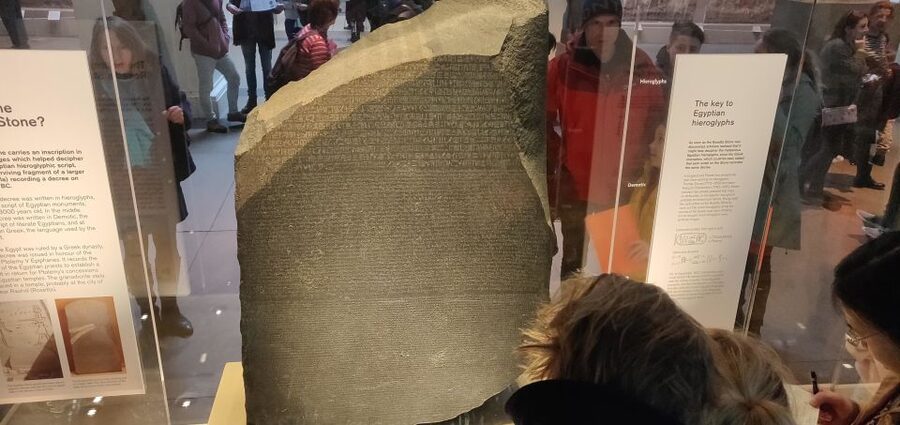
The discussion of writing is a major strength. Egyptian hieroglyphs and Sumerian cuneiform are not presented as mysterious decoration. You learn about the people who worked out how these scripts functioned and the patience required to compare signs, languages, and surviving texts.
The Rosetta Stone provides the obvious Egyptian focus. Its importance comes from the role it played in deciphering hieroglyphs, not only from its appearance in a glass case. The tour uses the object to explain how scholars can compare versions of the same message and begin to read a script that had been silent for centuries.
Cuneiform offers a different lesson. It is associated with some of the earliest known writing, pressed into clay rather than painted on papyrus or carved into monumental stone. The course shows how written marks can reveal the organization of early cities and the practical needs of administration.
This is where the archaeologist’s training adds real value. You are not just told what a script means. You get a sense of the process behind the translation and the limits of interpretation. For me, that is more memorable than a string of dates.
More guided runs through the British Museum:
- London: Tour of the British Museum
★ 4.1 · 678 reviews - London: British Museum Audio Tour & Priority Entrance Ticket
★ 4.5 · 631 reviews - Afternoon Tea at the British Museum
★ 4.2 · 511 reviews - London: British Museum Guided Tour
★ 4.5 · 267 reviews
Egypt, Assyria, Greece, and Rome in the museum galleries
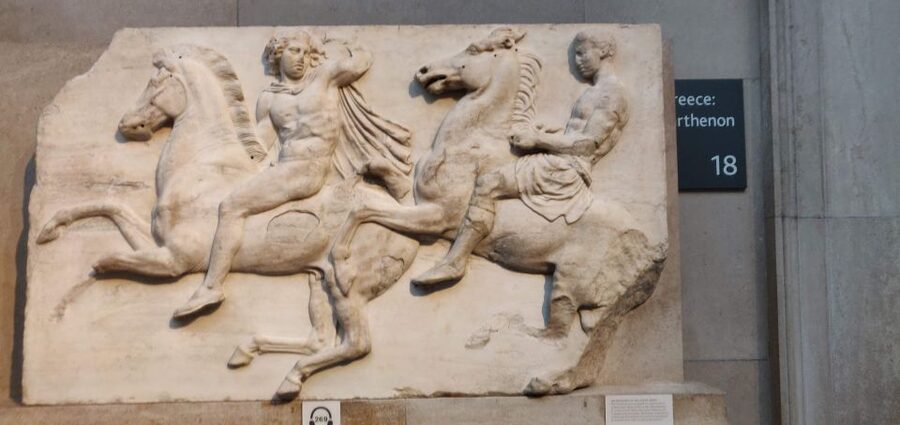
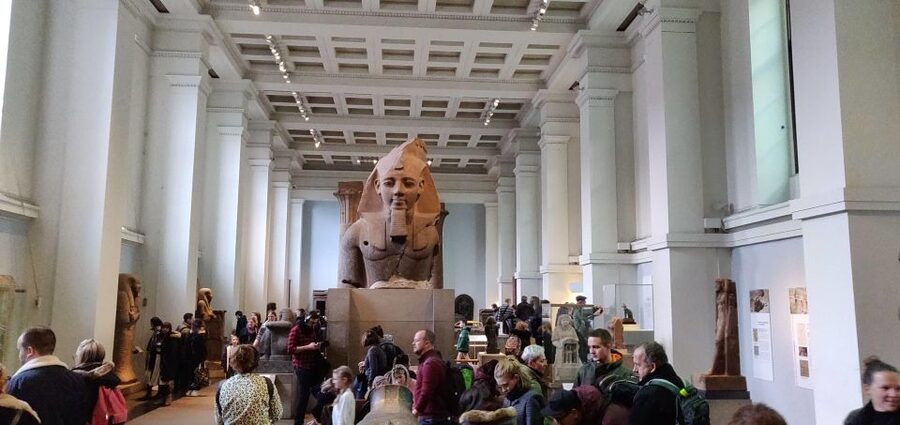
The Ancient Egypt galleries are among the major stops, but the tour does not treat Egypt as an isolated wonder. It places Egyptian society within the wider story of cities, belief, writing, power, and empire.
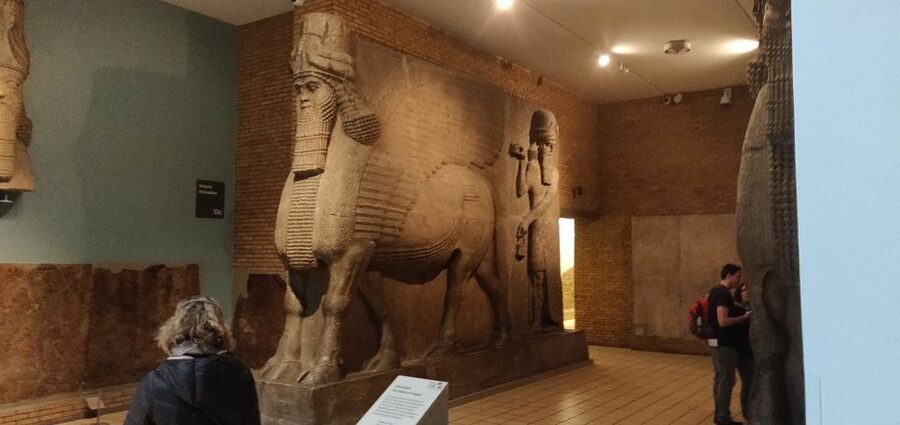
The route also includes Ancient Assyria, where the scale and purpose of imperial art help explain how rulers displayed authority. Large reliefs and palace objects become evidence of military ambition, religion, and royal propaganda. You may already know some of these objects from books, but the guide supplies the links between them.
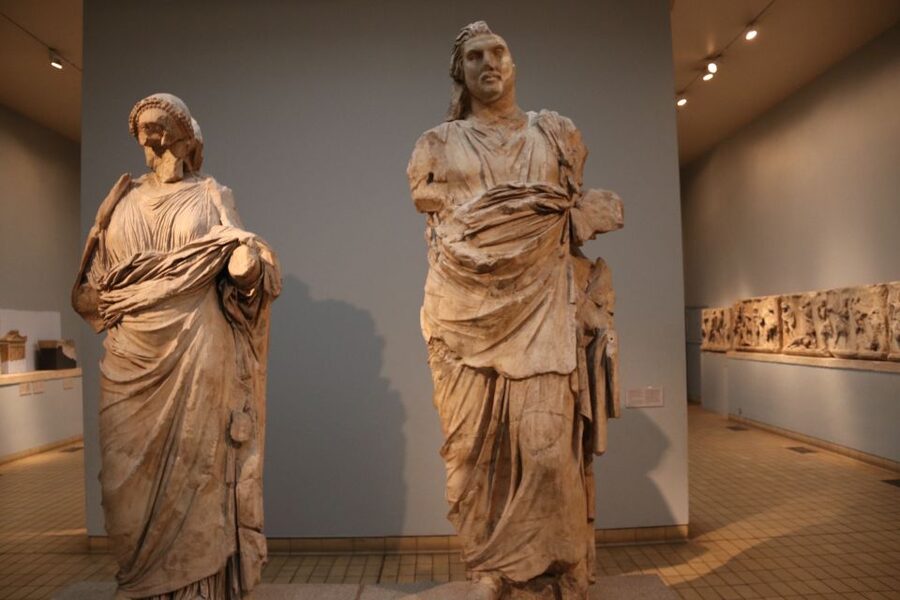
Ancient Greece and Rome provide another shift. Here you consider art, political power, public life, and the way later societies borrowed from earlier ones. The Parthenon Marbles are a natural focus, but the tour is not simply a photo stop. Their presence opens questions about classical culture and how museums present objects removed from their original settings.
Five and a half hours cannot cover every room. That is both the value and the limit of the plan. You see selected objects that support the human story, but you do not get time to wander through every gallery at your own pace. If you want a full day at the museum, schedule separate time before or after the course.
Vikings, the Aztecs, and civilization after empire
The itinerary reaches beyond the most familiar ancient Mediterranean cultures. Viking material broadens the story of movement, trade, belief, and conflict in northern Europe. The Sutton Hoo Helmet is one of the most memorable named objects, giving you a connection to early medieval Britain and the burial customs of its elite.
The Lewis Chessmen offer a different kind of evidence. These small carved figures are engaging because they connect archaeology with play, craftsmanship, status, and everyday imagination. They are also easy objects for a family group to enjoy.
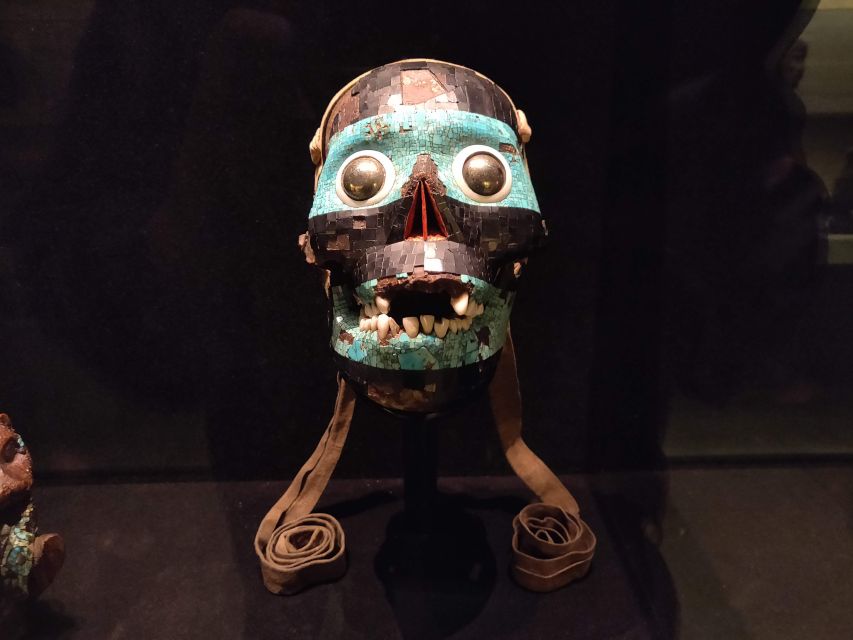
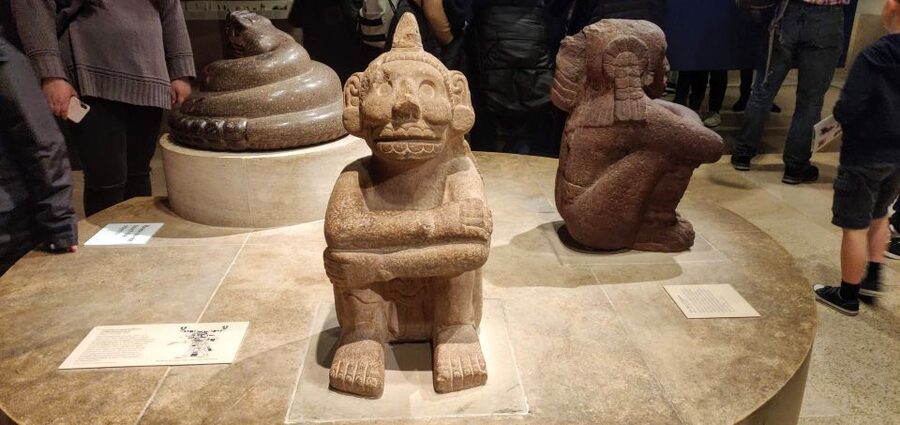
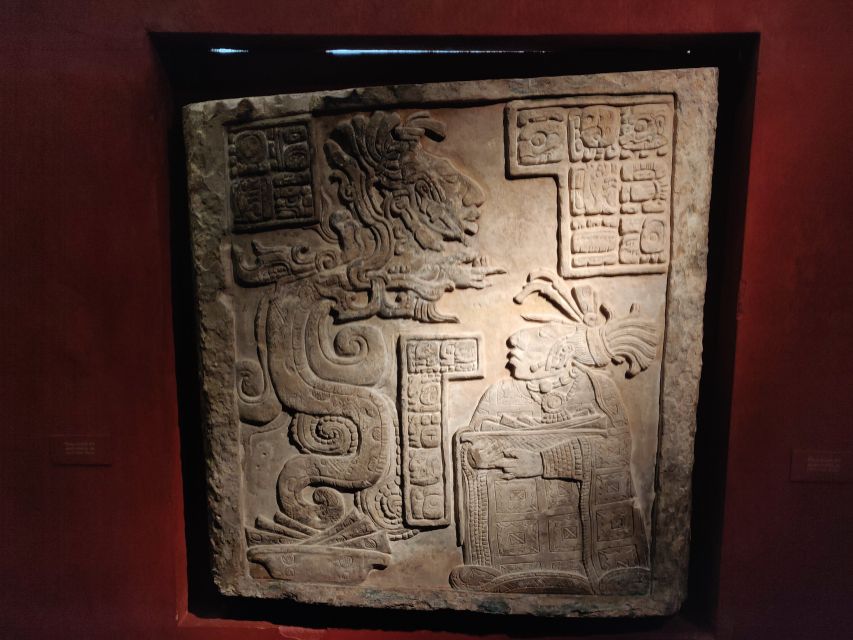
The Aztec galleries show that the museum’s story does not end with Rome or medieval Europe. They add another major civilization and remind you that human development did not follow one single path. The collection lets the guide compare different systems of power, religion, art, and social organization.
The broad reach is useful, but it also explains why the visit can feel intense. You move across continents and centuries in one day. If you prefer a narrow subject, such as Egyptian burial customs or Roman sculpture, a specialist tour may suit you better.
Playing the Royal Game of Ur
The Royal Game of Ur is the most playful part of the course. British Museum scholars reconstructed its rules, allowing you to try a board game played in ancient Mesopotamia.
This small activity gives the day a needed change of pace. After standing in galleries and listening to explanations of scripts and dating methods, you get to handle a game and think about how people spent leisure time thousands of years ago.
It also makes an important point. Archaeology is not only about kings, temples, and war. A game can reveal design, chance, competition, social habits, and the simple fact that people in the distant past also wanted amusement.
The game is especially useful for families. Younger participants may not follow every explanation of cuneiform, but they can take part in something physical and memorable. It is also a good reminder that museum objects were made for use, not for display cases.
How archaeologists date objects and reconstruct the past
The final part turns from individual civilizations to the methods behind archaeology. You learn how ancient sites become buried and how objects are dated. That can include the position of an object in a site, its relationship to other finds, and scientific approaches used to estimate age, although the exact teaching sequence may vary.
This section helps you read museum labels with a sharper eye. An object’s date is not always a simple fact stamped onto it. Archaeologists build arguments from evidence, comparisons, materials, and context. Some questions can be answered with confidence, while others remain uncertain.
I appreciate that the course leaves room for mystery. The guide does not present the past as fully solved. Ancient objects may have unknown uses, disputed meanings, or incomplete records. That honesty makes the subject more interesting, not less.
It also gives you a better sense of what can be lost when an object is removed from its original site. A museum can preserve and explain an artifact, but the surrounding archaeological context may be just as important as the object itself.
The guide’s teaching style and group experience
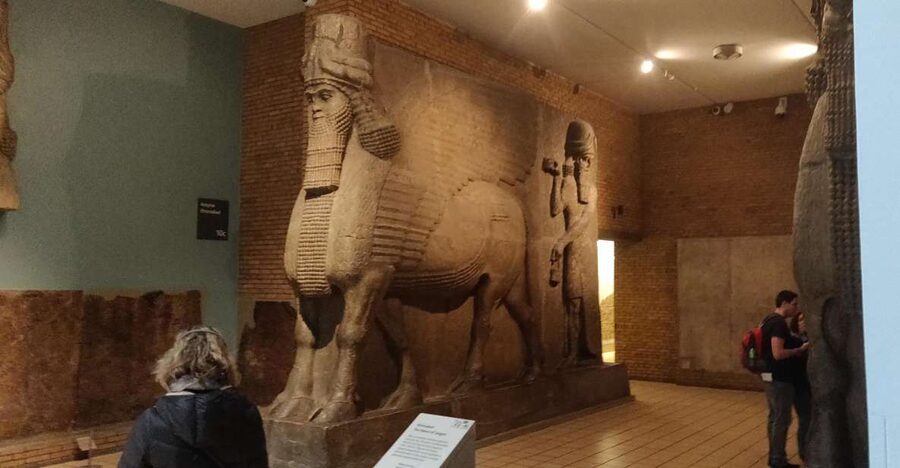
Rossa is the key reason this tour works. He combines archaeological training with energetic storytelling, and the strongest praise centers on his ability to keep a long session moving. He explains complex material in understandable terms, answers questions, and uses stories to make distant people feel less remote.
The experience can work with a small group. On one occasion, only two people booked and the tour still went ahead, which is useful if you are worried about a minimum group size disrupting your plans. Group numbers can vary, so do not assume every departure will feel private.
The tone suits people who enjoy asking questions. You are not simply led from display to display. The format includes a class element, and the guide may pause to explain how scholars reached a conclusion or why an object matters.
The drawback is that an enthusiastic guide and a large subject can produce information overload. You will not remember every name or date. I suggest choosing a few themes to carry with you, such as the rise of cities, the invention of writing, or the methods used to date objects.
Timing, lunch, and physical comfort
The tour lasts 5.5 hours and includes a break. Lunch is not included, so bring a packed meal or be ready to buy food at one of the museum outlets. A 40-minute break may sound generous, but it goes quickly once you find food and a place to sit.
Bring water. Wear shoes that can handle prolonged standing, and consider using a folding stool from the entrance. This is particularly helpful for older adults or anyone who tires easily.
The day is suitable for people with limited mobility, but accessibility is not the same as complete ease. The museum is large, and the course still requires time on your feet. Contact the provider before booking with specific mobility needs.
Because luggage and large bags are prohibited, plan this as a museum day rather than a stop between hotels or train stations. A small daypack may be fine, but you should follow the provider’s instructions at the meeting point.
Is $81 good value?
At $81 per person, the price is reasonable if you want a serious introduction to the British Museum and ancient history. Museum admission itself is free, so you are paying mainly for five and a half hours of expert guidance, a planned route, the archaeology lesson, and the chance to ask questions.
That is a better deal than paying for a short walk that only points out famous objects. The course gives you an organizing idea and explains the evidence behind the displays. It can also save you from spending hours wandering without knowing which rooms fit together.
The value is lower if you want freedom to explore. You will see selected galleries and objects rather than every part of the museum. If you already know the collection well, the broad introductory approach may repeat familiar material.
For a first visit, a family history outing, or a rainy London day with a clear plan, I think the price is justified. The experience has earned a 4.7 rating from 113 reviews, with repeated praise for Rossa’s teaching, storytelling, and command of the subject.
Who should book this archaeology course?
I would choose this tour if you:
- Want a full story of human civilization rather than isolated museum highlights
- Enjoy archaeology, ancient languages, and the question of how scholars interpret evidence
- Are visiting the British Museum for the first time
- Have a teenager who likes history and can manage a long museum session
- Prefer a live English-speaking guide to exploring alone
- Want a planned route through the museum’s biggest themes
I would think twice if you dislike long tours, need frequent unscheduled breaks, or want to spend most of the day wandering at your own pace. The course is intensive, and the collection is too large to cover fully.
You can cancel up to 24 hours before the start for a full refund, and you can reserve now and pay later. Those terms are useful when London plans are still shifting, but the main booking decision is about pace and depth.
Should you book it?
Book this British Museum archaeology course if you want the objects to make sense. Rossa’s strongest quality is not simply how much he knows, but how he connects tools, writing, burial, empire, games, and art into one human story.
Bring water, comfortable shoes, and lunch. Arrive early at Russell Square Station, use a folding stool if needed, and leave separate time if you want to explore the museum alone. For curious adults, families with older children, and anyone who wants more than pretty displays, this is one of the more useful ways to spend half a day at the British Museum.
FAQ
Where does the British Museum archaeology tour meet?
You meet your guide outside Russell Square Station. The guide will hold an iPad displaying the local partner’s name.
How early should I arrive?
Arrive 10 minutes before the scheduled start time.
How long does the experience last?
The course and guided museum visit last 5.5 hours, including a break.
Where does the tour finish?
The experience finishes at the British Museum.
Is British Museum admission included?
Yes. Entrance is included, and the museum’s general admission is free.
Is lunch included?
No. Lunch is not included. You can bring a packed lunch or buy food at one of the museum’s outlets.
What language is the tour conducted in?
The live tour guide speaks English.
Is the tour wheelchair accessible?
Yes. The activity is wheelchair accessible and suitable for people with limited mobility. Contact the provider in advance if you have special requirements.
Can I bring luggage or a large bag?
No. Luggage and large bags are not allowed. A small daypack has been reported as acceptable, but avoid bringing oversized bags.
What famous objects can I see?
The route includes famous pieces and galleries such as the Rosetta Stone, Parthenon Marbles, Sutton Hoo Helmet, Lewis Chessmen, Ancient Egypt, Assyria, Ancient Greece and Rome, the Vikings, and the Aztecs.
More Museums in London
- London: Paradox Museum Entry Ticket
★ 3.9 · 441 reviews - London: National Gallery Guided Tour with Art Expert Guide
★ 4.7 · 440 reviews - London: Postal Museum Entry Ticket and Underground Rail Ride
★ 4.6 · 363 reviews - London: Royal Museums Greenwich Day Pass
★ 4.5 · 309 reviews
Just added around London
- London: Wimbledon Tennis Club and Westminster Walking Tour★ 4.5 · 86 reviews
- London: Westminster to Richmond River Thames Cruise★ 4.8 · 23 reviews
- Westminster Abbey Skip-the-Line Entry and Private Tour★ 4.6 · 4 reviews
- Best of London by LE GRAND – London’s Luxury Bus Tour★ 4.2 · 23 reviews
- London: Westminster Walking Tour & St Paul’s Cathedral Entry★ 4.7 · 7 reviews
- From London: Oxford, Stratford-upon-Avon & Cotswolds Trip★ 4.5 · 64 reviews
- From London: Warwick, Oxford, Stratford & Cotswolds Day Tour★ 4.0 · 270 reviews
- Warner Bros. Studios and 1-Day London Hop-on Hop-off tour★ 4.7 · 9 reviews
British Museum Tours, compared.



British Museum Audio Tour & Priority Entrance Ticket
Read our review →

British Museum Highlights Guided Small Group Tour
Read our review →
British Museum Guided Tour with Priority Entrance
Read our review →
Browse the lists this tour appears in