
Reviewed · BRITISH MUSEUM TOURS
London: British Museum Guided Tour Private Group
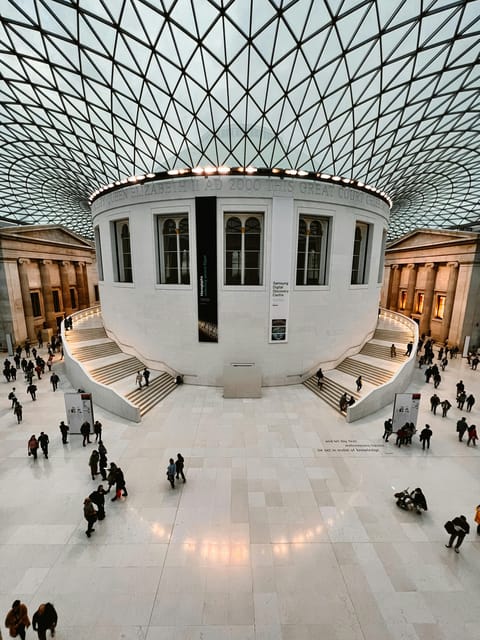
The British Museum can feel like a world in one building, which is both its magic and its main challenge. This private tour gives you a clear route through the Rosetta Stone, Elgin Marbles, Sutton Hoo treasures, and Hoa Hakananai’a, with a licensed guide explaining why each object matters. I like the personal format for a small group of up to five, and I like that the tour moves across cultures instead of staying in one historical corner. The main drawback is time: two hours goes quickly, and one rating found the visit a little rushed and shorter than expected.
I also like the chance to shape the visit around your interests rather than wandering without a plan. Guide Filomena earned especially warm praise for her enthusiasm, while the tour can be given in English, French, or Italian. Just arrive ready to walk, wear comfortable shoes, and watch for the ticket message sent by WhatsApp about an hour before the tour.
Key points to know before you book
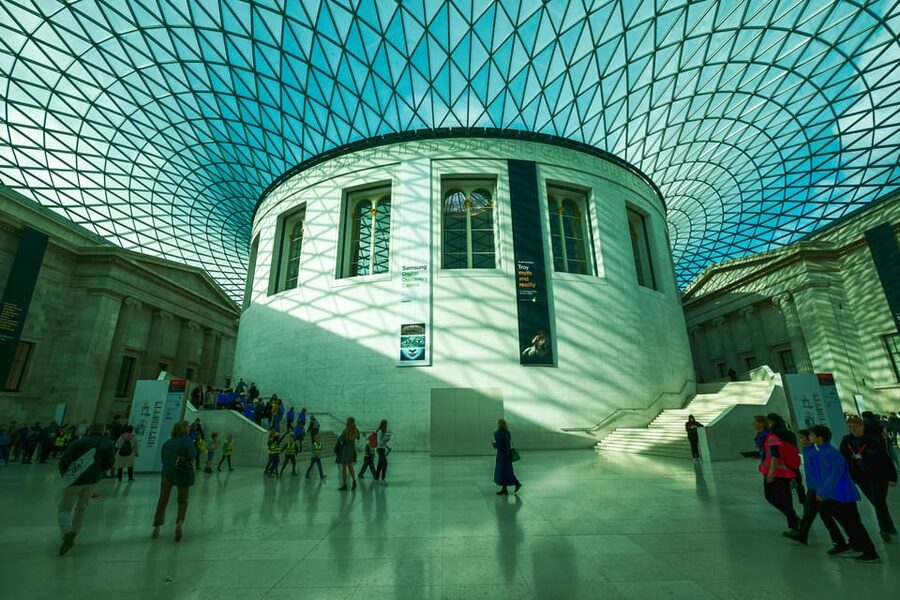
- Small private group: Your group can include up to five people, so the visit can feel more personal than a large museum walk.
- Big-name objects: The route includes the Rosetta Stone, Parthenon sculptures, Roman works, Sutton Hoo, and an Easter Island moai.
- A fast tour through world cultures: The two-hour format covers Egypt, Greece, Rome, early England, Easter Island, and other regions.
- Guide-led interpretation: A live licensed guide helps connect objects to religion, politics, art, language, and daily life.
- Flexible language choice: Tours are available in English, French, and Italian.
- Good booking flexibility: You can cancel up to 24 hours before the start for a full refund and reserve without paying at once.
Why a private British Museum tour helps
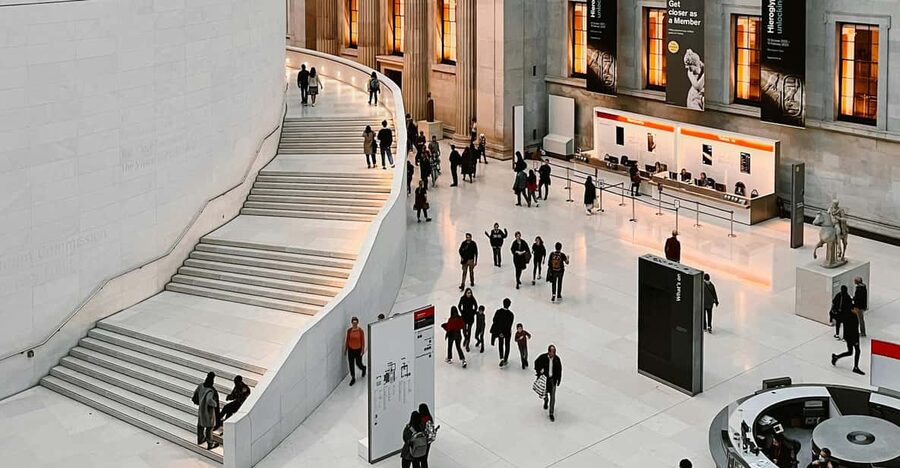
The British Museum is free to enter, but free does not mean easy to understand. Its famous objects are spread across a large public museum, and each one can pull you into a different century and culture. Without a plan, you may spend too much time finding the highlights and too little time understanding them.
This tour solves that problem with a set two-hour route and a live guide. You are not simply pointed toward a statue and given its name. The goal is to connect objects to larger human questions: How did people record language? Why did rulers build monuments? How did religion shape art? What can a burial tell us about a society?
A private group of up to five is the strongest part of the setup. You can ask questions without competing with a crowd, and the guide can adjust the pace or spend more time on the objects that interest you. If your group includes children, first-time museum visitors, or people with very different interests, that personal format can make the visit easier.
Still, keep your expectations realistic. The British Museum holds far more than can fit into two hours. This is a highlights tour, not a full study of the collection. If you want long periods to read labels, sketch sculptures, or compare objects closely, plan extra museum time after the guided visit.
More Museum Tours in London
- London: Chelsea Football Club Stadium and Museum Tour
★ 4.8 · 4,576 reviews - London: British Museum Guided Tour
★ 4.3 · 1,182 reviews - London: Jack the Ripper Museum Tickets
★ 4.2 · 894 reviews
Egypt and the Rosetta Stone
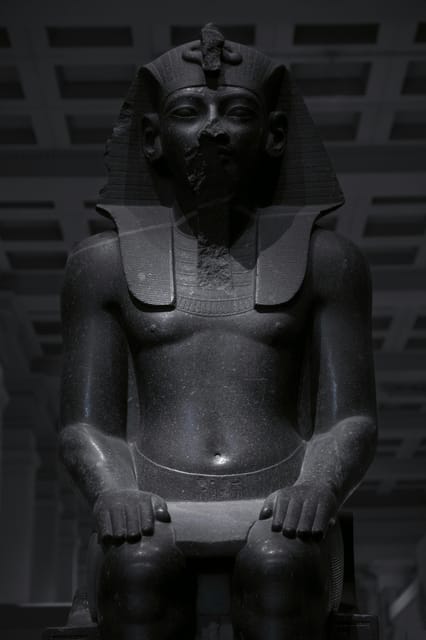
The tour begins with ancient Egypt, a sensible choice because Egyptian objects offer some of the clearest links between writing, religion, kingship, and everyday life. You can expect to see relics connected with pharaohs and Egyptian belief, while the guide explains how these pieces fit into the culture that made them.
The central stop is the Rosetta Stone. Its importance is not only its age or appearance. The stone carries the same decree in three forms of writing, giving scholars the comparison needed to work out Egyptian hieroglyphics. That makes it one of the museum’s most useful objects for understanding how a lost writing system could be read again.
I like this stop because it turns a famous object into a practical lesson. You are not just looking at carved symbols. You are seeing the tool that helped connect modern readers with ancient Egyptian texts.
The limitation is that the Rosetta Stone is famous enough to attract plenty of attention. Your guide can explain its meaning, but you may not have much quiet time around it during a short visit. If Egyptian culture is your main reason for booking, tell the guide early so this part receives the attention you want.
Greek sculpture and the Parthenon collection
From Egypt, the route moves to ancient Greece, where the focus shifts toward sculpture, philosophy, architecture, and civic life. The Parthenon sculptures are the major draw. These marble works once formed part of the temple dedicated to Athena on the Acropolis in Athens.
The sculptures are visually striking, but the story around them is just as important. Their presence in London remains controversial, and the guide can help you understand why the objects attract both admiration and debate. This is a useful part of the tour because it shows that museums are not only places for beautiful things. They are also places where questions of ownership, removal, national identity, and cultural responsibility matter.
You will also encounter marble inscriptions and other Greek works tied to ideas that influenced Western thought. The guide’s job here is to keep the display from becoming a blur of white stone. Look for details in the figures, clothing, posture, and carved lettering. These features can reveal how Greek artists represented gods, heroes, and people in public settings.
The pace may feel quick if you want to examine every sculpture. Greece alone could fill a morning. I would treat this section as a strong introduction, then return later if the Parthenon collection becomes your main interest.
Roman gods, mosaics, and imperial power
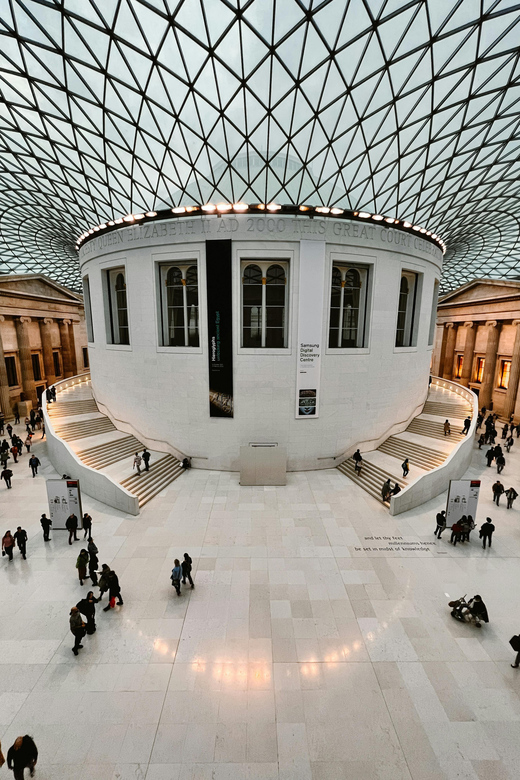
The Roman section brings a different mood. Greek art often invites discussion of ideal form and philosophy, while Roman objects can show how power, engineering, religion, and daily life worked together across a large empire.
Expect statues of gods and heroes, intricate mosaics, and objects linked with emperors and Roman society. A mosaic can look decorative at first glance, yet its patterns and images may tell you about taste, wealth, religion, or the role of the home. A statue can also do more than show a face. It may present a ruler as a military leader, divine figure, or model citizen.
The Roman stop works well in a highlights tour because it gives you visual variety. You move from carved marble to colored floor designs and religious images. The guide can also show how Roman culture borrowed from and reshaped Greek traditions, including the legacy of the Parthenon and Greek sculpture.
This part is another reason to accept the tour’s broad scope. You will not see every Roman gallery, but you get a useful comparison between Greece and Rome. If you are especially interested in engineering or military history, the listed highlights suggest a wider Roman story, but the exact time spent on those subjects may depend on your guide and group.
More Private Tours in London
- London: Tower of London Entry & Beefeater Private Audience
★ 4.4 · 1,441 reviews - London: Private Photoshoot with Video Clip Option
★ 4.8 · 182 reviews - London: Private Walking Sightseeing Tour
★ 4.2 · 175 reviews - London Private Welcome Tour with a Local Guide
★ 4.6 · 142 reviews
Sutton Hoo and early English life
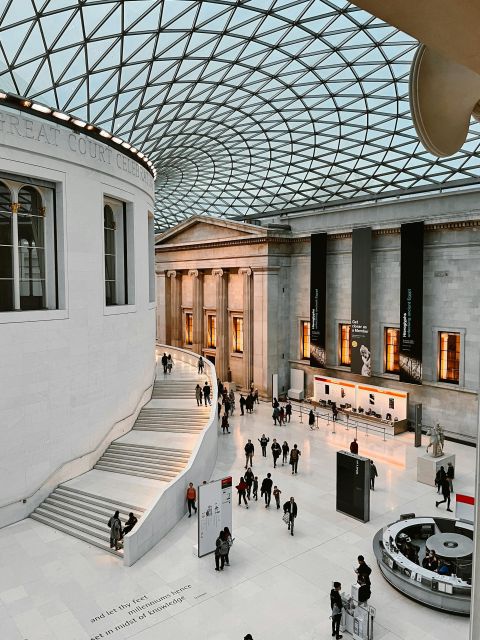
Sutton Hoo changes the route again. Instead of the Mediterranean world, you move to early England and the Anglo-Saxon period. The treasures give you a glimpse of a society through metalwork, burial customs, status, and artistic skill.
This section is valuable because it widens the story beyond the civilizations most people expect at the British Museum. You are not only looking at Egypt, Greece, and Rome as if they are the sole center of human development. Sutton Hoo shows how early English communities expressed rank, belief, trade, and identity through objects placed in a burial setting.
The intricate workmanship makes this a rewarding stop for anyone who enjoys close detail. Small decorative elements can carry a lot of meaning, and a guide can help you see why the finds matter beyond their beauty.
The trade-off is context. A short tour can introduce Sutton Hoo, but it cannot cover every question about Anglo-Saxon life or the excavation. If this is the part you most want to understand, say so at the beginning. A private guide has more room to adjust than a fixed large-group tour, but two hours still places a firm limit on the discussion.
Hoa Hakananai’a and a distant Pacific culture
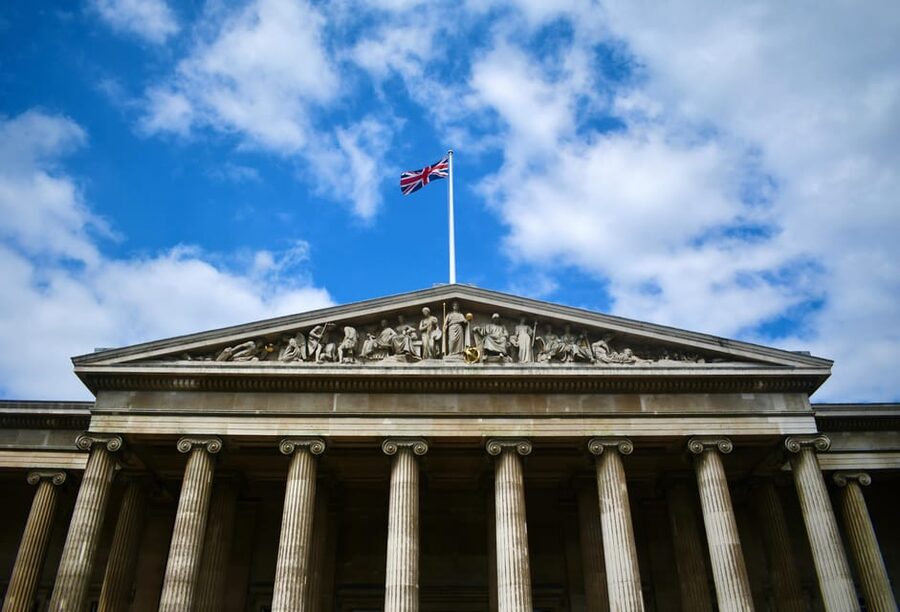
One of the most unusual stops is Hoa Hakananai’a, a moai from Easter Island. The statue brings the tour into the Pacific and offers a sharp change from the carved stone and metalwork of Europe and the Mediterranean.
A moai is not simply a large stone figure. It reflects the spiritual and social world of the people who made it. The guide can help you consider the role of ancestors, community, ceremony, and memory without treating the statue as an isolated curiosity.
I like this inclusion because it prevents the tour from becoming a narrow march through familiar European masterpieces. It also gives you a chance to compare how different cultures represented power and spiritual presence. The pharaohs, Greek gods, Roman heroes, Anglo-Saxon burial objects, and Easter Island moai all speak in different ways about what communities valued.
As with every stop, you should expect an introduction rather than a complete account of Easter Island. The museum’s global collection offers many more objects, and this two-hour route can only sample them.
A broad final look at human culture
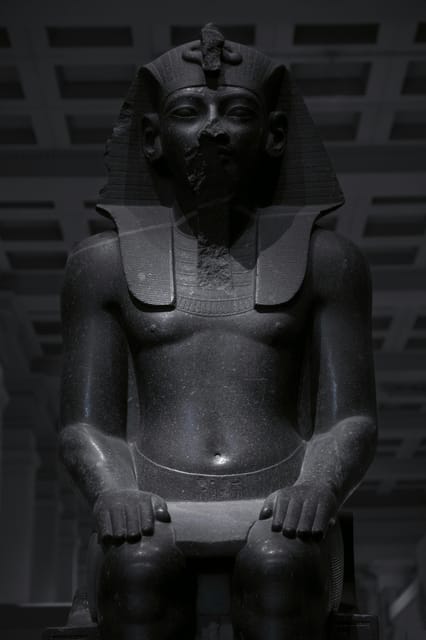
The tour ends with artifacts from around the world, reinforcing its main idea: human culture cannot be reduced to one region or one period. You will have moved through writing, sculpture, religion, burial, political power, and spiritual life.
This broad approach suits you if you want a first visit that gives you a mental map of the museum. It is also useful if members of your group have different interests. One person may care about Egypt, another about Greece, and another about early England. A private route can give everyone at least one strong point of connection.
The same breadth may frustrate a specialist. You will not get a long, slow look at one collection, and the guide may need to keep moving to cover the promised highlights. One four-star rating specifically described the visit as somewhat rushed and shorter than expected, so I would build in extra time if you want to continue exploring afterward.
What the $331 group price means
At $331 for a group of up to five, the price makes more sense for a full group than for one or two people. Five guests bring the cost to about $66 per person. For two people, the per-person cost is much higher, even though the guide, private format, and two-hour service remain the same.
The British Museum itself is a public museum, so you are paying mainly for the guide and the focused route, not simply for access to the building. That distinction matters. If you are comfortable researching the collection and setting your own path, you may prefer to visit independently. If you value clear explanations and want to make good use of a short London stop, the private format can be worthwhile.
I see the best value for families, couples traveling with friends, and small groups who want to ask questions. The benefit is less about seeing more objects and more about understanding the important ones. You also avoid the uncertainty of wandering from gallery to gallery with no idea how long to spend.
The two-hour length keeps the tour manageable, but it also means you should not expect every famous room. Think of it as a guided introduction, then use your remaining time for the sections that caught your attention.
Meeting point, languages, and practical details
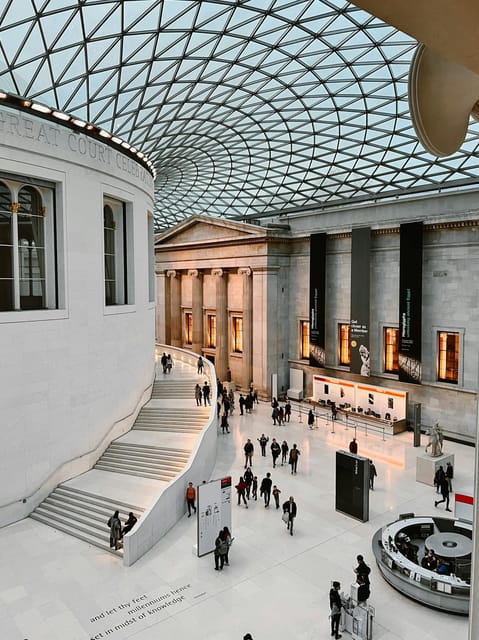
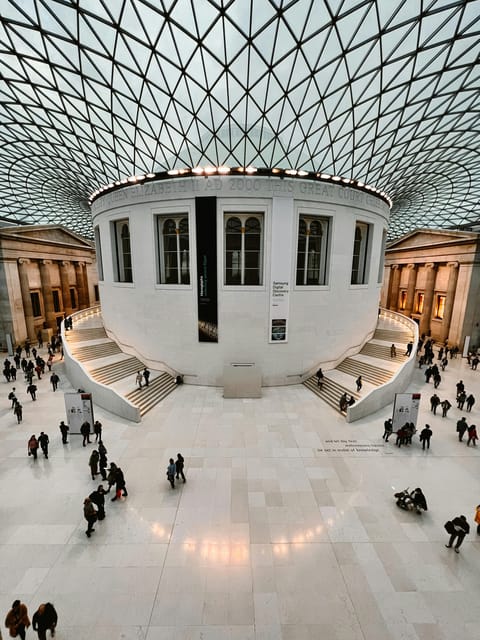
Meet your guide in front of the British Museum portals, on the stairs near the pillars, after you pass the security check. Do not wait outside the gates. That instruction is important because the correct meeting place is inside the secured entrance area.
Entry tickets are sent through WhatsApp about one hour before the tour. If you do not use WhatsApp, contact the provider by email so the tickets can be sent that way. I would check your messages before heading to the museum and keep the meeting instructions easy to find.
The live tour is available in English, French, and Italian. It is wheelchair accessible, though the experience still involves moving through museum galleries, so comfortable shoes are a sensible choice.
You can cancel up to 24 hours before the start for a full refund, and the reserve-now, pay-later option gives you some flexibility while arranging your London days. Starting times vary, so check availability for the date you want.
Who should book this British Museum visit?
I would recommend it most strongly if you have never visited the museum, have only two hours, or prefer someone else to choose a sensible route. It also suits families and small groups who want a guide to explain difficult subjects without turning the visit into a lecture.
The tour is a good match for people interested in major objects and the stories behind them. The Rosetta Stone, Parthenon sculptures, Roman works, Sutton Hoo, and Hoa Hakananai’a give you a varied introduction rather than one narrow theme.
I would hesitate if you want a slow art-history lesson, extensive time at each display, or a specialist tour devoted only to Egypt, Greece, Rome, or Anglo-Saxon England. In that case, the broad route may feel too fast. I would also be cautious about booking it for a group of only one or two people if the $331 price strains your budget.
The strongest guide experience may depend on the person assigned to your group. Filomena was praised for infectious enthusiasm, and that sort of energy can make a major difference in a museum filled with dense information. Still, the most useful step is to tell your guide what you care about before the route begins.
Should you book it?
Book this private British Museum tour if you want a well-chosen first look at the collection, personal guidance, and the freedom to ask questions in a group of up to five. Its best feature is the range: you can connect Egyptian writing, Greek sculpture, Roman power, Anglo-Saxon burial, and Easter Island spirituality in one visit.
Skip it if you prefer independent museum time or want to spend two hours on just one culture. At $331, the value is strongest when your group is close to five people and you want interpretation rather than simple entry. Arrive inside the correct meeting point, allow for a brisk pace, and plan extra museum time afterward if the famous objects leave you wanting more.
FAQ
How long is the British Museum private tour?
The tour lasts two hours. Starting times vary, so check availability for your chosen date.
How many people can join the private group?
The private group can include up to five people.
Which languages are available?
The live guide can conduct the tour in English, French, or Italian.
Where do I meet the guide?
Meet the guide in front of the British Museum portals, on the stairs near the pillars, after passing the security check. The meeting point is not outside the gates.
How will I receive the entry tickets?
Tickets are sent through WhatsApp one hour before the tour. If you do not have WhatsApp, contact the provider by email to receive the tickets there.
Is the tour wheelchair accessible?
Yes, the activity is listed as wheelchair accessible. Comfortable shoes are recommended.
More Museums in London
- London: Paradox Museum Entry Ticket
★ 3.9 · 441 reviews - London: National Gallery Guided Tour with Art Expert Guide
★ 4.7 · 440 reviews - London: Postal Museum Entry Ticket and Underground Rail Ride
★ 4.6 · 363 reviews - London: Royal Museums Greenwich Day Pass
★ 4.5 · 309 reviews
More British Museum Tours
- London: Tour of the British Museum
★ 4.1 · 678 reviews - London: British Museum Audio Tour & Priority Entrance Ticket
★ 4.5 · 631 reviews - Afternoon Tea at the British Museum
★ 4.2 · 511 reviews - London: British Museum Guided Tour
★ 4.5 · 267 reviews
Just added around London
- London: Wimbledon Tennis Club and Westminster Walking Tour★ 4.5 · 86 reviews
- London: Westminster to Richmond River Thames Cruise★ 4.8 · 23 reviews
- Westminster Abbey Skip-the-Line Entry and Private Tour★ 4.6 · 4 reviews
- Best of London by LE GRAND – London’s Luxury Bus Tour★ 4.2 · 23 reviews
- London: Westminster Walking Tour & St Paul’s Cathedral Entry★ 4.7 · 7 reviews
- From London: Oxford, Stratford-upon-Avon & Cotswolds Trip★ 4.5 · 64 reviews
- From London: Warwick, Oxford, Stratford & Cotswolds Day Tour★ 4.0 · 270 reviews
- Warner Bros. Studios and 1-Day London Hop-on Hop-off tour★ 4.7 · 9 reviews
British Museum Tours, compared.



British Museum Audio Tour & Priority Entrance Ticket
Read our review →
British Museum Archaeology Course and Guided Tour
Read our review →
British Museum Highlights Guided Small Group Tour
Read our review →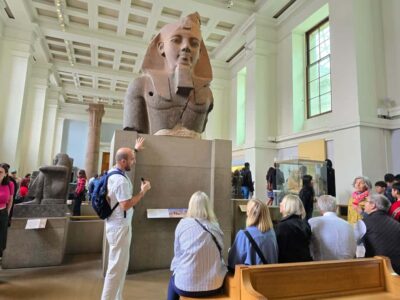
British Museum Guided Tour with Priority Entrance
Read our review →Browse the lists this tour appears in