
Reviewed · BRITISH MUSEUM TOURS
British Museum Tour: Rosetta Stone, Parthenon, Mummies
The Rosetta Stone is the star here, but it is only the beginning. This two-hour route gives you a sensible path through a museum so large that trying to see everything in one visit would be a losing game. I like the tight focus on major objects, and I like that the guide connects the exhibits to the museum’s own complicated story.
I also appreciate the chance to see both famous Egyptian pieces and lesser-known highlights such as Sutton Hoo and the Winged Bulls from Khorsabad. The main drawback is the crowd: one guide has been described as very capable but soft-spoken, and busy galleries can make it hard to hear. Arrive early, stay close, and do not expect a quiet private visit.
Key points to know before booking
- The Rosetta Stone anchors the visit: Learn how one carved decree helped scholars read Egyptian hieroglyphics.
- The Parthenon sculptures come with a controversy: You get the art and the story of how Lord Elgin removed the pieces from Athens.
- Egyptian mummies reveal more than burial customs: The galleries also show everyday objects, craftsmanship, and religious beliefs.
- Sutton Hoo adds an Anglo-Saxon chapter: Its burial treasures shift the tour from ancient Egypt and Greece to early medieval Britain.
- The Winged Bulls make a powerful final stop: These huge Assyrian guardians give you a clear sense of Mesopotamian royal power.
- Expect a brisk, non-private walk: The tour lasts two hours, takes place in English, and is not suitable for wheelchair users.
Why a focused British Museum tour makes sense
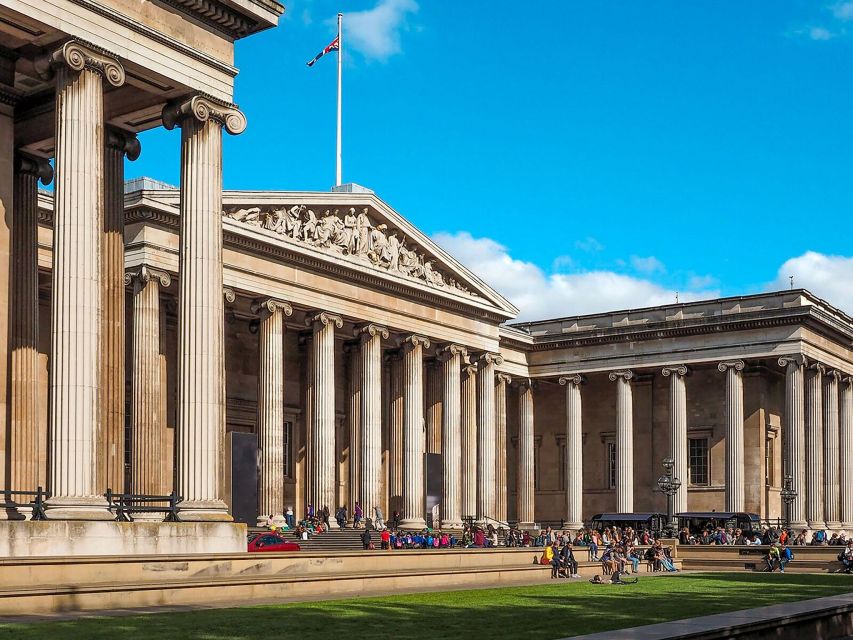
The British Museum is not a museum you casually finish. Its collections cover human societies across thousands of years, and the galleries can pull you in different directions at every turn. Without a plan, you can spend an hour wandering and still miss the objects you came to see.
This tour solves that problem with a clear route and a live guide. You move from the museum’s architecture to a small set of major collections, with explanations that provide links between the objects. I like this approach for a first visit, especially if you have only a morning or afternoon in London.
The price is $84.69 per person, which is not cheap for a two-hour museum visit. Its value depends on what you want. If you mainly need admission and prefer to read labels at your own pace, this will feel expensive. If you want someone to point out the important details, explain the political background, and keep you moving through a huge building, the cost buys structure and interpretation.
The tour is not private, so you share the guide with other customers. That keeps the price below a private guiding session, but it also means the pace and volume are not fully in your hands. You will get the most from it if you stay near the guide and ask questions when the group pauses.
More Museum Tours in London
- London: Chelsea Football Club Stadium and Museum Tour
★ 4.8 · 4,576 reviews - London: British Museum Guided Tour
★ 4.3 · 1,182 reviews - London: Jack the Ripper Museum Tickets
★ 4.2 · 894 reviews
Meeting your guide at the British Museum
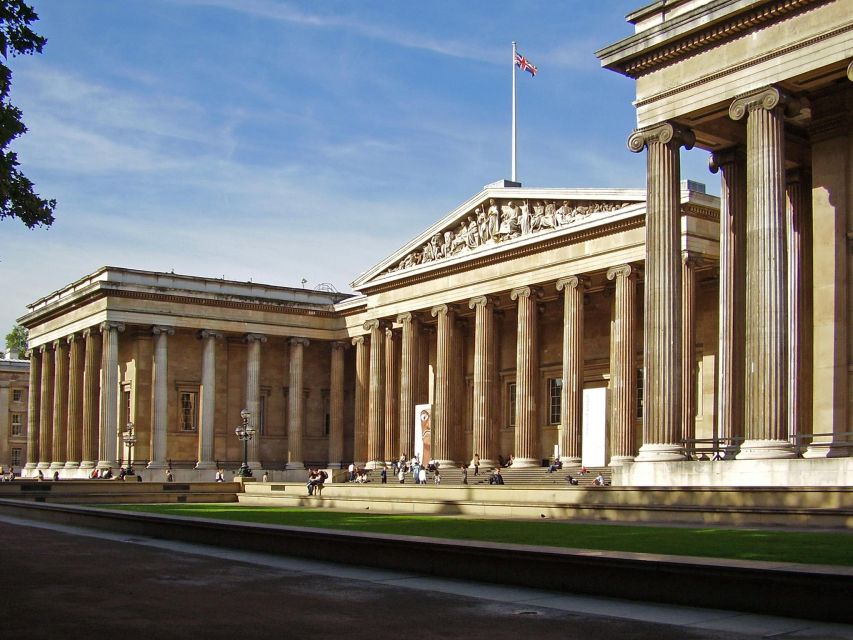
The meeting point is on the stairs at the main entrance, after you have passed through security. Plan to arrive at least 15 minutes before your chosen time. This is practical advice, not just a formal rule: the museum is large, the entrance area can be busy, and finding your group at the last moment adds needless stress.
You do not receive hotel pickup, and there is no food or drink included. Make your own arrangements before or after the tour. Bring a passport or ID card, as this is listed among the things you should have with you.
The tour is conducted in English by a licensed guide. Online support is available when the group is boarding, which can help if you are unsure where to stand or how to identify the meeting point.
Starting times depend on availability. If the time you select is unavailable, you may be moved to another time on the same day. A 10:00 booking, for example, could be shifted to the first available slot later in the day. Same-day or next-day bookings carry an additional risk: if there are no seats, you may be placed on the following day. Check the confirmed time carefully before arranging the rest of your London plans.
The Great Court gives you your first sense of scale
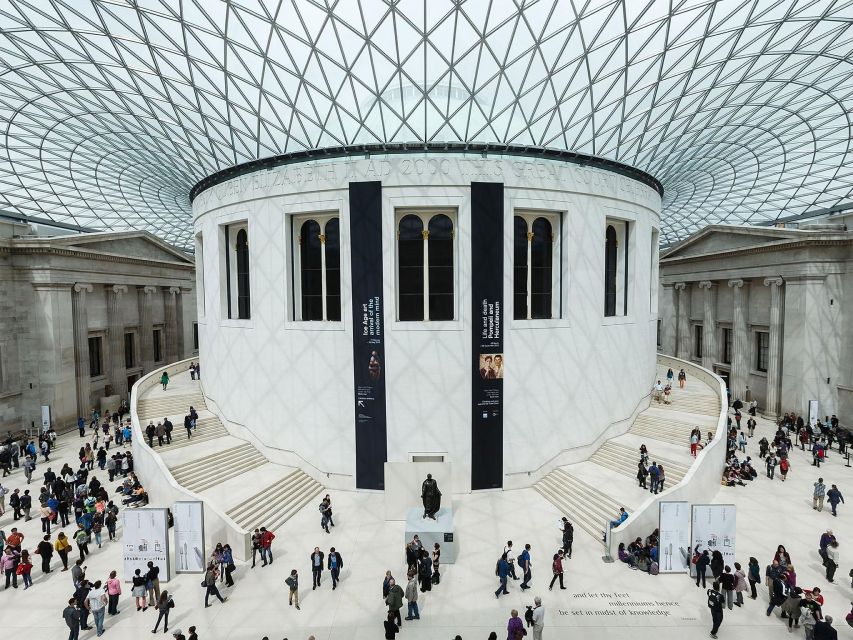
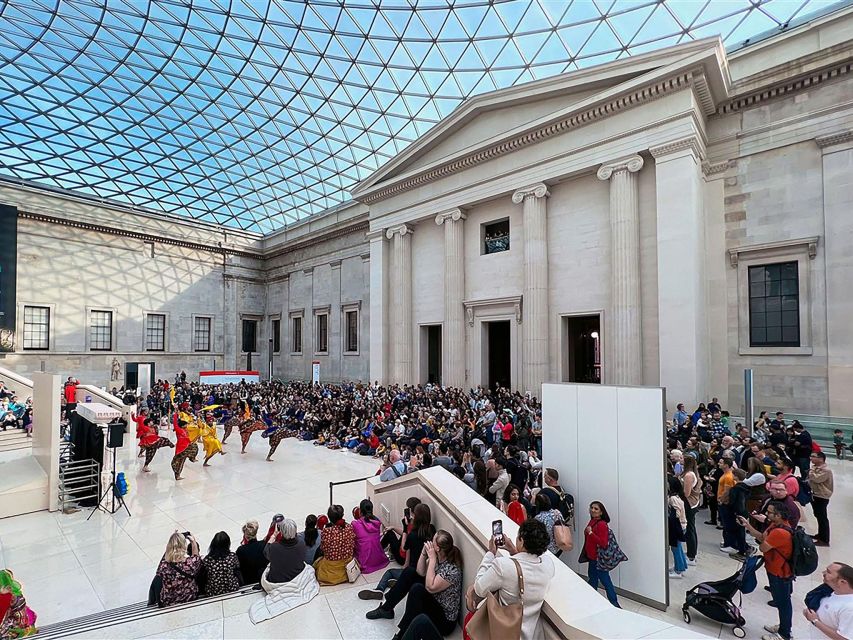
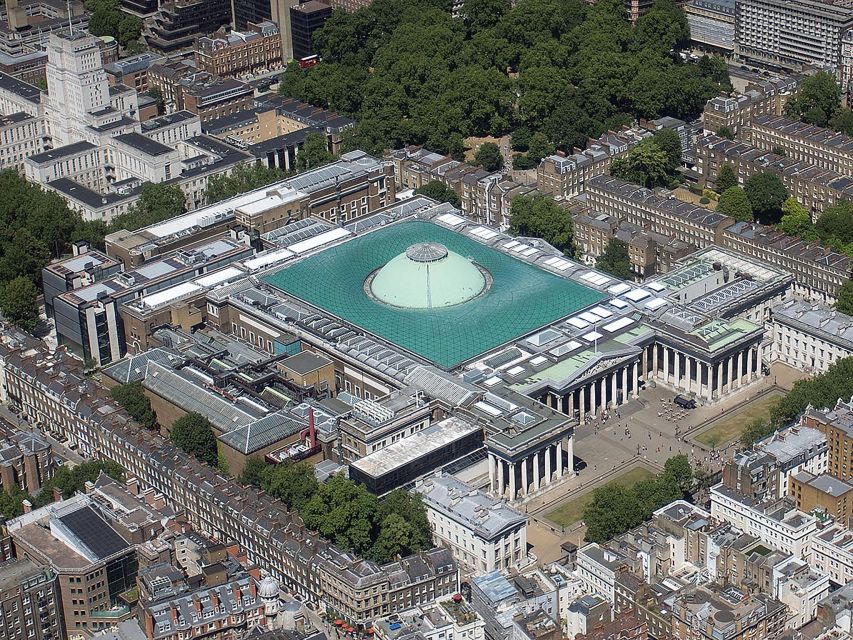
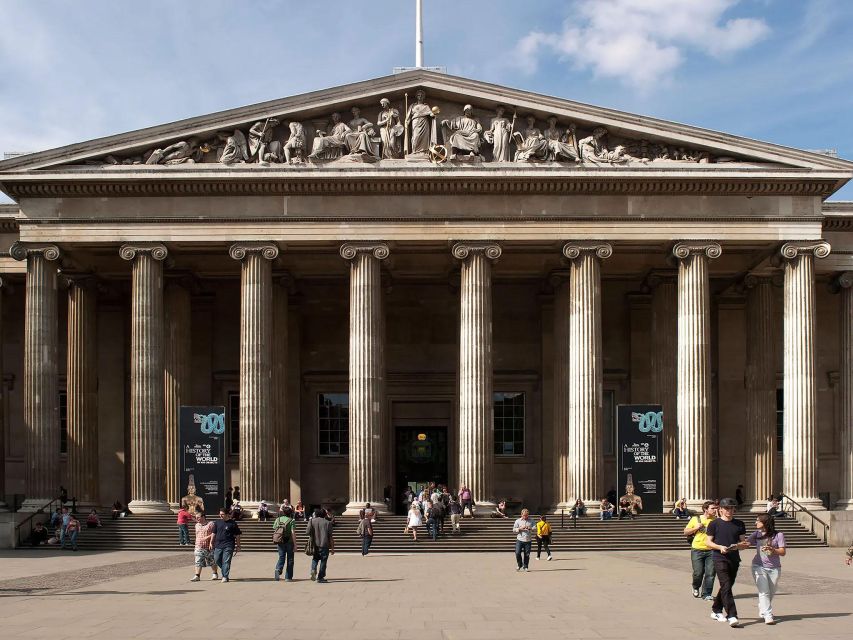
The tour begins at the British Museum, where the building itself sets the tone. The Great Court’s glass roof mixes old masonry with modern engineering and gives you a striking first view of the museum’s scale.
This is more than a quick photo stop. Look up and take in how the roof changes the feeling of the central space. The architecture helps explain why the museum can feel like a city under one roof: broad public areas, long routes, and more galleries than you can reasonably cover in a single day.
Your guide’s opening comments also help place the collections in context. The British Museum is famous for its objects, but its history is tied to collecting, empire, archaeology, diplomacy, and changing ideas about who should own ancient art. That background becomes especially useful when you reach the Parthenon sculptures.
The Rosetta Stone explains how Egyptian writing was read
The Rosetta Stone is the first major object on the route, and it deserves the attention it receives. The stone carries the same decree in three forms of writing, including Greek and two Egyptian scripts. Comparing the scripts gave scholars the evidence they needed to work out Egyptian hieroglyphics.
The important point is that the stone was not simply a dictionary carved in rock. Its value came from the repeated text and the known Greek wording, which allowed researchers to compare languages and signs. A guide can make that process easier to grasp than a label alone.
You may find the stone surrounded by other visitors, so do not expect a long, private look. The guide’s explanation is the real advantage here. You get the reason the object matters, not just its name and date.
This is also a good place to stay close to the group. One guide has been described as very soft-spoken, and crowded galleries can swallow a quiet voice. If you drift toward the back, you may see the object but miss the explanation that gives it meaning.
More guided runs through the British Museum:
- London: Tour of the British Museum
★ 4.1 · 678 reviews - London: British Museum Audio Tour & Priority Entrance Ticket
★ 4.5 · 631 reviews - Afternoon Tea at the British Museum
★ 4.2 · 511 reviews - London: British Museum Guided Tour
★ 4.5 · 267 reviews
The Parthenon sculptures bring art and ownership into the same room
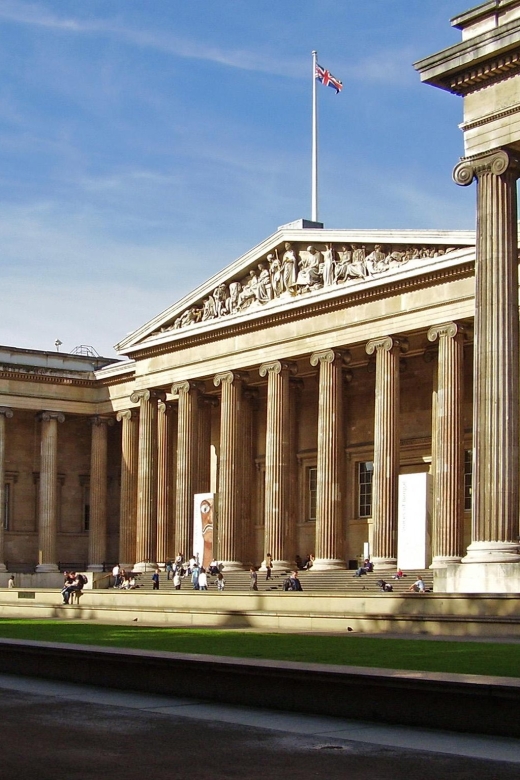
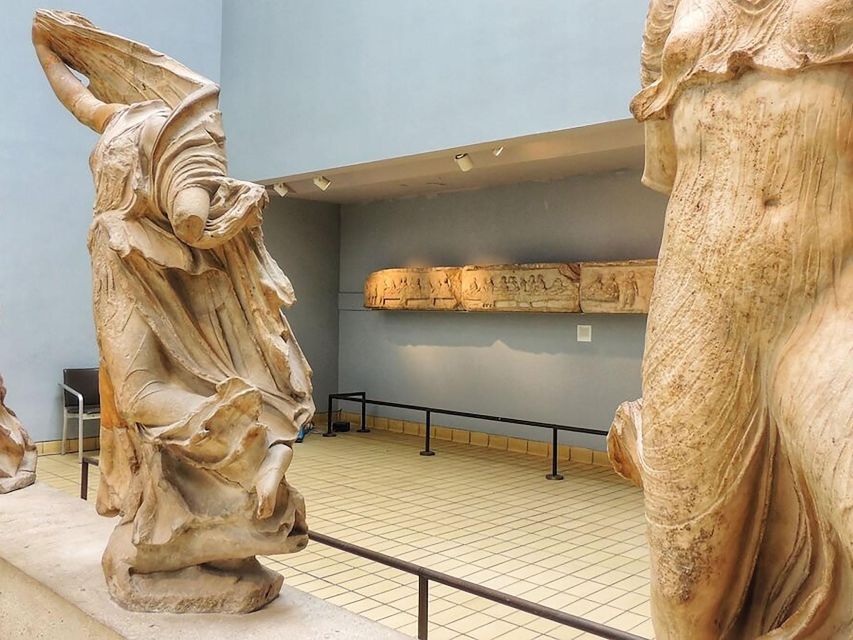
The Parthenon sculptures are beautiful, but they are not a simple stop. They were removed from the Parthenon in Athens by Lord Elgin, who was British ambassador to the Ottoman Empire, and brought to the British Museum. Their presence has led to a long-running dispute over ownership and the return of cultural property.
A good guide treats this as part of the object’s story rather than avoiding the difficult part. You can look closely at the carving while also thinking about how the sculptures left Athens, who had authority to remove them, and how museums should handle works taken under past political conditions.
The gallery offers a useful contrast with the Rosetta Stone. The Rosetta Stone is celebrated for the knowledge it helped make possible. The Parthenon sculptures prompt questions about power, collection, and national identity. Together, the two stops show that museums preserve objects, but they also preserve arguments.
The group format is helpful here because a guide can point out details you might otherwise pass. It is also a limitation if you want a long, quiet period with each sculpture. The tour is designed to give you a strong introduction, not an extended art-study session.
Egyptian mummies show belief, skill, and daily life
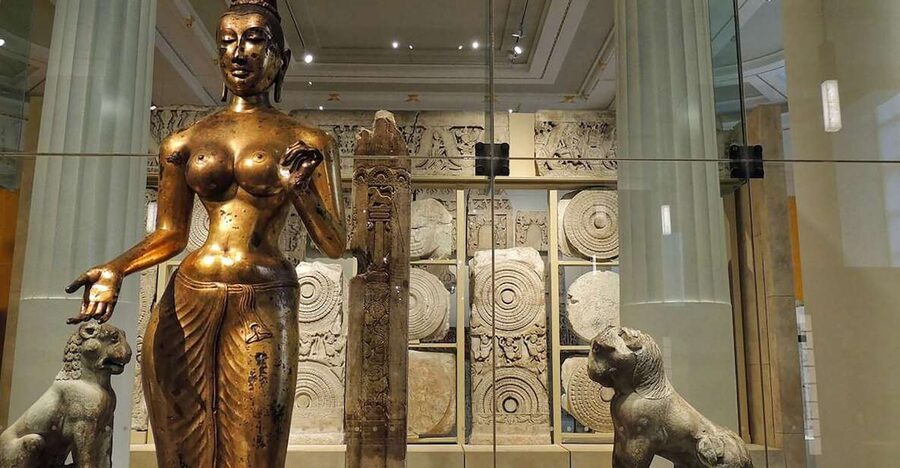
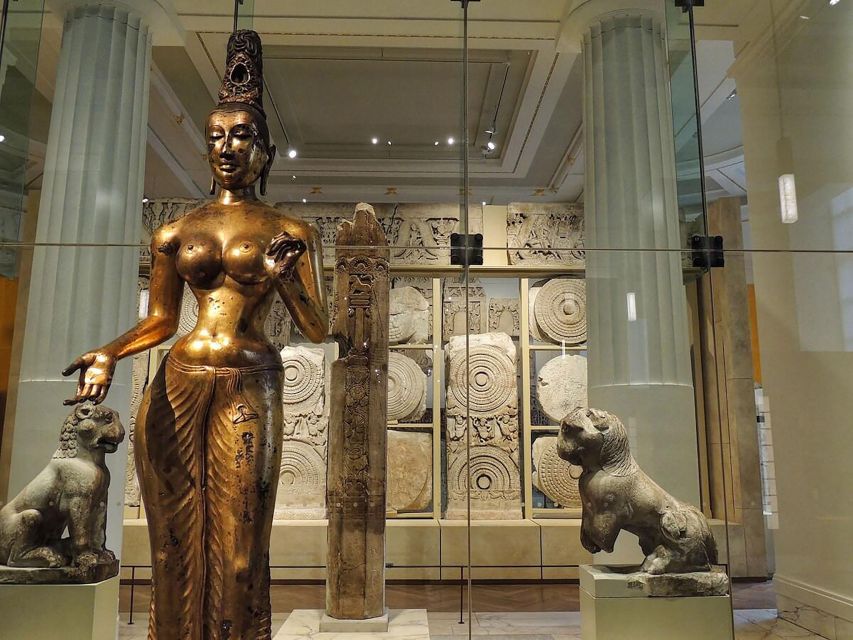
The Ancient Egyptian galleries are likely to be the longest part of the tour. Mummies draw attention because they are direct, physical links to individuals from the distant past, but the surrounding burial objects tell just as much of the story.
You will see artifacts connected with burial practices, religious beliefs, and the craftsmanship used to prepare objects for the next life. These displays can help you understand how Egyptians viewed death as part of a larger spiritual order rather than a final disappearance.
The collection also offers glimpses of ordinary life. Tools, household items, images, and decorative objects can show how people worked, dressed, worshipped, and prepared for death. The guide’s historical and mythological background is especially useful here, since Egyptian objects can be difficult to interpret without knowing the beliefs behind them.
This part of the museum can feel crowded, and the building’s size means you will do plenty of walking between sections. Wear comfortable shoes. Two hours goes quickly, so you will see selected highlights rather than every mummy and burial artifact.
Sutton Hoo changes the story from Egypt to Anglo-Saxon Britain
Sutton Hoo provides a welcome shift in time and place. The site is known for an Anglo-Saxon burial and the valuable objects found there, offering a window into the life and ceremony of an early medieval elite.
The display helps broaden the tour beyond the civilizations most people associate with the British Museum. After the monumental art of Egypt and Greece, Sutton Hoo gives you a more local British connection. The objects show that early medieval Britain had complex social ranks, skilled metalworkers, long-distance connections, and formal burial customs.
I like this stop because it prevents the tour from becoming a greatest-hits march through Egypt and classical Greece. It also gives you a chance to see how archaeologists use burial objects to reconstruct a society. A guide can explain what the artifacts suggest about status, ritual, and the people who created them.
Do not expect the same scale as the Parthenon pieces or the Khorsabad sculptures. Sutton Hoo’s interest comes from the detail and the questions it raises, not from sheer size.
The Winged Bulls from Khorsabad finish with ancient power
The Winged Bulls from Khorsabad provide one of the most dramatic visual moments on the route. These monumental Assyrian sculptures once guarded a grand palace, and their size and careful detail make the power of the ancient court easy to picture.
The creatures combine a human head, a powerful animal body, and wings. Such figures were not casual decoration. Their placement at palace entrances presented a warning and a welcome at the same time, announcing the authority of the ruler to anyone approaching.
The guide’s background on ancient Mesopotamian art and architecture can help you read the bulls as part of a larger royal setting. Look closely at the carving and the way the figures were designed to be seen from different angles. Their imposing scale is part of the message.
This is a strong final stop because it leaves you with an object that is easy to remember. After smaller burial objects and carved stone texts, the bulls bring the tour back to architecture, power, and spectacle.
What the two-hour pace feels like
Two hours is long enough to reach the featured collections, but not long enough for an unhurried museum day. You will walk between galleries, stop for explanations, and move on before every detail has had time to settle.
That pace is a benefit if you need direction. The museum can overwhelm first-time visitors, and a planned route lets you see the famous objects without spending half your visit searching for them. It is also useful if you have other London plans afterward.
The tradeoff is limited freedom. You may want to linger at the mummies or return to the Parthenon sculptures, but the group must keep moving. I would treat the tour as an introduction, then return on your own if one collection captures your attention.
The tour starts and ends at the British Museum, so there is no transportation between stops. It is entirely on foot. The activity is not suitable for wheelchair users, and anyone with limited walking ability should consider that restriction before booking.
Is the priority entry option really skip the line?
The experience describes skip the line as access to a fast, priority queue rather than the normal long queue. That does not mean you walk straight in with no wait. You still enter with other customers who have chosen the priority option.
This distinction matters at a major museum. Priority access can save time, but you should still arrive early and allow for security checks. The meeting point is after security, so you need to complete that step before finding the guide on the entrance stairs.
Who will get the most from this tour?
I would recommend it to a first-time British Museum visitor who wants the major sights with a clear explanation. It works well for people who enjoy ancient history but do not want to spend a full day planning their own route through dozens of rooms.
It is also a good fit if you want context around difficult subjects. The Parthenon sculptures are not just famous marble pieces, and the museum’s collections are not separate from questions about collecting and ownership. A guide can help you approach those issues without reducing them to a quick label.
Families and mixed-interest groups may also find the range useful. The Rosetta Stone, mummies, monumental bulls, and burial treasure offer different kinds of visual appeal. That said, the two-hour walk may be tiring for young children, and the tour cannot be adjusted as freely as a private visit.
I would be more cautious if you prefer silence, photography at your own pace, or detailed study of a single gallery. The group is not private, and the guide may be difficult to hear when the museum is crowded. Stay close and speak up if you miss an explanation.
Booking value and practical tradeoffs
At $84.69 per person, this is a premium way to spend two hours in a museum. You are paying for the licensed English-speaking guide, the planned route, the commentary, and priority-queue access, not for a meal, hotel pickup, or private attention.
The strongest value comes from saving yourself the work of choosing what to see. The British Museum contains far more than anyone can cover in one visit, and the route gathers several headline objects plus two stops that are easy to overlook. If you are short on time, that organization may be worth the price.
The weakest value comes if you are already comfortable navigating museums independently. In that case, you may prefer to spend your money on extra time inside the galleries rather than on a fixed group schedule.
Free cancellation up to 24 hours before the activity and reserve-now, pay-later booking make planning less risky. Still, pay close attention to time changes, especially for last-minute bookings. A changed start time can affect the rest of your day in London.
Should you book the British Museum tour?
Book this tour if you want a well-planned introduction to the British Museum and care about why the Rosetta Stone, Parthenon sculptures, mummies, Sutton Hoo objects, and Winged Bulls matter. The guide’s historical and mythological explanations add value, particularly at the Parthenon and Egyptian galleries.
Skip it if you want a private guide, a slow museum visit, wheelchair access, or complete control over the route. For most first-time visitors with only a few hours, the focused plan is sensible. Arrive early, wear good shoes, stay near the guide, and be ready for a busy but rewarding walk through human history.
FAQ
How long does the British Museum tour last?
The guided tour lasts two hours.
What language is the tour conducted in?
The live tour guide speaks English.
Where do I meet the guide?
Meet the guide on the stairs at the British Museum’s main entrance after completing security checks.
How early should I arrive?
Arrive at least 15 minutes before your scheduled start time.
What major objects are included?
The route includes the Rosetta Stone, Parthenon sculptures, Ancient Egyptian mummies and burial artifacts, Sutton Hoo treasures, and the Winged Bulls from Khorsabad.
Is hotel pickup included?
No. Hotel pickup is not included, and the tour begins and ends at the British Museum.
Is food or drink included?
No. Food and drinks are not included.
Can I cancel for a refund?
You can cancel up to 24 hours in advance for a full refund.
Is the tour suitable for wheelchair users?
No. The activity is listed as unsuitable for wheelchair users. It is also a walking tour, so comfortable shoes are recommended.
More Museums in London
- London: Paradox Museum Entry Ticket
★ 3.9 · 441 reviews - London: National Gallery Guided Tour with Art Expert Guide
★ 4.7 · 440 reviews - London: Postal Museum Entry Ticket and Underground Rail Ride
★ 4.6 · 363 reviews - London: Royal Museums Greenwich Day Pass
★ 4.5 · 309 reviews
Just added around London
- London: Wimbledon Tennis Club and Westminster Walking Tour★ 4.5 · 86 reviews
- London: Westminster to Richmond River Thames Cruise★ 4.8 · 23 reviews
- Westminster Abbey Skip-the-Line Entry and Private Tour★ 4.6 · 4 reviews
- Best of London by LE GRAND – London’s Luxury Bus Tour★ 4.2 · 23 reviews
- London: Westminster Walking Tour & St Paul’s Cathedral Entry★ 4.7 · 7 reviews
- From London: Oxford, Stratford-upon-Avon & Cotswolds Trip★ 4.5 · 64 reviews
- From London: Warwick, Oxford, Stratford & Cotswolds Day Tour★ 4.0 · 270 reviews
- Warner Bros. Studios and 1-Day London Hop-on Hop-off tour★ 4.7 · 9 reviews
British Museum Tours, compared.



British Museum Audio Tour & Priority Entrance Ticket
Read our review →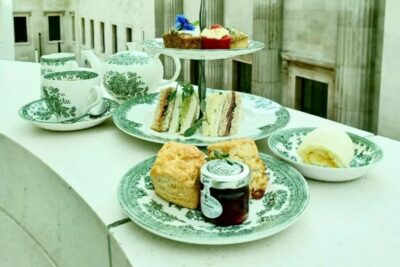
British Museum Archaeology Course and Guided Tour
Read our review →
British Museum Highlights Guided Small Group Tour
Read our review →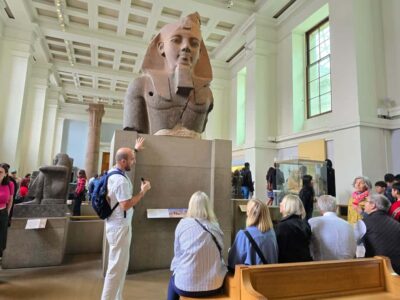
British Museum Guided Tour with Priority Entrance
Read our review →Browse the lists this tour appears in