
Reviewed · BRITISH MUSEUM TOURS
London: British Museum Guided Tour with Priority Entrance
The British Museum can swallow an entire day, so this two-hour guided route makes a sensible first visit. You’ll move from the glass-roofed Great Court to Egyptian mummies, the Rosetta Stone, Parthenon Sculptures, and Sutton Hoo, with a guide supplying the links that labels often leave out.
I like the small group limit of 10 people, which should make it easier to hear and ask questions. I also like the clear sweep across several major collections, from ancient Egypt and Greece to Anglo-Saxon England. The main caution is the advertised priority entrance: one account describes a long queue despite the separate-entry promise, so arrive early and do not assume you’ll walk straight in.
Key points at a glance
- A fast route through a huge museum: Two hours focuses on some of the British Museum’s best-known galleries.
- Major highlights included: Expect the Great Court, Parthenon Sculptures, Egyptian mummies, Rosetta Stone, and Sutton Hoo objects.
- Small group format: The group is limited to 10 participants.
- Guides can make the difference: Tony, Tara, Stuart, Alex, and Mira are among the guides associated with the experience, with especially warm praise for their stories and enthusiasm.
- Priority entry needs a practical caveat: The tour includes allocated main-entrance tickets, but a queue may still be present.
- Good value for first-time visitors: At $39.05, you are paying mainly for structure, explanation, and time saved inside the museum.
Why a guided visit helps at the British Museum
The British Museum is free to enter, but free does not mean simple. More than 8 million objects are held in its collections, spread across more than 70 galleries. Even a focused visit can leave you standing at a map, wondering which direction leads to Egypt and which leads to Greece.
This tour gives you a route through the museum’s major headline objects. That matters because the British Museum is not arranged as one neat story from beginning to end. Its collections jump across continents and centuries. A good guide turns those separate rooms into a connected account of human belief, art, science, burial, power, and discovery.
You should also set your expectations correctly. Two hours is enough to see selected highlights, not enough to understand the whole museum. I see that as a strength for a first visit. You get a strong introduction, then you can return later to the rooms that caught your attention.
The guide’s role is central. Tony is described as offering commentary that was interesting and enjoyable. Tara is praised for her enthusiasm, clear knowledge of the museum, fascinating stories, and kind manner. Stuart also made a strong impression and waited for a late arrival who had been caught in the entrance queue. Alex and Mira are also named in connection with an interesting tour.
Guide quality can vary from one departure to another, but the pattern here is encouraging: the best part of this experience is likely to be the human explanation rather than simply the ticket.
More Museum Tours in London
- London: Chelsea Football Club Stadium and Museum Tour
★ 4.8 · 4,576 reviews - London: British Museum Guided Tour
★ 4.3 · 1,182 reviews - London: Jack the Ripper Museum Tickets
★ 4.2 · 894 reviews
Meeting inside the Great Court
Your guide waits inside the museum beside the information desk, and the tour ends back at the same meeting point. That arrangement is convenient once you are through the doors, but it creates an important arrival issue.
You need to locate the museum entrance, pass through any required security or ticket checks, and then find the information desk. The instructions do not describe a street-side guide holding a large sign, so allow extra time to get inside and reach the meeting point.
The tour includes priority tickets for the main entrance with allocated time slots and is presented as a way to skip the line through a separate entrance. In practice, you should keep your expectations modest. A detailed account of the experience says that the queue was very long, that priority entrance did not feel like a true skip-the-line service, and that the wait reached as much as 45 minutes on a busy day.
That same account says the guide waited, which is helpful, but you should not rely on a late arrival being harmless. Arrive early, especially if your time slot is fixed. The museum itself is free, so the $39.05 price is not buying admission in the usual sense. It is paying for a reserved tour arrangement and two hours of guidance.
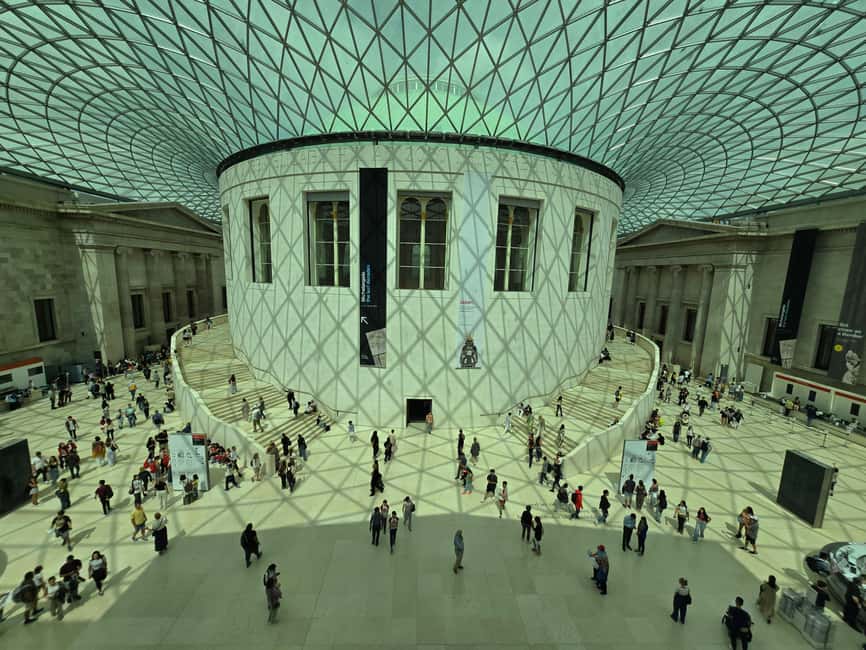
Once inside, the Great Court gives the tour a memorable opening. Its huge glass roof is more than a useful cover over a central space. It is one of the museum’s visual highlights, and your guide can use it to explain the building’s scale and the way the museum gathers objects from many parts of the world.
Egyptian mummies, the Rosetta Stone, and Ramesses II
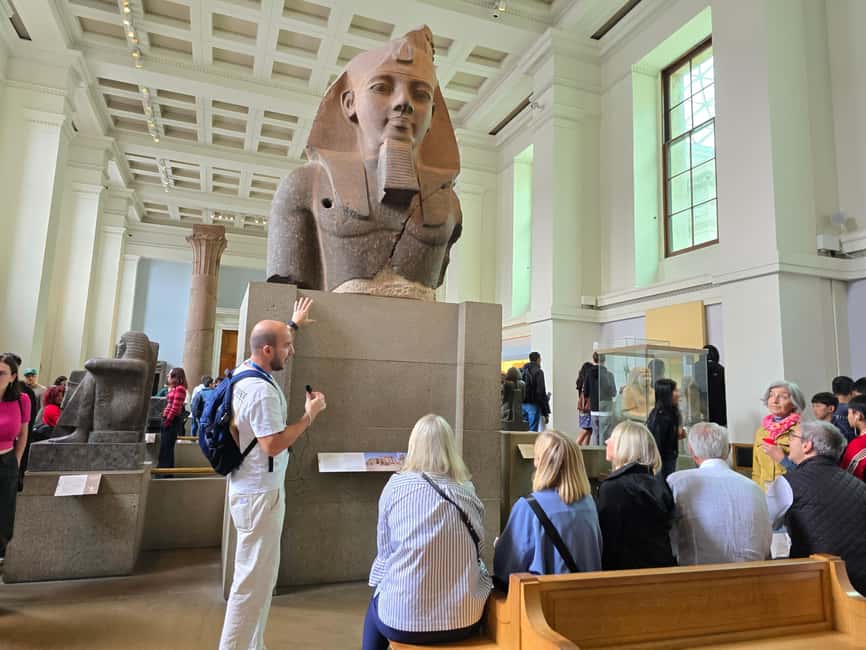
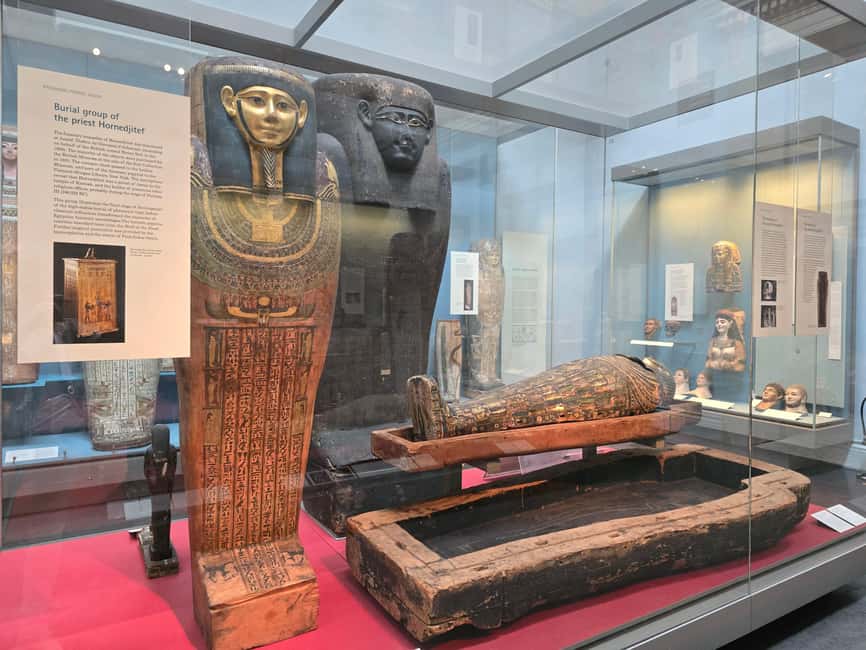
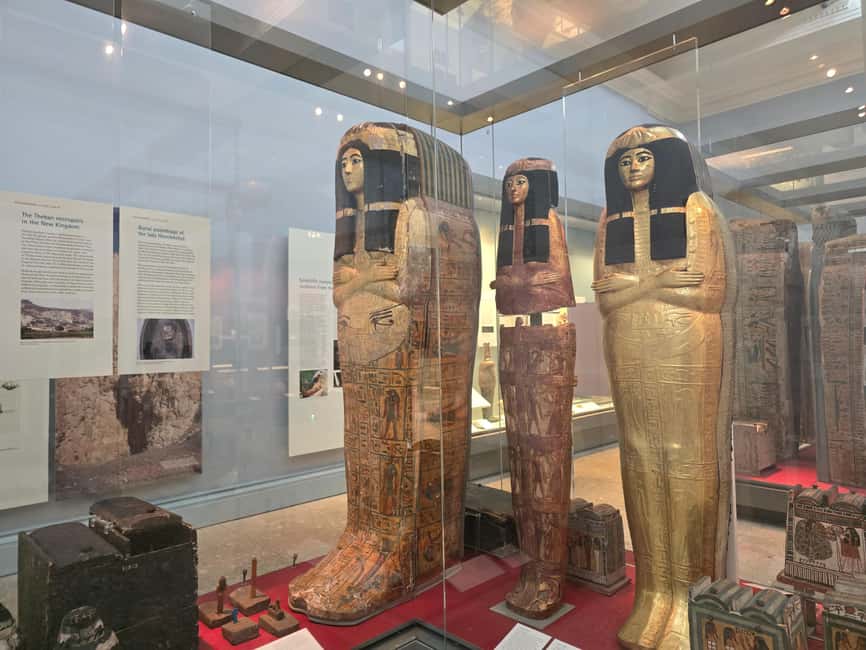
The Egyptian section supplies some of the strongest material for a guided visit. You will see Egyptian mummies, the Book of the Dead, the Rosetta Stone, and the bust of Ramesses II.
A guide can help you look beyond the familiar image of a mummy in a case. The displays connect burial practices with religious beliefs and ideas about the afterlife. The Book of the Dead is especially useful in that discussion because it points to the rituals and instructions connected with death, judgment, and the next world.
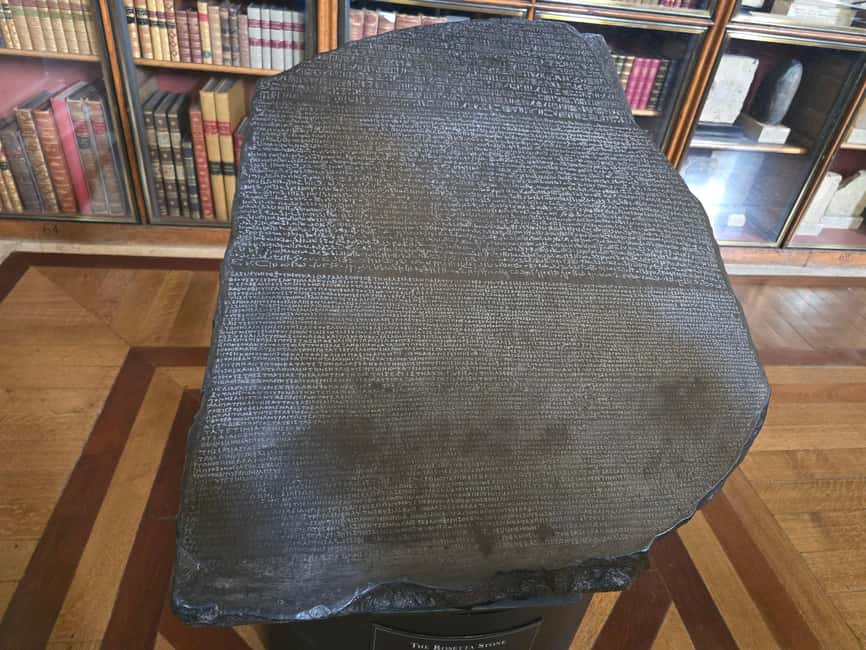
The Rosetta Stone is famous for helping scholars read Egyptian hieroglyphs. Without context, it can seem like a dark slab surrounded by crowds. With a guide, you get the basic reason it mattered and why a single object could change the study of ancient Egypt.
Ramesses II adds another angle. The bust is not simply a portrait to admire and pass by. It reflects royal image-making and the way rulers presented authority. Your guide can give you a short explanation while keeping the group moving, an important skill when several rooms compete for your attention.
This section may be the busiest part of the route. You will not have unlimited time at each object, and the guide must balance explanation with the pace of a group. If Egyptian collections are your main interest, treat the tour as an introduction and plan a separate return visit.
The Parthenon Sculptures and ancient Greek myths
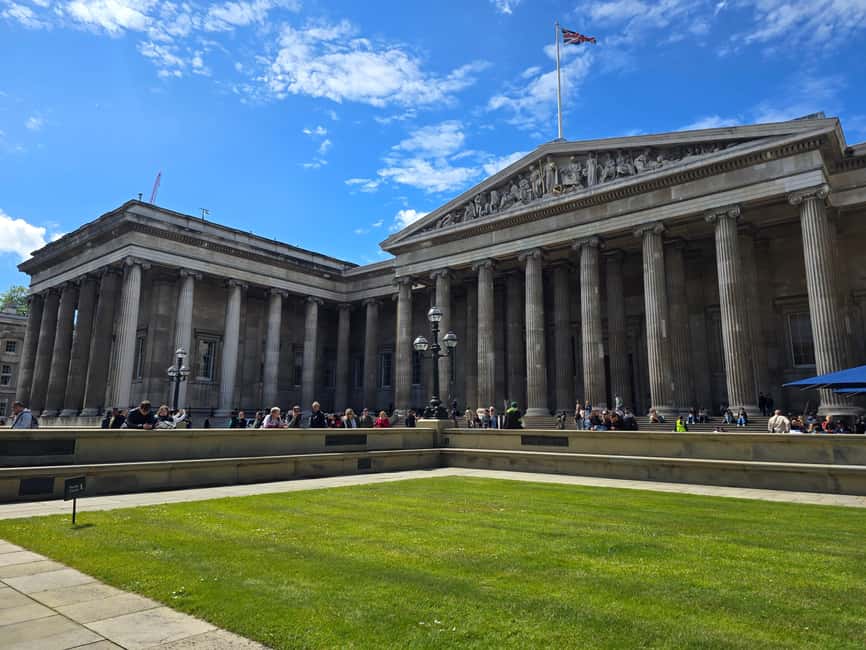
The Parthenon Sculptures, also called the Elgin Marbles, bring you into the world of classical Greece. The tour uses them to explain myths and legends as well as the artistic ideas behind the sculptures.
These pieces are not just isolated statues. They once formed part of a major temple program, where images of gods, heroes, ceremonies, and conflict helped express the values of the society that made them. A guide can point out how the figures were designed, what stories they suggest, and why their movement and human form became so influential.
The name Elgin Marbles also carries a modern political and cultural debate over ownership and removal. The supplied tour information identifies the sculptures by both names but does not promise a detailed discussion of that dispute. If the question of where the sculptures belong is a major reason for your visit, ask your guide directly and allow more time afterward for your own reading.
For a first tour, the Greek galleries are valuable because they contrast with the Egyptian rooms. You shift from burial and royal power to temple art, mythology, and the public ideals of the ancient Greek world. The route gains variety without requiring a long journey across London.
More guided runs through the British Museum:
- London: Tour of the British Museum
★ 4.1 · 678 reviews - London: British Museum Audio Tour & Priority Entrance Ticket
★ 4.5 · 631 reviews - Afternoon Tea at the British Museum
★ 4.2 · 511 reviews - London: British Museum Guided Tour
★ 4.5 · 267 reviews
The Enlightenment Room and the pleasure of collecting
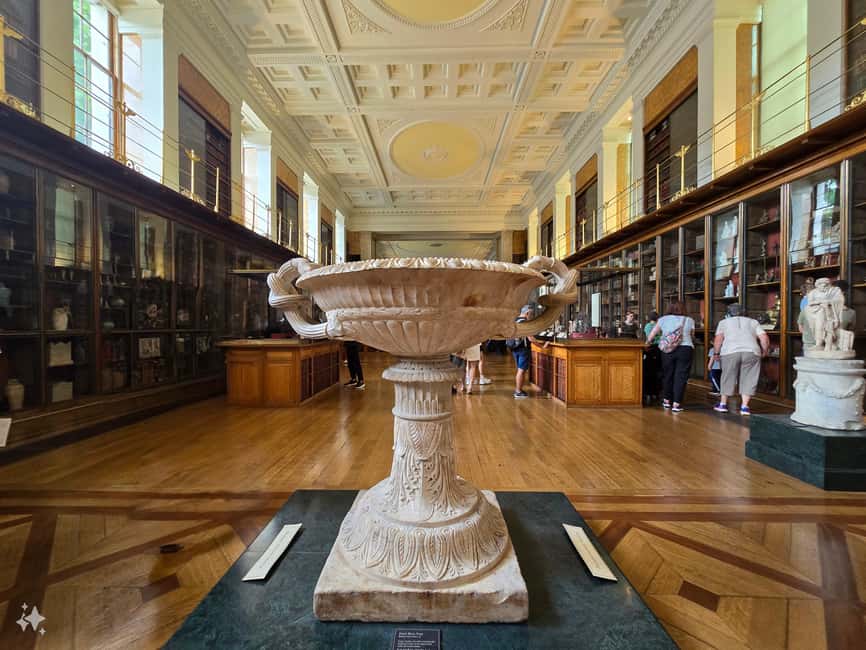
The Enlightenment Room changes the mood. Instead of focusing mainly on ancient burial, temples, and kings, it looks toward the 18th century and the drive to classify, compare, study, and collect.
The objects reflect intellectual curiosity and scientific progress. This makes the room useful for understanding how European museums developed as places of research as well as display. It also gives you a chance to consider the museum itself: who gathered these objects, how they were organized, and what people in the 18th century believed knowledge should look like.
I like this stop because it prevents the tour from becoming a parade of famous objects. The British Museum is also about the history of collecting and the habits of scholarship. The Enlightenment Room gives that larger idea a physical setting.
The drawback is time. A two-hour tour has to cover several major areas, so this room may receive a shorter explanation than the Egyptian or Greek galleries. Still, its inclusion helps the itinerary feel broader and more thoughtful.
Chinese and Southeast Asian collections
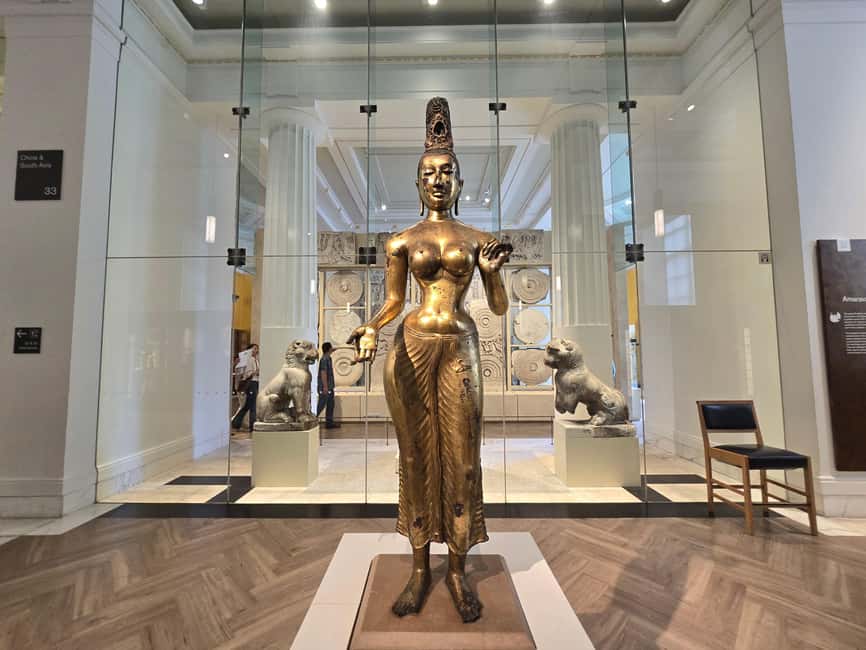
The Asian collections add another change of pace. You will see Chinese objects and finely made pieces from Southeast Asia, with the guide explaining the cultures and artistic traditions behind them.
The information provided does not identify exact objects or galleries, so you should not expect a fixed list of individual masterpieces here. Instead, think of this portion as a compact introduction to collections that can be easy to miss when first-time visitors head straight for Egypt and Greece.
This stop is particularly useful if you want the tour to move beyond the most famous European and Mediterranean displays. It also shows the scale of the museum’s holdings. You are not visiting a single-civilization museum, and the Asian galleries make that clear.
As with every part of the route, the guide has to choose what deserves attention. If a Chinese or Southeast Asian object catches your eye, note its location and return after the tour. The two-hour format is designed to give you range, not long periods of quiet study.
Sutton Hoo and Anglo-Saxon England
The final major highlight is Sutton Hoo, the Anglo-Saxon ship burial. The display includes the famous helmet, a shield, and other objects that reveal the skill and culture of early medieval England.
Sutton Hoo is an excellent choice for this route because it brings the museum’s own national story into the tour after so much attention to Egypt, Greece, and Asia. The objects show that early medieval England was not a plain or isolated world. The craftsmanship, burial setting, and links to wider trade and power all give the display weight.
The helmet is the visual star, but do not rush past the less famous pieces. The shield and other burial objects help explain how status, warfare, ceremony, and identity worked together. A guide can also show how archaeologists use a burial site to reconstruct a society when written evidence is limited.
This gallery may be especially rewarding if you have seen the film The Dig, though the tour details do not promise any film-related commentary. You will still gain a concise look at one of Britain’s most important archaeological discoveries.
What the two-hour pace feels like
Two hours sounds generous until you count the Great Court, Egypt, Greece, the Enlightenment Room, Asian collections, and Sutton Hoo. The pace will be purposeful. You will stop for explanations, move between galleries, and keep an eye on the clock.
That pace is ideal if you are visiting London for a short stay or if this is your first look at the museum. It is less suitable if you want to sketch, read every label, or examine one collection in detail. The guide is there to choose the major stops for you, not to provide unlimited free time.
The small group limit of 10 should help. A group this size is easier to keep together than a large crowd, and it gives you a better chance to hear the commentary. Headsets are available as an option, which may help in crowded galleries or when the guide needs to speak while the group is spread around an object.
The tour commentary is offered in English or Italian. Check the available departure when booking, since the language matters greatly to how much you gain from the explanations.
Is $39.05 a fair price?
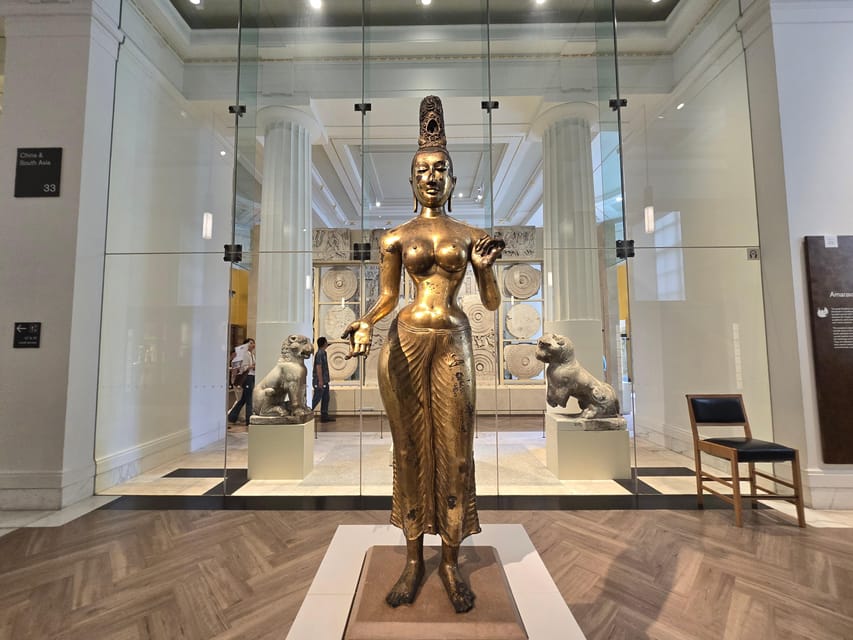
At $39.05 per person, the price is reasonable if you want a structured first visit and strong interpretation. The British Museum has free admission, so you are not paying for access to the collection itself. You are paying for the guide, the organized route, and the ticket arrangement.
That value depends heavily on your priorities. If you are comfortable studying a map, reading labels, and choosing your own highlights, you can visit the museum without this tour and spend nothing on admission. If the museum feels overwhelming, two hours of direction can prevent wasted time and help you understand why the objects matter.
The price also feels fairer for a first-time visit than for a repeat visit focused on one gallery. Someone returning specifically for Egyptian mummies or Greek sculpture may prefer to explore independently and set their own pace.
Food, drinks, and transportation are not included. You need to make your own way to the museum and handle anything you want before or after the tour. Free cancellation up to 24 hours before the activity and the option to reserve now and pay later reduce the financial risk if your London plans are still shifting.
Who should book this British Museum tour?
I would recommend it to you if:
- You are visiting the British Museum for the first time.
- You want to see several major collections in a short period.
- You prefer stories and context to reading dozens of labels.
- You are traveling with someone who might find a huge museum tiring or confusing.
- You want a small group rather than a large guided crowd.
- You can arrive early and handle the possibility of an entrance queue.
I would be more cautious if you have already visited the museum and know exactly which galleries you want. The fixed two-hour route may feel restrictive, especially if your priority is one collection.
Families and mixed-interest groups may find the variety helpful, though the supplied information does not state a minimum age or a dedicated children’s format. The tour covers objects from several periods, so it offers regular changes of subject rather than two hours on one theme.
Practical verdict: book for guidance, not just priority entry
This is a good British Museum introduction at a fair price, provided you understand what you are buying. The guide-led experience is the real product. The route gives you famous objects, useful context, and a manageable way into one of London’s largest museums.
Book it if Tony, Tara, Stuart, Alex, or Mira, or another guide with the same clear and lively approach, is available in your language and you want help making sense of the collection. Arrive early, since the priority-entry promise may not eliminate the queue. If your only goal is admission, remember that the museum is free and independent entry may suit you better.
FAQ
How long does the British Museum guided tour last?
The tour lasts two hours. Starting times vary, so check availability for the date you want.
How much does the tour cost?
The listed price is $39.05 per person.
What languages are available?
Live commentary is available in English and Italian.
How large is the tour group?
The group is limited to 10 participants.
Where does the tour begin?
Your guide waits inside the British Museum next to the information desk.
Where does the tour finish?
The activity ends back at the meeting point beside the information desk.
Does the tour include British Museum admission?
It includes priority tickets for the main entrance with allocated time slots. The museum itself is free to enter.
Does priority entrance guarantee no queue?
The tour is advertised with a separate entrance, but an account of the experience describes a long queue and a wait of up to 45 minutes on a busy day. Arrive early and allow extra time.
What exhibits are included?
The route includes the Great Court, Parthenon Sculptures, Egyptian mummies, the Book of the Dead, the Rosetta Stone, the bust of Ramesses II, the Enlightenment Room, Chinese and Southeast Asian collections, and Sutton Hoo objects.
Are headsets available?
Headsets are available as an option.
Are food and drinks included?
No. Food and drinks are not included.
Is transportation included?
No. You must arrange your own transportation to the British Museum.
Can I cancel the tour?
You can cancel up to 24 hours in advance for a full refund.
Can I reserve now and pay later?
Yes. The booking option allows you to reserve your place and pay later.
More Museums in London
- London: Paradox Museum Entry Ticket
★ 3.9 · 441 reviews - London: National Gallery Guided Tour with Art Expert Guide
★ 4.7 · 440 reviews - London: Postal Museum Entry Ticket and Underground Rail Ride
★ 4.6 · 363 reviews - London: Royal Museums Greenwich Day Pass
★ 4.5 · 309 reviews
Just added around London
- London: Wimbledon Tennis Club and Westminster Walking Tour★ 4.5 · 86 reviews
- London: Westminster to Richmond River Thames Cruise★ 4.8 · 23 reviews
- Westminster Abbey Skip-the-Line Entry and Private Tour★ 4.6 · 4 reviews
- Best of London by LE GRAND – London’s Luxury Bus Tour★ 4.2 · 23 reviews
- London: Westminster Walking Tour & St Paul’s Cathedral Entry★ 4.7 · 7 reviews
- From London: Oxford, Stratford-upon-Avon & Cotswolds Trip★ 4.5 · 64 reviews
- From London: Warwick, Oxford, Stratford & Cotswolds Day Tour★ 4.0 · 270 reviews
- Warner Bros. Studios and 1-Day London Hop-on Hop-off tour★ 4.7 · 9 reviews
British Museum Tours, compared.



British Museum Audio Tour & Priority Entrance Ticket
Read our review →
British Museum Archaeology Course and Guided Tour
Read our review →
British Museum Highlights Guided Small Group Tour
Read our review →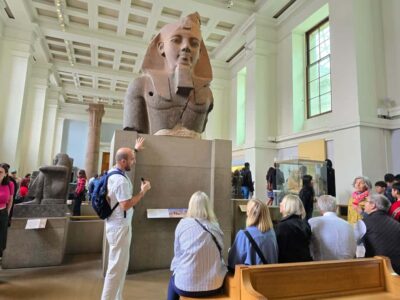
British Museum Guided Tour with Priority Entrance
Read our review →Browse the lists this tour appears in