
Reviewed · BRITISH MUSEUM TOURS
London: British Museum Highlights: Private Tour
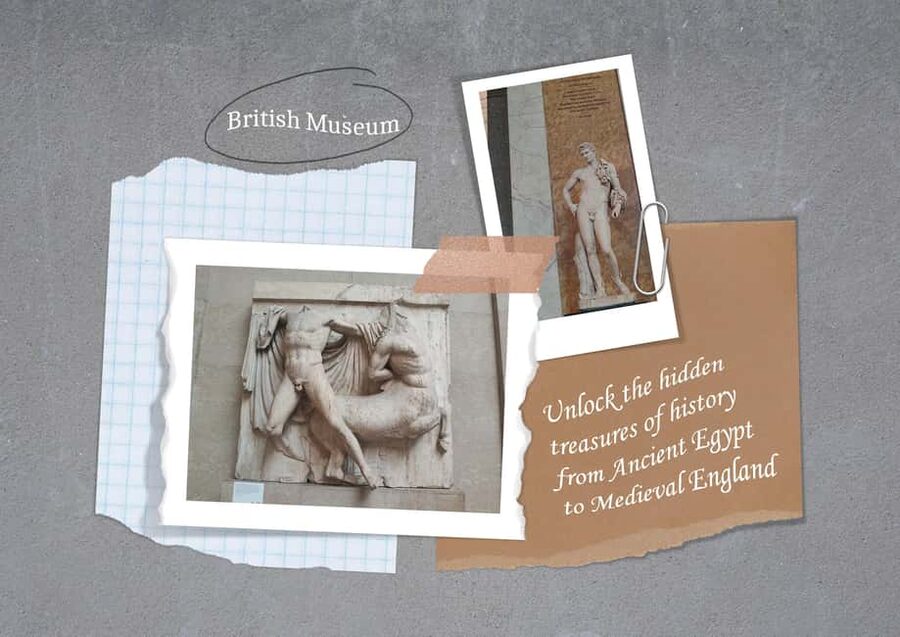
The British Museum is too large for a casual wander to make much sense. This private two-hour tour gives you a clear route through famous objects, from the Rosetta Stone and Egyptian mummies to the Parthenon Marbles and medieval religious art. The theme is beauty, belief, love, death, and the ideas that still shape modern life.
I like the small format, limited to four people, because you can ask questions without fighting for the guide’s attention. I also like the focus on storytelling. Richard, one of the named guides, is praised for his enthusiasm and clear explanations. The main drawback is time: two hours can introduce the museum, but it cannot cover more than a small portion of its collection.
Key points to know before booking
- Private group for up to four: You get a more personal tour rather than a large crowd moving from object to object.
- Rosetta Stone and Parthenon Marbles: The route covers two of the museum’s best-known displays and explains their wider cultural importance.
- Stories beyond dates and labels: Expect themes of beauty, fate, love, religion, and changing ideas about the human body.
- Richard may be your guide: His friendly manner, enthusiasm, and clear explanations receive special praise.
- Fast-track security helps: You enter through the group entrance at Edward VII’s Entrance and use express security.
- Plan for walking and light packing: Large bags, backpacks, food, drinks, selfie sticks, and flash photography are not permitted inside.
Why a private British Museum tour can make sense
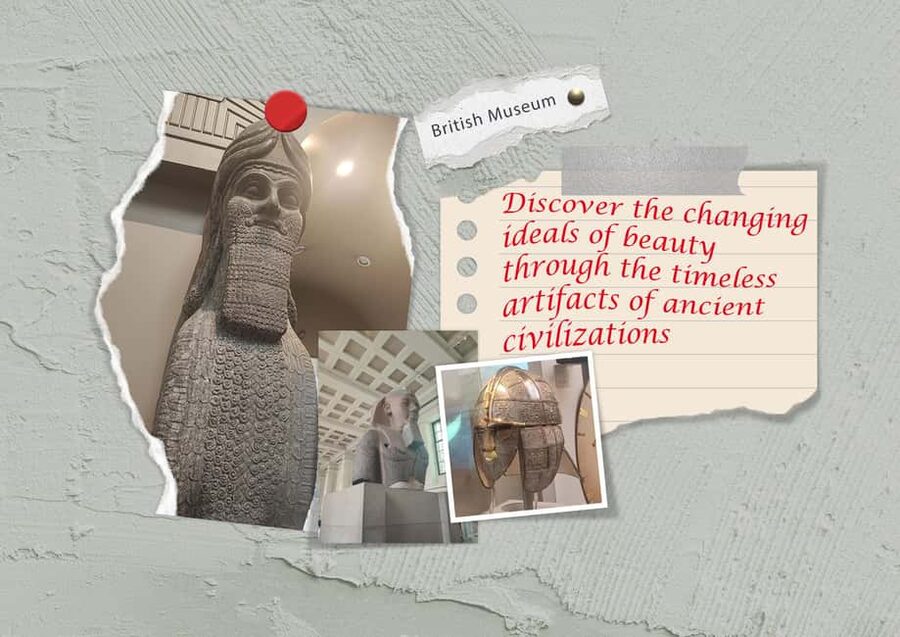
The British Museum holds more than 8 million artifacts. That figure is impressive, but it also explains the problem: you can spend hours walking past objects without understanding why they matter.
A private guide gives you a human route through the collection. Instead of trying to see everything, you follow a selected story about how people have pictured beauty, explained the world, mourned the dead, and told stories about love and faith.
I find that approach more useful than a simple list of famous objects. The Rosetta Stone is not only a large stone with writing on it. The Egyptian mummies are not just dramatic cases to photograph. The Parthenon Marbles raise questions about beauty, cultural ownership, and the way ancient Greece still shapes European art.
The private format matters most if your group has different interests. You can ask for more explanation about Egypt, religion, ancient Greece, or the museum’s storytelling themes. With only up to four people, you should have a better chance to hear the guide and stop when something catches your attention.
The tour is conducted in English. The small size also makes the experience easier for families, couples, or a few friends who prefer not to join a large walking group.
More Museum Tours in London
- London: Chelsea Football Club Stadium and Museum Tour
★ 4.8 · 4,576 reviews - London: British Museum Guided Tour
★ 4.3 · 1,182 reviews - London: Jack the Ripper Museum Tickets
★ 4.2 · 894 reviews
Meeting the guide at Edward VII’s Entrance
The tour begins at the group entrance to the British Museum, specifically Edward VII’s Entrance. Look for the guide holding a My London Guide sign.
This detail is worth taking seriously. The British Museum has several entrances and a very large public facade, so arriving at the wrong doorway can eat into a two-hour tour. Give yourself enough time to reach the museum and locate the meeting point before the scheduled start.
Fast-track entry means you use an express security check. It does not mean you can ignore the museum’s rules. Weapons, sharp objects, alcohol, drugs, explosives, and selfie sticks are not allowed. Large bags and backpacks cannot enter, so pack lightly.
Photography is allowed without flash. Food and drinks are not permitted in the exhibition halls. These restrictions are ordinary museum rules, but they can affect your morning or afternoon if you arrive carrying a large daypack from sightseeing elsewhere.
The activity ends back at the same meeting point. There is no hotel pickup or drop-off, so you handle your own transport to and from the museum.
The Rosetta Stone and the power of written language
The Rosetta Stone is one of the natural anchors for this tour. It connects different forms of writing and helped scholars understand Egyptian hieroglyphs.
What makes the object valuable is not only its age or appearance. It represents a major step in reading a lost writing system. A guide can turn what might look like a dark stone slab into a story about language, scholarship, and the effort required to make sense of the ancient world.
This is also a good example of why a live guide helps. Museum labels are useful, but they cannot always explain the chain of ideas around an object. You can ask questions, hear the explanation in plain language, and connect the stone to the wider Egyptian displays.
Do not expect a long, quiet session at every highlight. The full tour lasts about two hours, and the museum contains far more material than any short visit can cover. The value lies in seeing a carefully chosen group of objects rather than wandering without a plan.
Greek beauty and the Parthenon Marbles
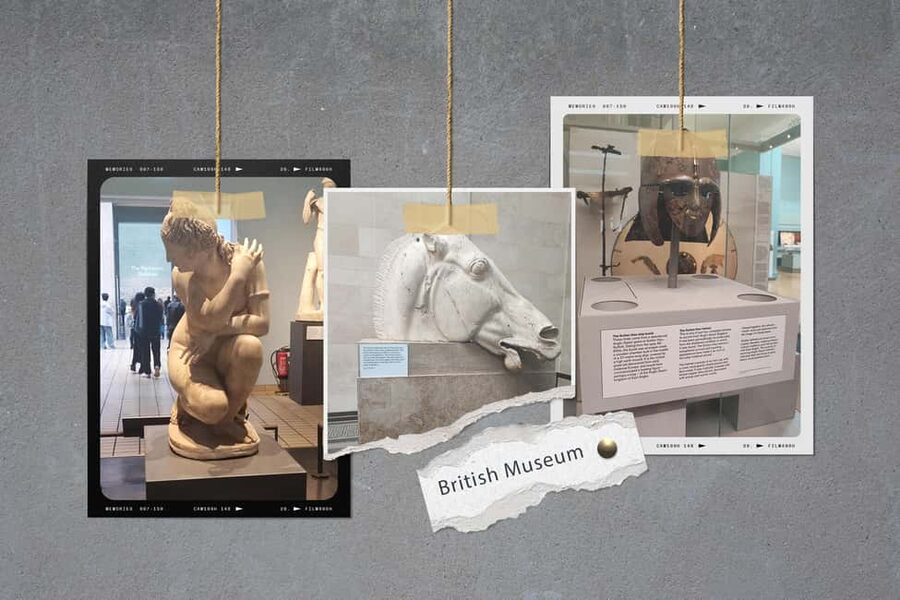
The Parthenon Marbles provide the tour’s main chance to consider beauty. Ancient Greek art has had a lasting effect on European ideas about the human form, balance, movement, and ideal proportion.
The guide’s job here is not simply to point out carved figures. You will consider how ancient Greece shaped later views of art and culture, and how those ideas still appear in modern life. The subject gives the tour a useful thread: beauty is not fixed, even when certain artistic ideals appear to last for centuries.
The Parthenon Marbles also require a thoughtful approach because they are famous, contested, and displayed far from the building where they were made. The supplied details do not promise a long discussion of museum ownership or current cultural debates, so you should not book this tour expecting a specialist seminar on that subject. You can, however, expect the marbles to serve as a major stop in the story of beauty and ancient Greek influence.
Some people may want more time with the sculptures. If the marbles are your main reason for visiting, tell the guide early. A private group gives you a better chance to shape the conversation, though the fixed two-hour limit still applies.
More Private Tours in London
- London: Tower of London Entry & Beefeater Private Audience
★ 4.4 · 1,441 reviews - London: Private Photoshoot with Video Clip Option
★ 4.8 · 182 reviews - London: Private Walking Sightseeing Tour
★ 4.2 · 175 reviews - London Private Welcome Tour with a Local Guide
★ 4.6 · 142 reviews
Egyptian mummies and the line between life and death
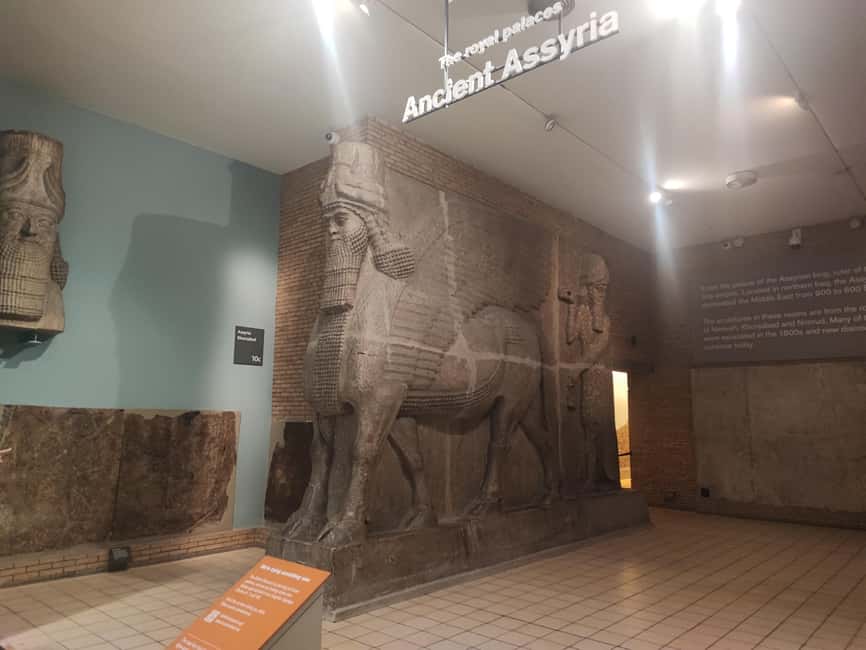
The Egyptian section brings a different mood. Mummies give the guide a way to talk about death, medicine, belief, and the human wish to preserve the body.
The tour frames these objects around the dance between life and death. That theme is more useful than treating mummies as spooky curiosities. Ancient Egyptian approaches to burial and the body reveal a society thinking hard about the soul, the afterlife, and what might happen after death.
You will also encounter the wider achievements linked with ancient Egypt, including pyramids, hieroglyphs, and advances in medicine. The guide can connect these subjects rather than presenting each display as an isolated fact.
Keep in mind that the museum experience involves a moderate amount of walking. You will be moving between galleries and standing for much of the tour. The activity is not suitable for wheelchair users, so anyone with mobility concerns should consider that before booking.
Mesopotamia and ideas that still affect daily life
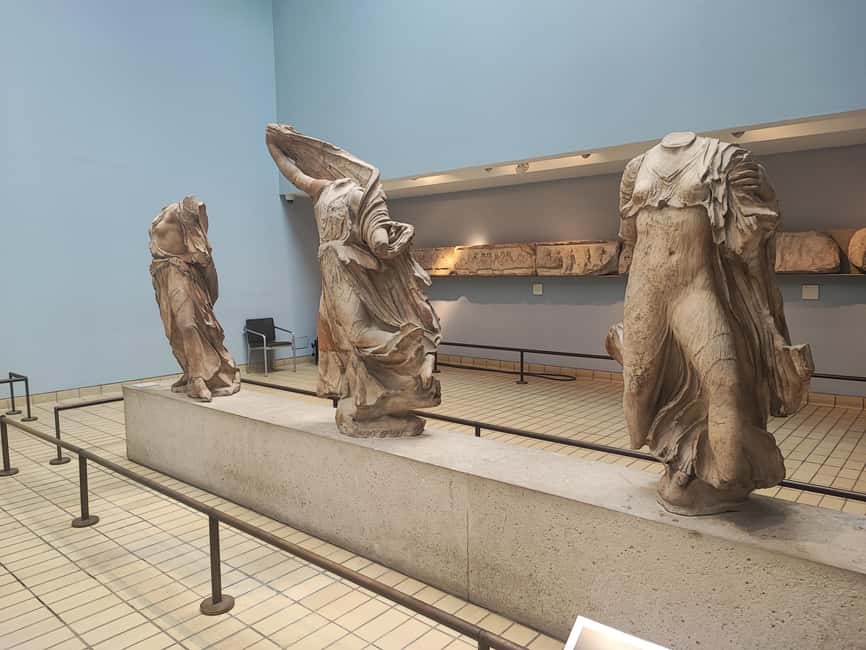
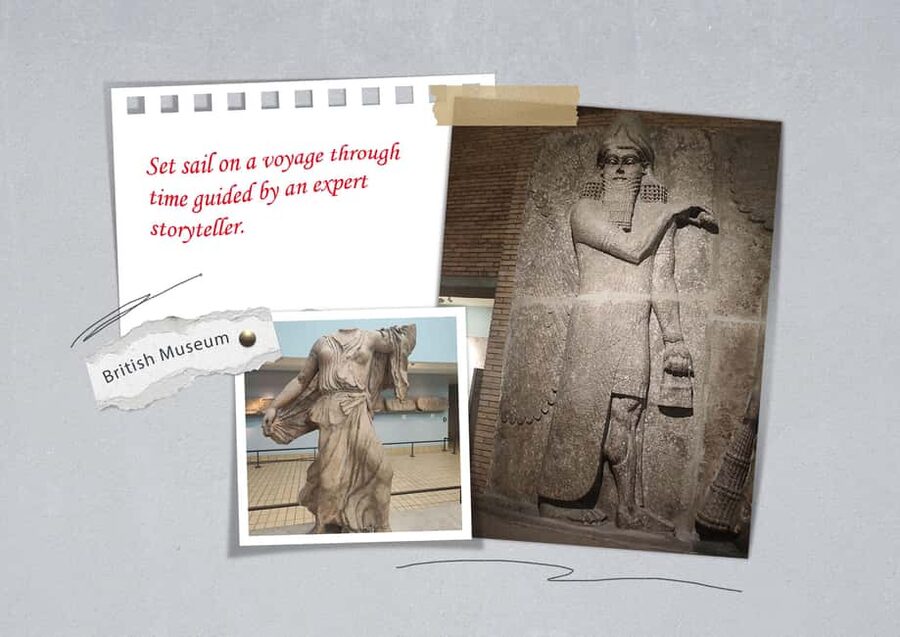
The tour also reaches ancient Mesopotamia, a setting linked with the wheel, siege engines, and modern farming. These subjects are practical rather than purely decorative, which helps show why museum collections matter beyond famous statues.
A wheel or farming tool may not attract the same attention as a carved figure, but it can tell you how people organized work, movement, food production, and conflict. The guide’s theme asks a simple question: what lessons from these early societies still apply now?
That question gives the stop a modern edge without forcing the material into a present-day mold. You may find yourself thinking less about a single object and more about how inventions spread, how societies solve problems, and how much of ordinary life rests on ancient ideas.
Because the tour is short, this section is likely part of a broader route rather than a full treatment of Mesopotamia. If ancient technology is your chief interest, mention it to the guide. The private structure makes that request more practical than it would be on a large group outing.
Ancient India, rebirth, and the search for inner peace
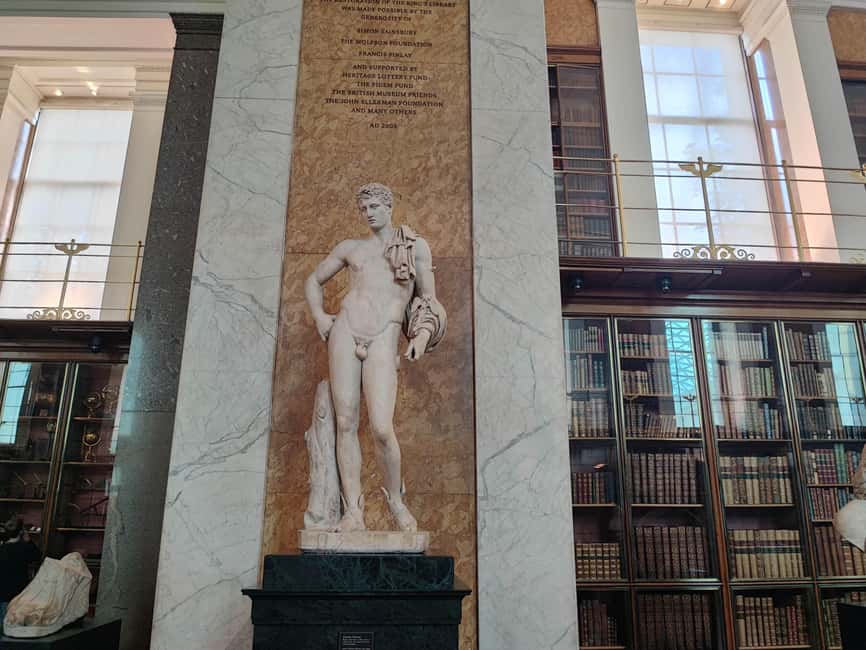
Ancient India adds another change of direction. The themes include yoga, rebirth, and paths toward enlightenment.
This part of the route asks how old religious and philosophical ideas continue to influence modern views of life and the soul. It is a useful counterpoint to the Greek focus on the body and the Egyptian concern with preserving the dead. Here, the emphasis turns toward spiritual practice, rebirth, and the search for peace.
The tour does not present the museum as a collection of disconnected civilizations. Instead, it compares the questions different societies asked. How should a person live? What is the body for? What happens after death? How can human beings understand forces larger than themselves?
That broad approach may appeal to you if you like ideas as much as artifacts. It may be less satisfying if you want exact dates, long object-by-object descriptions, or a specialist treatment of one culture. The guide is presented as a professional storyteller, so expect interpretation and connections alongside basic historical information.
Tragic love, fate, and the emotional side of ancient art
One of the more unusual themes is tragic love and fate. Ancient art often deals with powerful emotions, and this part of the tour considers how earlier audiences responded to stories of loss, desire, and unavoidable change.
That makes the visit feel less like a school lesson. You are not only looking at old objects. You are asking why stories written or pictured long ago can still feel familiar.
The subject also helps balance the more academic stops. After language, sculpture, burial customs, technology, and religion, a story about love and fate brings the material back to ordinary human feelings. The guide can show how our ancestors used art to explore fear, hope, loyalty, grief, and desire.
This is another section where a private guide has an advantage. If a particular story interests you, you can ask for more context. If you prefer the museum’s political or technological material, you can keep the pace moving.
Medieval art and the lesser-known childhood stories of Jesus
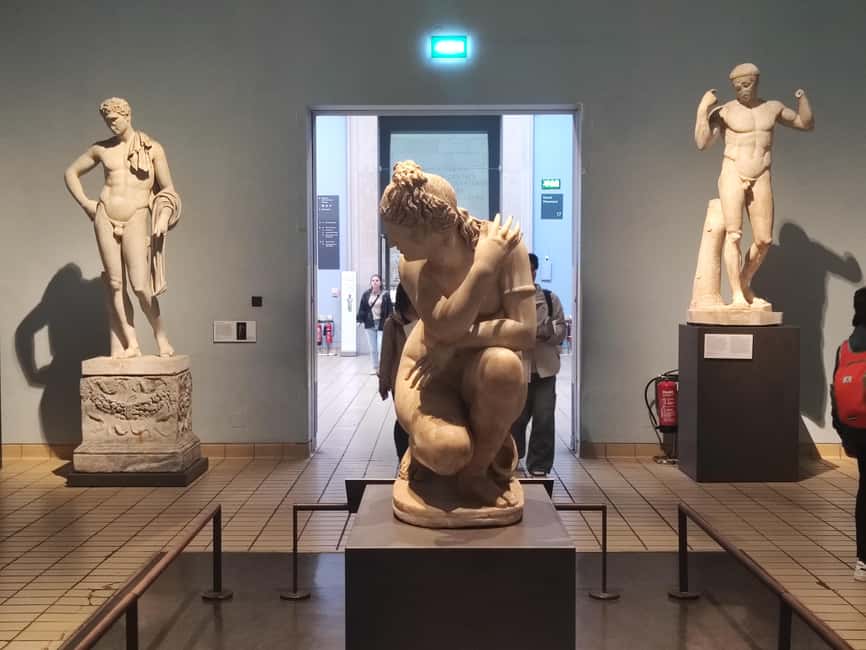
The final highlight is especially distinctive: alternative medieval narratives about the childhood of Jesus, presented through what the tour describes as medieval comic books.
This is not the same as a standard introduction to Christian art. The focus is on stories beyond the most familiar accounts, including extra episodes that did not become part of the traditional Gospel narrative. That gives you a look at how medieval artists and storytellers filled in gaps, entertained audiences, and shaped religious imagination.
The phrase medieval comic books is playful, but it points to a real feature of visual storytelling. Images can guide an audience through a sequence of events, much like a picture story. A guide can help you read those scenes instead of treating them as a wall of unfamiliar religious figures.
You should not expect this short stop to cover every aspect of medieval Christianity. It is one part of a tour that moves across several cultures and time periods. Still, it offers something less predictable than the usual famous-object route.
How the guide affects the experience
The guide is the main reason to choose this tour instead of walking through the museum alone. Richard is specifically praised for being very nice, informative, and enthusiastic. That combination matters in a museum where dry delivery can make even important objects feel remote.
A good guide should help you make sense of the museum without burying you in dates. The planned subjects give the tour a strong framework, while the private group allows room for questions.
The information provided does not guarantee that Richard will lead every departure. You should check the booking details for the assigned guide. Still, the positive comments about his manner give you a useful idea of the tone to expect: friendly, engaged, and focused on making the artifacts understandable.
The tour is in English only. If everyone in your group is comfortable following an English-speaking guide for two hours, that keeps the experience straightforward. If you need another language, this activity will not meet that need.
Is $74.08 per person good value?
The advertised price is $74.08 per person. For a private tour of up to four people, the cost buys more than entry alone. You are paying for the guide’s time, a planned route, live interpretation, and express security access.
The value is strongest when four people share the booking. A private guide can be expensive for one person, but the per-person cost becomes easier to justify for a small family or group of friends that wants personal attention.
I would compare it with the cost of spending a half day in the museum without a plan. Admission may not be your only expense in that case. You also pay with time, and it is easy to leave having seen famous objects without understanding them.
The tour is less suitable if you enjoy setting your own pace, reading every label, or spending an hour with one favorite gallery. Two hours will give you a lively introduction, not complete museum coverage. You may want to return later for independent exploration, especially since the activity ends at the meeting point and does not control the rest of your day.
Food and drinks are not included, and there is no hotel transportation. Those omissions are normal for a museum walking tour, but you should plan around them.
Practical advice for making the most of two hours
Arrive at Edward VII’s Entrance with only what you need. A small bag is the safest choice because large bags and backpacks are not allowed inside.
Wear comfortable shoes. The tour involves a moderate amount of walking and standing, and the museum’s scale can make two hours feel full. Keep your phone ready for non-flash photography, but leave the selfie stick at home.
Bring questions. Ask the guide to explain an object in simpler terms, connect it to another culture, or spend a little longer on the Rosetta Stone, mummies, marbles, or religious art. The private group is most valuable when you use it.
You can cancel up to 24 hours in advance for a full refund, and the reserve-now, pay-later option lets you hold a place without paying at once. Check the available starting times before planning the rest of your London day.
Should you book this British Museum tour?
Book it if you want a short, guided introduction to the British Museum with a clear theme and personal attention. It suits first-time visitors, small groups, families with older children, and anyone who prefers stories and connections over a long list of dates.
The strongest reasons are the private size, express security, and the guide’s reported warmth and enthusiasm, especially if Richard leads your visit. The route also includes an appealing mix of famous objects and less familiar material, from the Rosetta Stone and Parthenon Marbles to medieval stories about Jesus.
Skip it if you want a full museum day, need wheelchair access, prefer to explore alone, or require a language other than English. At $74.08 per person, it is best value when shared by a small group that wants help making sense of a huge collection in a limited amount of time.
FAQ
How long does the British Museum private tour last?
The tour lasts about two hours. Check availability for the available starting times.
How many people can join the private tour?
The private tour is reserved for a group of up to four people.
Where does the tour begin?
The tour begins at the group entrance to the British Museum, at Edward VII’s Entrance. The guide will hold a My London Guide sign.
Where does the activity end?
The tour ends back at the meeting point.
Is fast-track entry included?
Yes. The activity includes fast-track entry through an express security check.
Which language is the tour conducted in?
The live tour guide speaks English.
Is photography allowed inside the museum?
Photography is allowed without flash. Flash photography is not permitted.
Can I bring a large backpack or food into the museum?
Large bags and backpacks are not allowed inside. Food and drinks are not permitted in the exhibition halls.
Is the tour suitable for wheelchair users?
No. The activity is listed as not suitable for wheelchair users.
More Museums in London
- London: Paradox Museum Entry Ticket
★ 3.9 · 441 reviews - London: National Gallery Guided Tour with Art Expert Guide
★ 4.7 · 440 reviews - London: Postal Museum Entry Ticket and Underground Rail Ride
★ 4.6 · 363 reviews - London: Royal Museums Greenwich Day Pass
★ 4.5 · 309 reviews
More British Museum Tours
- London: Tour of the British Museum
★ 4.1 · 678 reviews - London: British Museum Audio Tour & Priority Entrance Ticket
★ 4.5 · 631 reviews - Afternoon Tea at the British Museum
★ 4.2 · 511 reviews - London: British Museum Guided Tour
★ 4.5 · 267 reviews
Just added around London
- London: Wimbledon Tennis Club and Westminster Walking Tour★ 4.5 · 86 reviews
- London: Westminster to Richmond River Thames Cruise★ 4.8 · 23 reviews
- Westminster Abbey Skip-the-Line Entry and Private Tour★ 4.6 · 4 reviews
- Best of London by LE GRAND – London’s Luxury Bus Tour★ 4.2 · 23 reviews
- London: Westminster Walking Tour & St Paul’s Cathedral Entry★ 4.7 · 7 reviews
- From London: Oxford, Stratford-upon-Avon & Cotswolds Trip★ 4.5 · 64 reviews
- From London: Warwick, Oxford, Stratford & Cotswolds Day Tour★ 4.0 · 270 reviews
- Warner Bros. Studios and 1-Day London Hop-on Hop-off tour★ 4.7 · 9 reviews
British Museum Tours, compared.



British Museum Audio Tour & Priority Entrance Ticket
Read our review →
British Museum Archaeology Course and Guided Tour
Read our review →
British Museum Highlights Guided Small Group Tour
Read our review →
British Museum Guided Tour with Priority Entrance
Read our review →Browse the lists this tour appears in