
Reviewed · BRITISH MUSEUM TOURS
London: British Museum Highlights Tour: How Beauty Was Born
The most interesting idea here is that beauty is not fixed. This 2-hour British Museum tour follows changing ideas of the beautiful, the sacred, the heroic, and the human, using famous objects from Egypt, Greece, Mesopotamia, India, and medieval Europe.
I like the small group of eight, which gives the guide room to explain rather than simply point. I also like the clear theme, since the museum can feel overwhelming when you face millions of objects with no plan. The main drawback is the pace: two hours is enough for a thoughtful highlights route, not a full visit to this enormous museum.
Key points at a glance
- Rosetta Stone: See the object that allowed scholars to read Egyptian hieroglyphs.
- Parthenon Marbles: Consider how Greek ideals still shape modern ideas of beauty.
- Egyptian mummies: Look at death, ritual, medicine, and the body through ancient eyes.
- Stories of love and fate: Connect art with emotions that still feel familiar.
- Medieval tales of Jesus: Encounter lesser-known childhood stories shown in comic-like religious art.
- Eight-person maximum: Expect a more personal experience than a large museum procession.
A two-hour route through the British Museum
The British Museum is not a tidy storybook. Its galleries hold more than 8 million objects, spread across civilizations and thousands of years. You can spend a day here and still see only a small part of it.
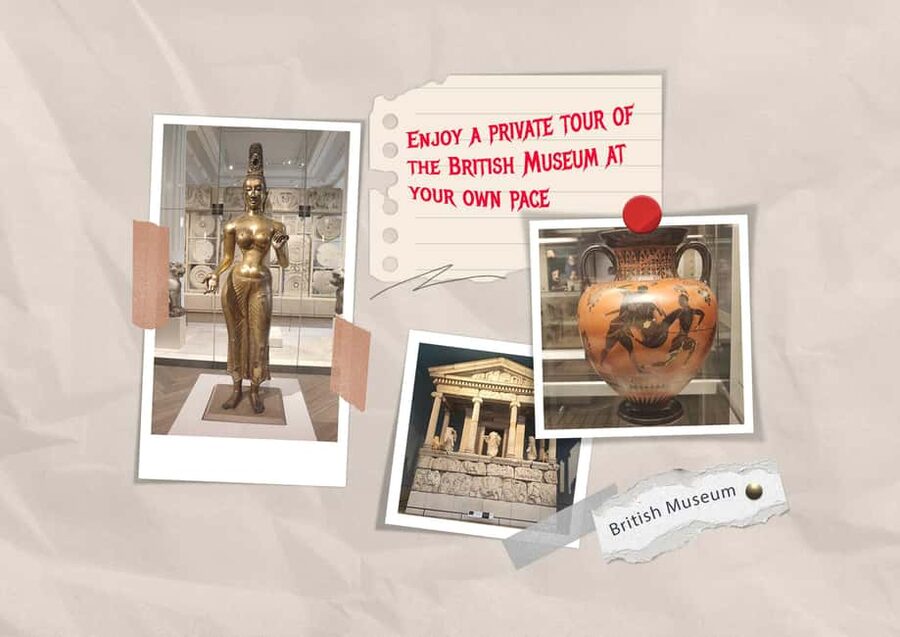
That is why a planned route helps. This tour does not try to cover everything. Instead, it uses the idea of beauty as a thread, then follows that thread through art, religion, death, invention, and storytelling.
You meet at the group entrance at Edward VII’s Entrance. Look for the guide holding a My London Guide sign. The experience ends back at the same meeting point, so you do not need to work out a new location in the middle of central London.
The tour includes an express security check described as fast track entry. Still, museum security can involve practical delays, and you should arrive ready to walk in when the guide gathers the group. The guide’s role at the door is useful here. An entry problem involving museum staff has been handled directly by the guide, which is reassuring if the arrival process becomes confusing.
More Museum Tours in London
- London: Chelsea Football Club Stadium and Museum Tour
★ 4.8 · 4,576 reviews - London: British Museum Guided Tour
★ 4.3 · 1,182 reviews - London: Jack the Ripper Museum Tickets
★ 4.2 · 894 reviews
The Rosetta Stone and the power of language
The Rosetta Stone is an ideal first major stop because it shows how one object can change the way the modern world understands the ancient world.
The stone carries the same decree in three scripts. Comparing those versions helped scholars read Egyptian hieroglyphs. You will not simply be looking at an old piece of stone. You will be looking at a practical bridge between languages, political authority, and modern scholarship.
A guide can make this stop more meaningful by explaining why the writing mattered. Hieroglyphs were not just decoration. They carried religious, political, and cultural information, but much of that meaning was inaccessible to modern readers until the scripts could be compared.
This is also where the tour’s storytelling approach should work well. Instead of treating the museum as a warehouse of famous objects, the guide uses the stone to pose a human question: what happens when an entire writing system becomes unreadable, then becomes readable again?
Expect other visitors around this famous object. The small group helps your guide keep the stop focused, but it cannot remove the crowds that gather around the British Museum’s best-known pieces.
Greek beauty and the Parthenon Marbles
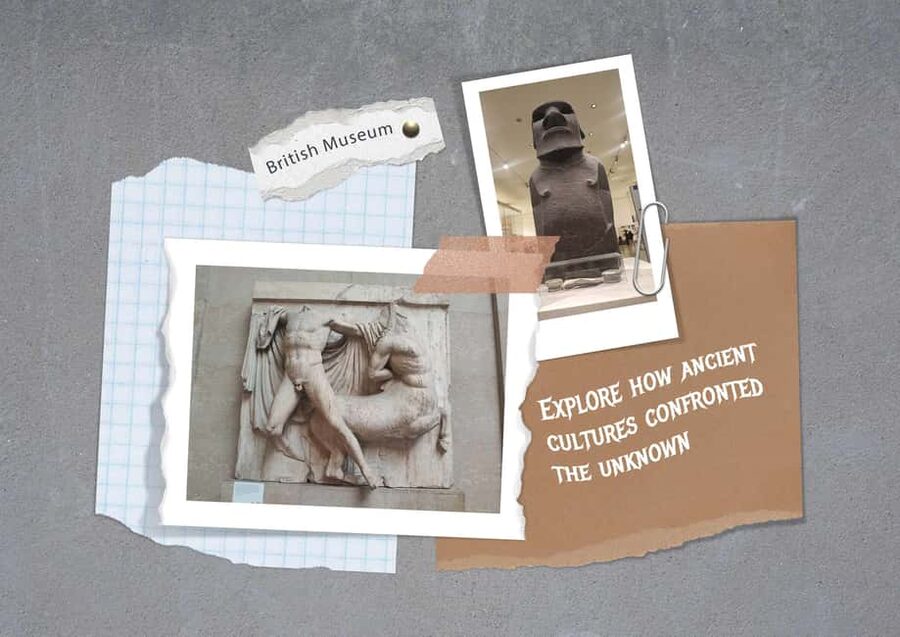
Ancient Greece is presented through the familiar ideas of philosophy, democracy, theatre, and drama. The tour then asks how Greek art shaped the way later societies picture the ideal human body.
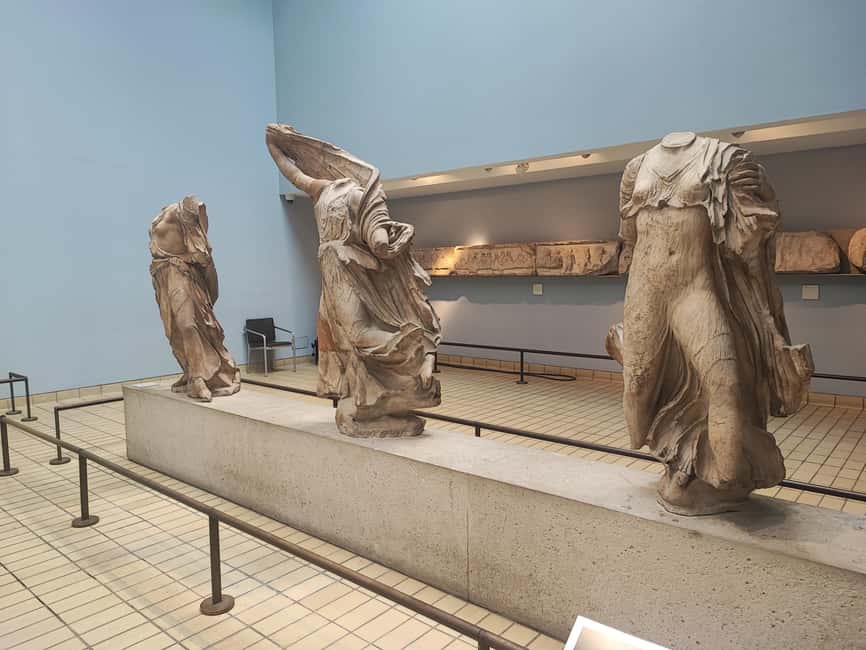
The Parthenon Marbles are central to this part of the route. Their carved figures have influenced European art and popular ideas of proportion, balance, and physical perfection. Looking at them through the theme of beauty gives you more to consider than the usual list of dates and architectural terms.
You might find yourself comparing the calm bodies and controlled poses with modern images of perfection. The point is not that ancient Greek beauty was the only standard. It is that Greek art became so influential that its visual choices still affect museums, schools, public buildings, and advertising.
This stop can also bring up the difficult question of ownership and removal, although the information provided does not promise a full discussion of that issue. If that subject matters to you, ask the guide how the marbles came to be in London and how the museum presents them.
The route uses Greece to show that beauty is connected to power. Art can express ideals, but it can also help later societies decide which ideals deserve to be copied.
Egyptian mummies, medicine, and the dance of life and death
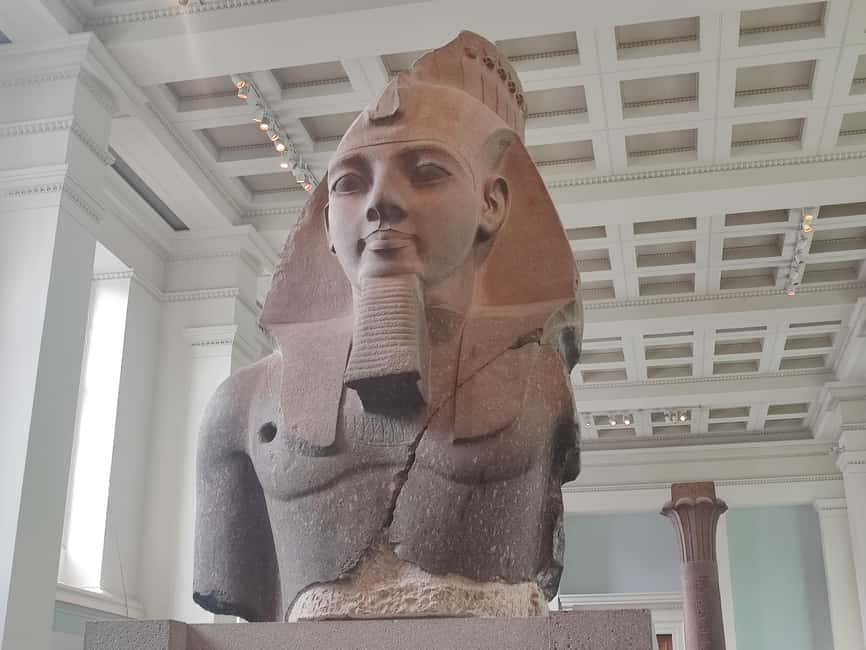
The Egyptian section shifts the mood. Here, beauty is not only about a living body or a perfect face. It is tied to preparation, memory, the soul, and the hope of continuing beyond death.
Egypt gave the world pyramids and hieroglyphs, but the tour also points to advances in medicine. Mummies offer a direct way to think about the body as something preserved, studied, and protected. You will be asked to consider the relationship between physical remains and spiritual belief.
This part may be especially useful if you have seen Egyptian objects before but felt unsure how to connect them. A storyteller can link the mummy to wider beliefs about death and rebirth, rather than leaving you with a label and a date.
The subject can be intense. Some people appreciate the chance to look closely at ancient burial customs, while others may prefer a lighter museum visit. The tour makes death part of its central theme, so choose it knowing that the Egyptian section is not treated as a quick photo stop.
Photography is allowed without flash, but large bags and backpacks are not permitted inside the museum. Food and drinks are also banned in the exhibition halls. Carry water for before or after the tour, and wear comfortable shoes.
More guided runs through the British Museum:
- London: Tour of the British Museum
★ 4.1 · 678 reviews - London: British Museum Audio Tour & Priority Entrance Ticket
★ 4.5 · 631 reviews - Afternoon Tea at the British Museum
★ 4.2 · 511 reviews - London: British Museum Guided Tour
★ 4.5 · 267 reviews
Mesopotamia and the inventions that still shape daily life
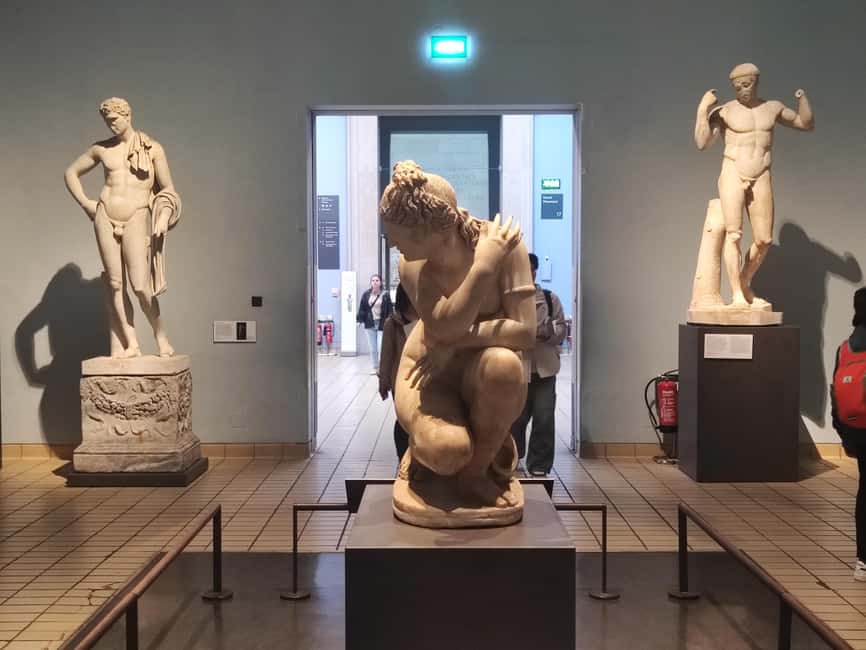
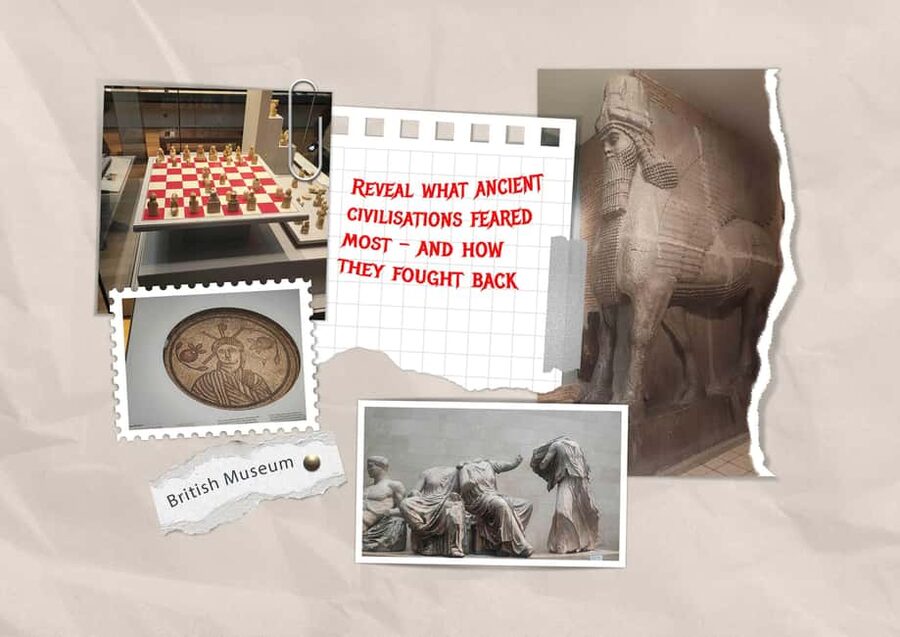
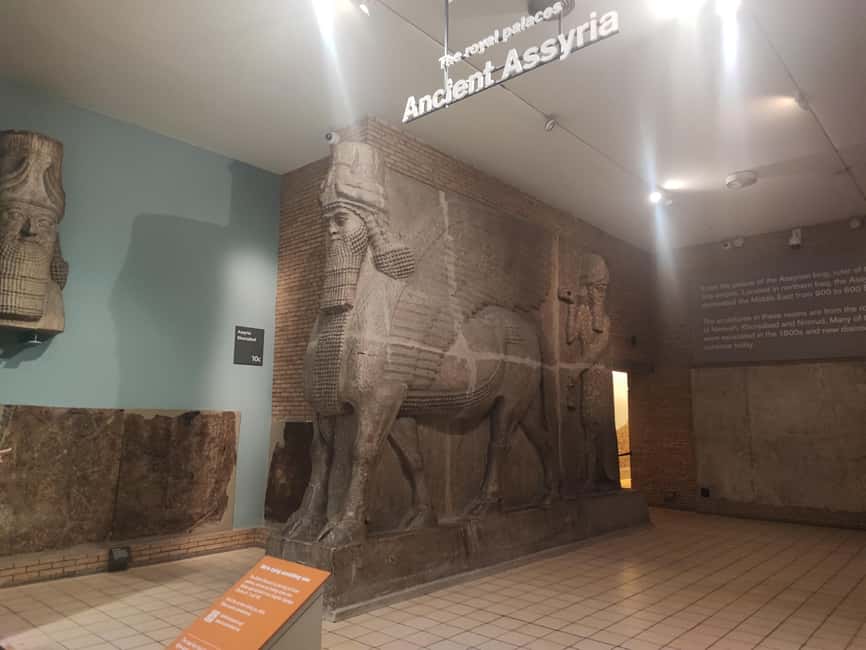
Mesopotamia brings the discussion back to human problem-solving. The tour connects this early civilization with the wheel, siege engines, and modern farming.
These are not just isolated inventions. They show how people changed movement, warfare, food production, and settlement. When you look at ancient objects with those uses in mind, the collection becomes easier to relate to your own life.
The wheel is an especially effective example because it feels ordinary now. Ancient farming methods may also seem distant, yet they helped support larger communities and more organized societies. The guide’s task is to connect those early changes with the world you know without turning the stop into a simple list of firsts.
The Mesopotamian material is valuable for visitors who want more than Egypt and Greece. It adds a civilization that often receives less attention in a short museum visit, while showing that the theme of beauty is not limited to sculpture. Order, invention, and the ability to build a lasting society can also reflect what people value.
India, rebirth, and the search for inner peace
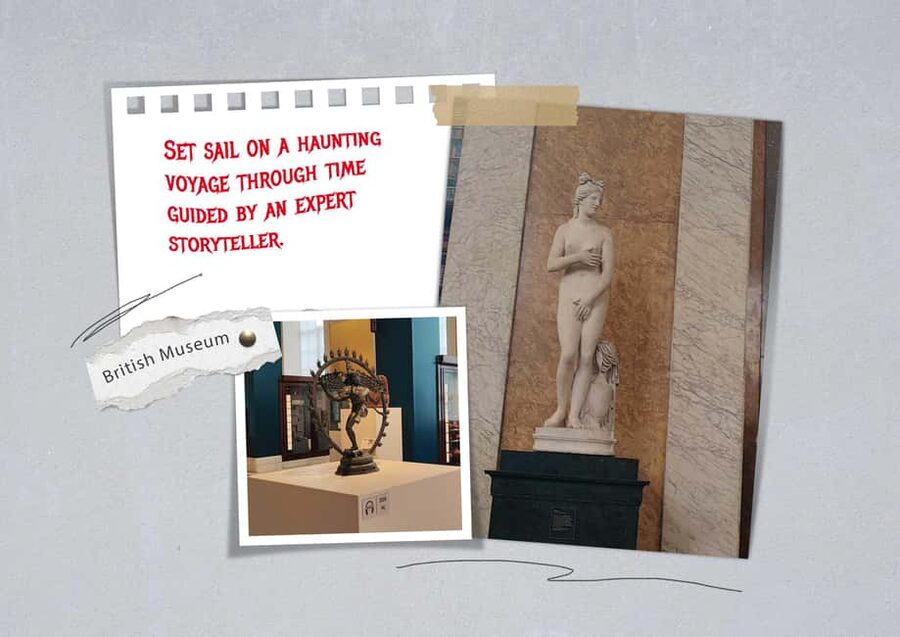
The Indian section brings belief and the soul into the route. The tour refers to yoga, rebirth, and paths toward enlightenment, then asks how those ideas continue to affect modern thinking.
This is a different kind of beauty. Instead of focusing mainly on the body, the discussion turns toward balance, self-control, spiritual progress, and the meaning of life. You may find this section more reflective than the stops centered on monuments and famous objects.
The material also gives the guide a chance to connect ancient beliefs with familiar modern habits. Yoga is now practiced around the world in many forms, but its older religious and philosophical roots are more complex than a fitness class suggests.
Do not expect a full course in Indian religion during a two-hour tour. The subject is broad, and the route can only introduce it. Its value is in giving you a question to carry into the galleries: how does a culture picture a beautiful life when beauty means inner peace rather than physical perfection?
Tragic love stories and the art of fate
The tour then turns to stories of tragic love. This is one of the most relatable parts of the experience because the emotional pattern is so familiar: desire, separation, sacrifice, bad luck, and loss.
Ancient and medieval artists used stories to help people process fear and longing. Love stories could entertain, but they could also warn audiences about fate, family pressure, social rules, and the cost of personal choices.
A guide who tells these stories well can make the museum feel less distant. You are not only studying the past. You are seeing how earlier societies pictured emotions that still fill theatre, books, film, and popular culture.
This section also breaks up the heavy focus on famous objects. After the Rosetta Stone and Parthenon Marbles, a narrative about love gives the tour a more personal rhythm. The quality depends heavily on the guide’s storytelling, but the experience is designed around that strength.
Medieval comic books and Jesus’s missing childhood
The final unusual theme is the childhood of Jesus Christ. The tour presents medieval religious art as a kind of comic-book storytelling, with scenes that go beyond the familiar accounts most people know.
These alternative childhood stories are interesting because they show how religious audiences wanted to imagine the years not covered by the best-known narratives. Art gave people a way to picture those extra episodes, teach beliefs, and make sacred stories easier to follow.
Calling the works medieval comic books is a playful comparison, but it points to something real about visual storytelling. Images can guide the eye from scene to scene, introduce characters, and make a complicated account understandable to people who may not read.
This stop may appeal to you if you enjoy unusual details and lesser-known stories. It may be less satisfying if you want a strictly traditional account of Christian history. The tour is clearly interested in the alternate narratives and the way art presents them.
What the small group changes
A maximum of eight people is one of the strongest practical features. In a museum, a large group can block displays, make questions awkward, and force you to listen from the back. A smaller group makes it easier to stay close to the guide and ask for clarification.
The format is semi-private, not private. You will share the route with other people, and the museum itself will not be quiet or empty. Still, eight is a manageable number for a conversational tour.
The guide is described as an expert storyteller, and the route depends more on explanation than on simply locating famous objects. That matters at the British Museum, where labels can provide facts but cannot always explain why an object matters.
A Greek-language account specifically praises the tour as detailed and describes the guide resolving an entry issue. The tour itself is conducted in English, so you should be comfortable following spoken English for two hours.
Price, pace, and what you receive
At $33.67 per person, this is not the cheapest way to enter a museum, but the price is reasonable if you want structure and interpretation. You are paying for an English-speaking guide, a planned route, a small group, and an express security check.
The value depends on how you normally visit museums. If you enjoy reading every label and choosing your own galleries, you may prefer to enter independently. If you tend to lose time deciding where to go, a focused tour can make your visit more productive.
Two hours is a sensible length for a first introduction. It is long enough to cover several major themes without turning the whole visit into a tiring march. It is also short enough to leave you time afterward for galleries that caught your attention.
The tour does involve a moderate amount of walking. Comfortable shoes are important, and the activity is not suitable for wheelchair users or people with mobility impairments according to the stated restrictions.
Food and drinks are not included, and there is no hotel pickup or drop-off. Plan your transport to and from the museum yourself. Large bags and backpacks cannot go inside, so travel light.
You can cancel up to 24 hours before the start for a full refund, and the reserve-now, pay-later option helps if your London schedule is still taking shape. Check the available start times before booking, since the exact departure time is not fixed here.
Who should book this British Museum tour
I would choose this tour for a first visit to the British Museum, especially if you want a clear route rather than a random walk through the galleries. It suits people who enjoy connections between art, belief, language, death, love, and ideas of the ideal human body.
It is also a good match for visitors with limited time in London. You will not see the entire museum, but you will leave with a set of memorable objects and several questions worth exploring on your own.
Families with older children may appreciate the stories about mummies, inventions, love, and medieval religious art. The comic-book comparison could help younger visitors connect with the visual material, though the amount of walking and the serious subjects may not suit very young children.
I would think twice if you dislike guided interpretation, cannot walk for two hours, or need wheelchair access. I would also skip it if your main goal is to spend a whole day studying one collection in detail.
Should you book it?
Book this tour if you want the British Museum to feel like a connected story instead of a giant catalogue. The eight-person limit, strong thematic route, and famous stops give you a focused introduction at a fair price.
Skip it if you want complete freedom, long gallery time, or a route built around a single civilization. For most first-time visitors who value clear explanations and unusual stories, this is a practical way to get oriented, then continue exploring the museum independently.
FAQ
How long does the British Museum tour last?
The tour lasts about 2 hours.
What language is the tour conducted in?
The live tour guide speaks English.
How many people can join the tour?
The group is limited to a maximum of 8 participants.
Where does the tour begin?
It begins at the group entrance to the British Museum, at Edward VII’s Entrance. The guide holds a My London Guide sign.
Where does the tour end?
The activity ends back at the meeting point.
Is photography allowed inside the museum?
Photography is allowed without flash. Flash photography is not permitted.
Can I bring a backpack or food into the museum?
Large bags and backpacks are not allowed inside. Food and drinks are not permitted in the exhibition halls.
More Museums in London
- London: Paradox Museum Entry Ticket
★ 3.9 · 441 reviews - London: National Gallery Guided Tour with Art Expert Guide
★ 4.7 · 440 reviews - London: Postal Museum Entry Ticket and Underground Rail Ride
★ 4.6 · 363 reviews - London: Royal Museums Greenwich Day Pass
★ 4.5 · 309 reviews
Just added around London
- London: Wimbledon Tennis Club and Westminster Walking Tour★ 4.5 · 86 reviews
- London: Westminster to Richmond River Thames Cruise★ 4.8 · 23 reviews
- Westminster Abbey Skip-the-Line Entry and Private Tour★ 4.6 · 4 reviews
- Best of London by LE GRAND – London’s Luxury Bus Tour★ 4.2 · 23 reviews
- London: Westminster Walking Tour & St Paul’s Cathedral Entry★ 4.7 · 7 reviews
- From London: Oxford, Stratford-upon-Avon & Cotswolds Trip★ 4.5 · 64 reviews
- From London: Warwick, Oxford, Stratford & Cotswolds Day Tour★ 4.0 · 270 reviews
- Warner Bros. Studios and 1-Day London Hop-on Hop-off tour★ 4.7 · 9 reviews
British Museum Tours, compared.



British Museum Audio Tour & Priority Entrance Ticket
Read our review →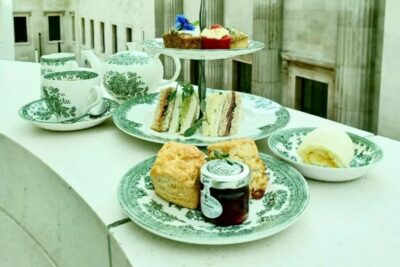
British Museum Archaeology Course and Guided Tour
Read our review →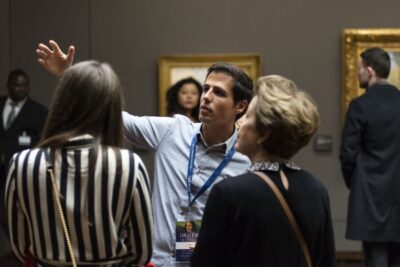
British Museum Highlights Guided Small Group Tour
Read our review →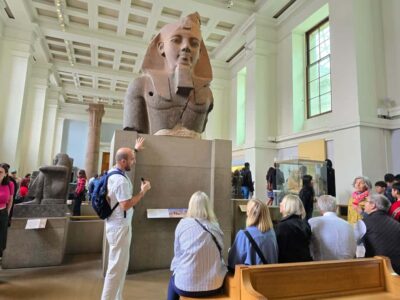
British Museum Guided Tour with Priority Entrance
Read our review →Browse the lists this tour appears in