

Reviewed · BRITISH MUSEUM TOURS
Unveil the Rosetta Stone, Parthenon at British Museum
The Rosetta Stone is the star here, but it is only the beginning. In two hours, a guide leads you through the British Museum’s Great Court, Egyptian galleries, Parthenon Sculptures, Sutton Hoo treasures, and huge Assyrian guardian figures. It is a brisk route through some of the world’s best-known objects.
I like the clear focus on major highlights, especially if this is your first visit and the museum feels too large to tackle alone. I also like the human touch: guide Joe is praised for being upbeat and able to keep a child interested, a useful sign for families. The main drawback is pace. The British Museum is enormous, and two hours leaves little time for side trips or quiet study.
Key points at a glance
- The Rosetta Stone anchors the tour: See the artifact that helped scholars read Egyptian hieroglyphics.
- The Parthenon Sculptures come with context: Learn how they reached Britain and why their ownership remains disputed.
- Egyptian mummies make ancient beliefs tangible: The guide explains burial customs and ideas about life after death.
- Sutton Hoo adds an English chapter: The famous helmet connects the museum to a 7th-century Anglo-Saxon burial ship.
- The Khorsabad winged bulls are immense: These Assyrian guardians give you a sense of royal power on a monumental scale.
- The format is practical but brisk: This is a shared, English-language walking tour lasting about two hours.
Starting beneath the British Museum’s glass roof
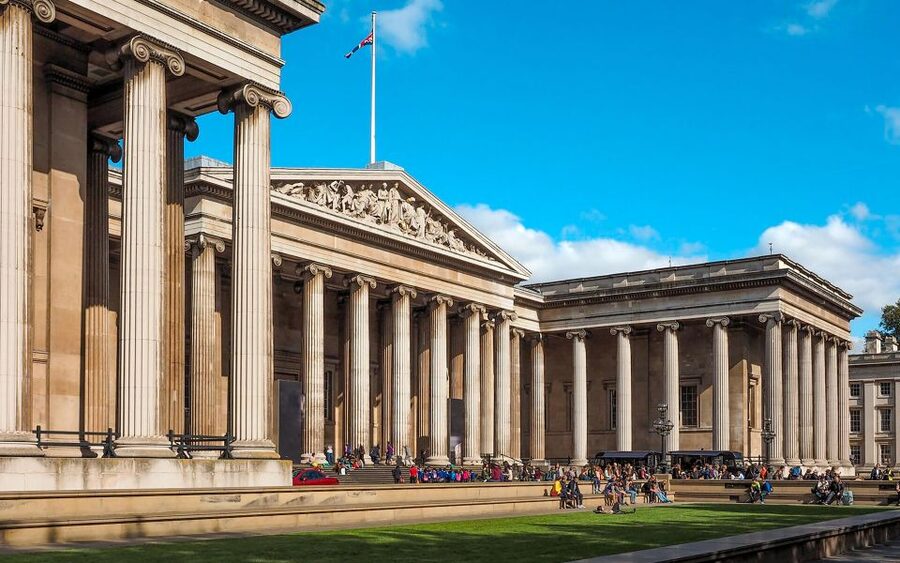
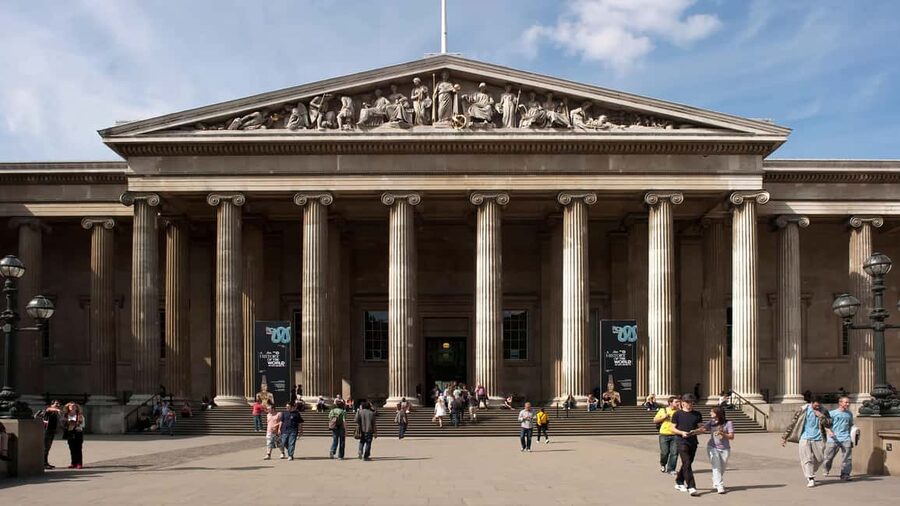
Meet your guide on the stairs at the main entrance, after passing through security. Arrive at least 15 minutes before your scheduled time. That buffer matters in central London, where a small delay on the Tube or a slow security line can turn a relaxed arrival into a sprint.
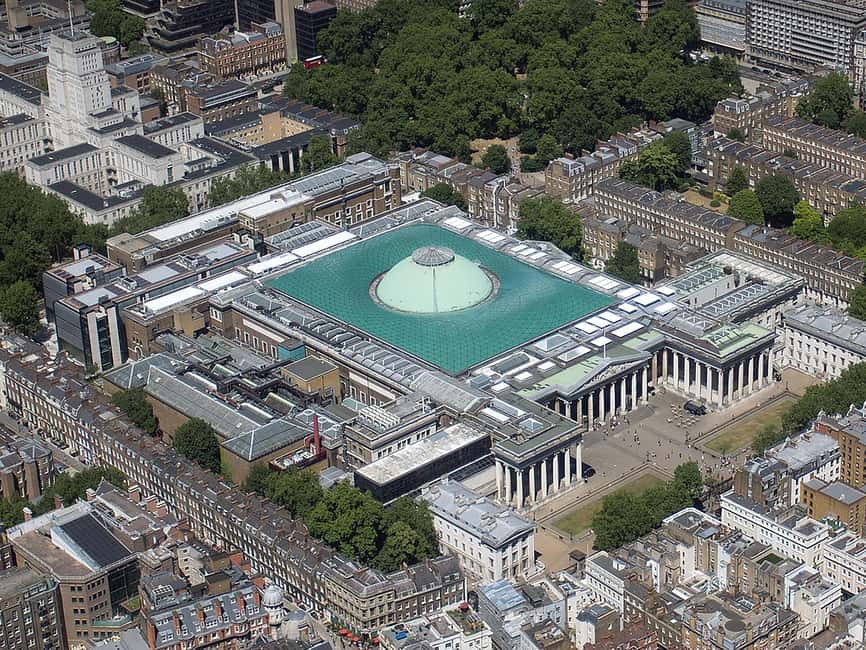
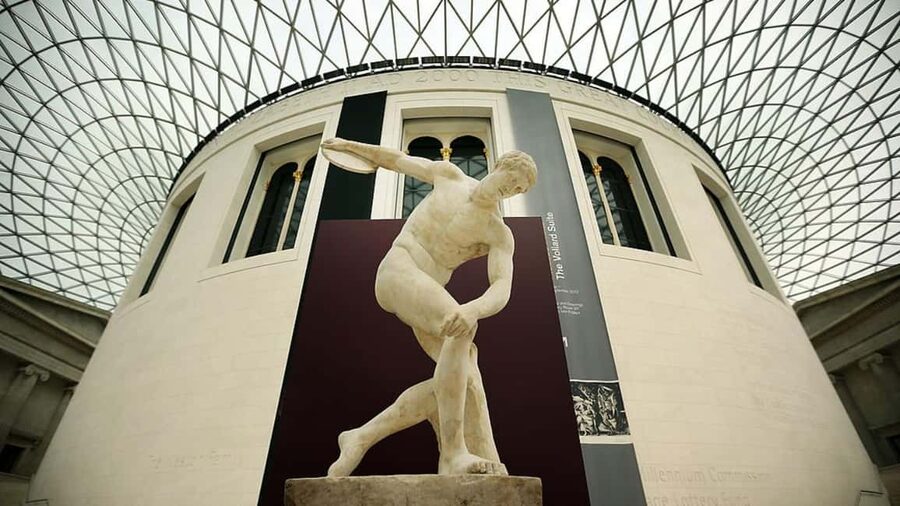
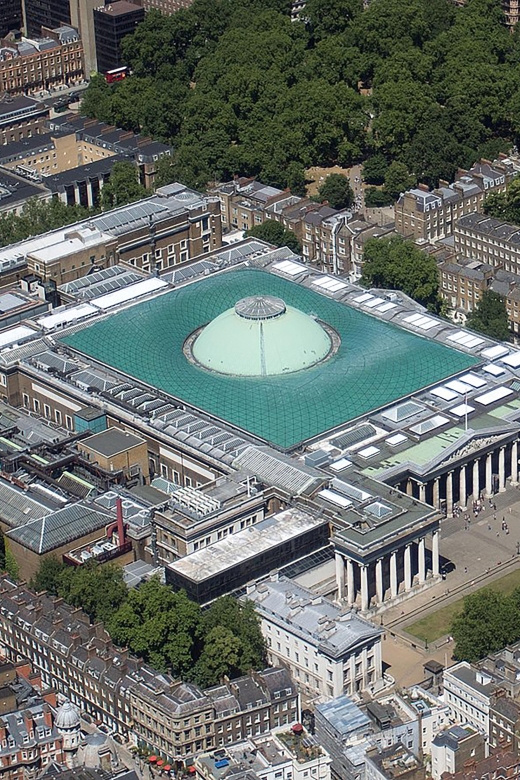
The first visual surprise is the Great Court. Its sweeping glass roof, designed by Norman Foster, covers what was once an open courtyard. Sunlight filters into the center of the museum, and the ceiling gives you an immediate sense that this is not a small, quiet collection you can skim in half an hour.
I would take a moment to look up before the tour gets moving. The building itself helps frame the visit: the British Museum is not simply a string of display cases, but a grand public institution built around objects gathered from many places and periods.
This is not a private tour, and the language is English. The exact group size is not provided, so expect to share the guide’s attention. That can be a fair trade for the $70.35 price, particularly if you want a planned route and live explanation rather than wandering without a map.
More Museum Tours in London
- London: Chelsea Football Club Stadium and Museum Tour
★ 4.8 · 4,576 reviews - London: British Museum Guided Tour
★ 4.3 · 1,182 reviews - London: Jack the Ripper Museum Tickets
★ 4.2 · 894 reviews
Why the Rosetta Stone matters
The Rosetta Stone is the first major stop, and it earns that position. Carved in 196 BC, the stone carries the same decree in three scripts, including Greek and Egyptian writing. Its importance comes from comparison: scholars could read the Greek, then use it to work out the Egyptian scripts.
Your guide explains how the stone helped make Egyptian hieroglyphics readable to modern scholars. That story gives the object a practical purpose. You are not just looking at a dark slab behind glass. You are seeing the bridge between a lost writing system and the ancient Egyptian texts that can now be studied.
The stone can attract a crowd, so a guide helps you get the main point quickly. You may not have much time to stand directly in front of it, especially during a busy museum day. Still, a short explanation here is far better than seeing it without knowing why it changed the study of Egypt.
There is also a useful lesson in scale. The Rosetta Stone is famous enough to seem monumental in the imagination, but the object itself is not a towering statue or a grand room. Its importance comes from what it says and how scholars used it. That makes the guide’s explanation especially valuable.
The Parthenon Sculptures and an unfinished argument
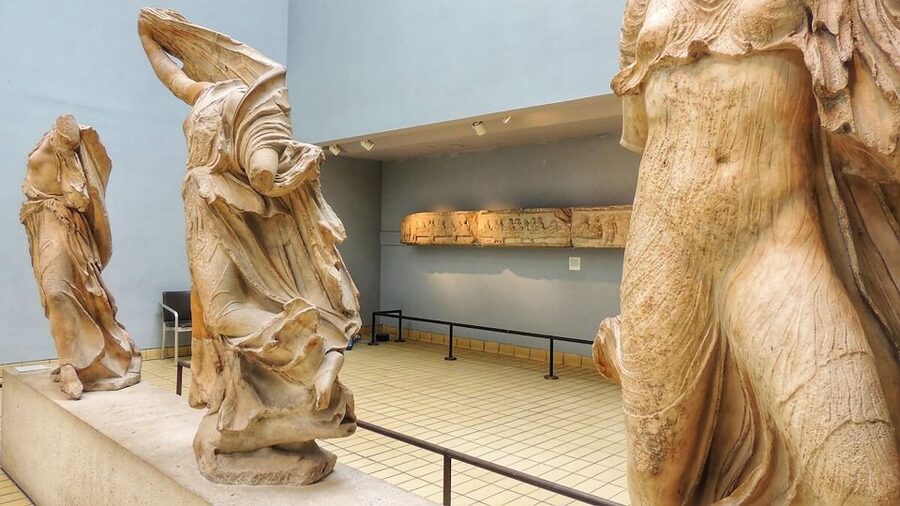
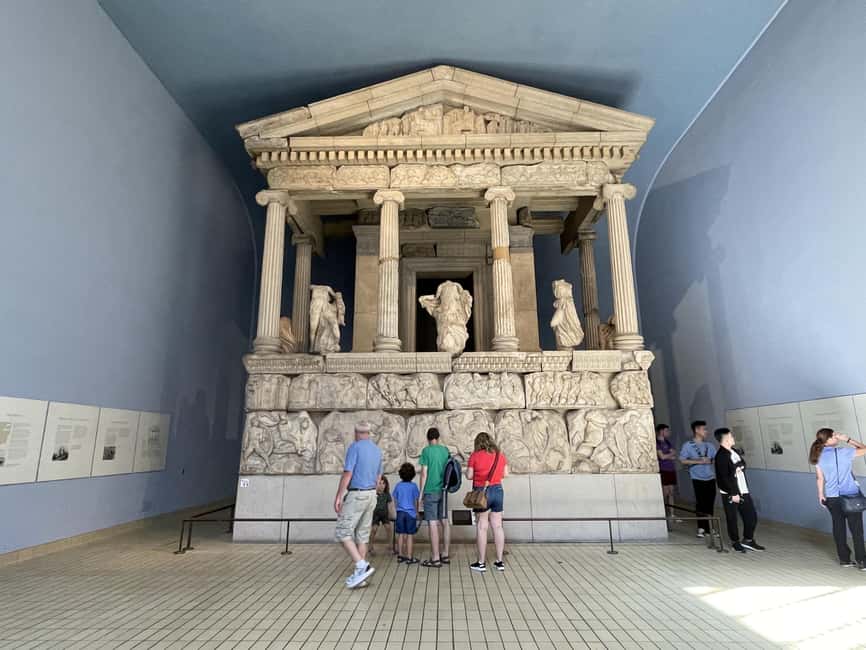
The route then moves to the Parthenon Sculptures, often called the Elgin Marbles. These marble carvings once formed part of the Parthenon in Athens. Lord Elgin, who served as British ambassador to the Ottoman Empire, brought them to Britain in the early 19th century.
You will see pieces of the original architectural decoration, including carved figures and relief work. The display lets you appreciate the skill of the ancient Athenian artists, but it also raises a difficult question: who should control major cultural objects removed from their original setting?
A good guide does not treat this as a simple victory story. The sculptures are important works of ancient art, yet Greece has long argued that they should return to Athens. Britain and the British Museum have their own legal and historical arguments. Your guide presents the dispute as part of the visit, not as an awkward subject to skip.
I like this stop because it connects art with modern politics. You can admire the marble and still question how it was acquired. That is a more honest way to see the collection. The drawback is that two hours cannot give you a full legal or historical account, so treat the commentary as an introduction rather than the final word.
Egyptian mummies and the beliefs behind them
The Egyptian galleries shift the mood from public monuments to personal beliefs. Here you see mummies and related objects that reveal how ancient Egyptians prepared the dead and thought about existence after death.
The guide explains burial practices and the ideas that shaped them. Mummification was not simply a method of preserving a body for display. It was tied to religious beliefs, identity, and the hope of continuing life beyond death. That context can change how you look at the cases.
The museum’s Egyptian collection is extensive, but this tour cannot cover every room. You will be shown selected highlights instead. That is useful for a first visit, though you should not expect a detailed survey of Egyptian art, dynasties, or archaeology.
Some people find mummy displays compelling; others find them unsettling. The tour data does not suggest that the guide avoids difficult subjects, so families may want to prepare younger children in advance. Still, the positive feedback about Joe keeping a son interested suggests that an engaging guide can make the material accessible to children who might otherwise lose focus.
For me, this is where the tour moves beyond famous names. The Rosetta Stone explains writing, while the mummies reveal how people understood death and the body. Together, the stops give you more than a list of objects.
More guided runs through the British Museum:
- London: Tour of the British Museum
★ 4.1 · 678 reviews - London: British Museum Audio Tour & Priority Entrance Ticket
★ 4.5 · 631 reviews - Afternoon Tea at the British Museum
★ 4.2 · 511 reviews - London: British Museum Guided Tour
★ 4.5 · 267 reviews
Sutton Hoo and early medieval England
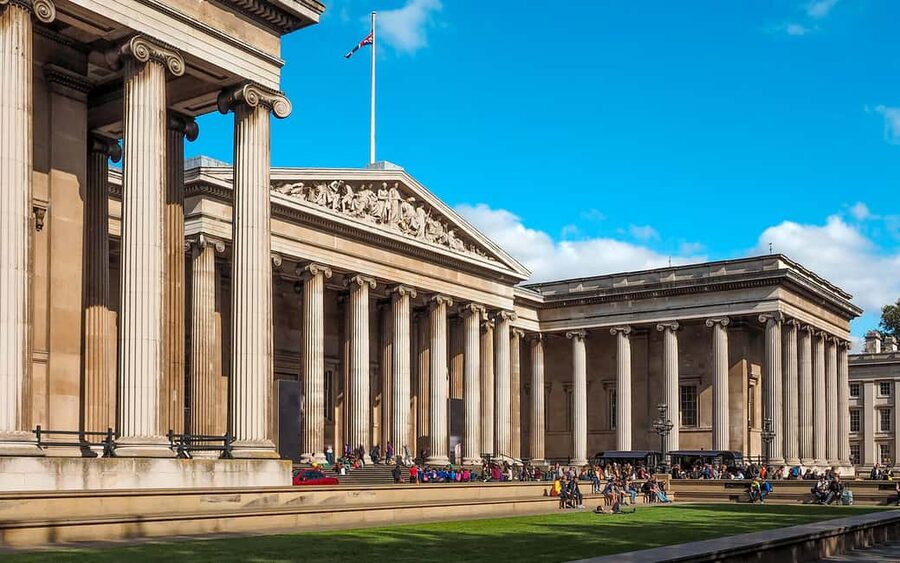
The Sutton Hoo section takes you far from Egypt and ancient Greece. Sutton Hoo was the site of a 7th-century Anglo-Saxon burial ship in England. The burial contained remarkable objects, including the famous Sutton Hoo helmet.
The helmet is one of the museum’s most recognizable pieces. Its decorated surface and protective form hint at the status of the person buried with it. The object also reminds you that early medieval England was not an isolated or primitive place. Skilled metalwork, long-distance contacts, and powerful local leaders all appear in this burial.
A guide is helpful here because Sutton Hoo may be less familiar than the Rosetta Stone or the Parthenon. Without context, the helmet can look like a striking piece of armor. With context, it becomes part of a burial ceremony and a clue to the society that produced it.
This stop adds welcome variety to the route. You move from ancient Mediterranean and Egyptian cultures to the early medieval world of Britain. It also gives the tour a local connection, something that can be easy to miss in a museum filled with objects from across the globe.
The winged bulls of Khorsabad
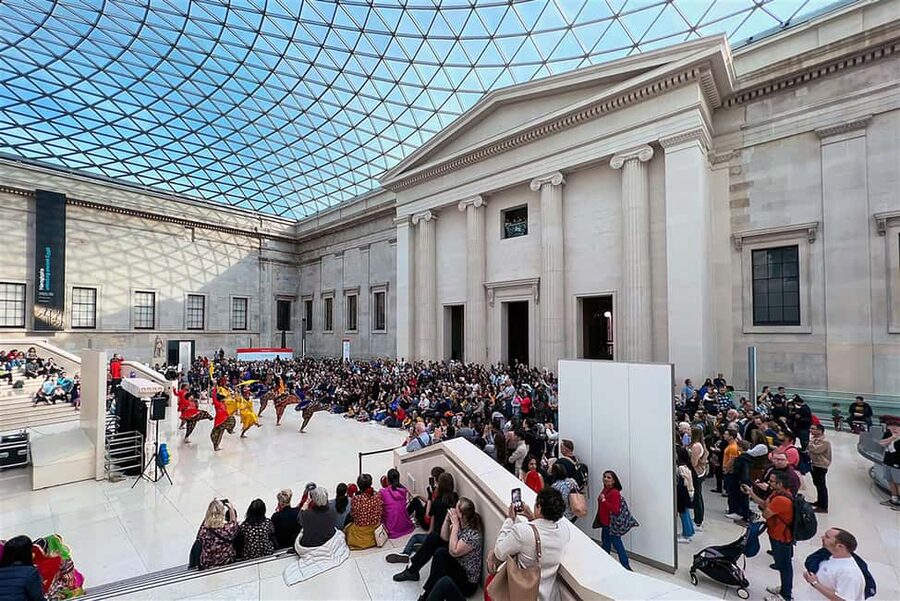
The final major highlight is the pair of winged bulls from Khorsabad. These colossal figures once guarded the entrance to the palace of Sargon II, an Assyrian king.
Their size is the point. Assyrian royal buildings used enormous guardian figures to impress visitors and protect the palace symbolically. The creatures combine a human head, a powerful animal body, wings, and carefully carved details. They are meant to be seen as both intelligent and physically overwhelming.
Your guide explains their role and the power of the Assyrian empire. This is one of the places where the museum’s large galleries work in your favor. The sculptures need room, and their scale is much easier to grasp in person than in a book or photograph.
The winged bulls also make a strong ending because they leave you with a sense of imperial ambition. After the intimate mummies and the compact Sutton Hoo helmet, these figures fill the space and bring the tour to a dramatic close.
What two hours really gets you
Two hours is enough for a guided introduction to the museum’s headline objects. It is not enough for a full visit. The British Museum contains far more galleries than this route can cover, so you should think of the experience as a well-chosen first pass.
The guide’s job is to keep the group moving and explain why each stop matters. That is especially useful if you have limited time in London or prefer a story-led visit. You do not need to decide in advance which rooms matter most, and you avoid spending your first 30 minutes trying to understand the floor plan.
The tradeoff is freedom. You may want to linger at one mummy, sculpture, or relief, but the group has a schedule. If you already know the museum well, or if you prefer to read every label at your own pace, a self-guided visit may suit you better.
Wear comfortable shoes. The activity is entirely on foot, and the museum is large. Even with a focused route, you should expect plenty of walking and standing. The experience is not suitable for wheelchair users, according to the provided activity information.
Is $70.35 good value?
At $70.35 per person, this is not the cheapest way to enter the British Museum. The museum itself is known for free general admission, although special arrangements, donations, or timed requirements can vary. The price here pays for the guided structure, the live English commentary, and priority access rather than simply admission.
That distinction matters. If you are comfortable researching the Rosetta Stone, Parthenon Sculptures, Egyptian mummies, Sutton Hoo, and Khorsabad on your own, you may prefer a free self-guided visit. If you want the main objects connected by a clear story, the cost can make sense, especially during a short London stay.
The advertised skip-the-line benefit means you use a faster priority queue rather than the normal long queue. It does not mean the museum is empty or that you walk past every other group. You still pass through security and join other people using priority entry.
The tour includes online support at the time of boarding, but not food, drinks, or hotel pickup. You make your own way to the British Museum and return to the same meeting point at the end.
Timing, booking, and a useful warning
Check availability carefully when choosing a start time. If your selected time is not available, you may be transferred to another time on the same day. A stated example is a 10:00 booking moved to the first available slot at 14:00.
That can affect a day built around theatre tickets, lunch plans, or another museum. I would avoid pairing this with a tightly timed activity unless you have confirmed the final start time. Last-minute bookings carry an additional risk: if there are no seats, you may be placed on the following day.
You can reserve now and pay later, which helps if your London schedule is still taking shape. Free cancellation is available up to 24 hours before the activity for a full refund. Bring a passport or ID card, as required information for the activity.
The meeting point is at the stairs of the main entrance after security checks. The tour finishes back at the British Museum, so you can continue exploring afterward if you still have energy.
Who will enjoy this British Museum tour?
I would recommend it most strongly to a first-time visitor who wants the museum’s major names explained in plain language. It also suits families, particularly if a child needs a guide who can keep the pace lively. Joe’s upbeat approach is specifically noted, and that kind of energy can make a difference in a large, label-heavy museum.
It is also a sensible choice for anyone with only a morning or afternoon in London. You get a concentrated route through Egypt, Greece, Anglo-Saxon England, and Assyria without spending hours planning your own path.
History fans may appreciate the selection but want more time afterward. The guided portion gives you a framework, then you can return to the galleries that caught your attention. I would not choose it if you need a private guide, a wheelchair-accessible format, or a slow, highly detailed examination of every exhibit.
Should you book it?
Book this tour if you want the British Museum’s biggest highlights tied together by a live guide, especially if this is your first visit or you are traveling with children. The Rosetta Stone, Parthenon Sculptures, Egyptian mummies, Sutton Hoo helmet, and Khorsabad bulls make a strong route, and Joe’s lively style appears well suited to keeping the experience moving.
Skip it if you prefer complete independence or want to spend a long time with one collection. At $70.35, you are paying for guidance and priority access, not simply entry. Confirm the start time, arrive early, wear good shoes, and leave room in your day in case the chosen slot changes.
FAQ
How long does the British Museum tour last?
The tour lasts two hours.
What language is the tour conducted in?
The live guide conducts the tour in English.
Where do I meet the guide?
Meet the guide on the stairs at the British Museum’s main entrance, after security checks.
How early should I arrive?
Arrive at least 15 minutes before your scheduled start time.
Does the tour include hotel pickup?
No. Hotel pickup is not included, so you must make your own way to the British Museum.
What does the tour include?
It includes a guided British Museum tour and online support at the time of boarding.
Are food and drinks included?
No. Food and drinks are not included.
Can the start time change?
Yes. If your chosen time is unavailable, you may be moved to another available time on the same day. For last-minute bookings, you may be placed on the following day if no seats remain.
Is the tour suitable for wheelchair users?
No. The activity is listed as unsuitable for wheelchair users. Comfortable shoes are recommended because the tour takes place on foot.
More Museums in London
- London: Paradox Museum Entry Ticket
★ 3.9 · 441 reviews - London: National Gallery Guided Tour with Art Expert Guide
★ 4.7 · 440 reviews - London: Postal Museum Entry Ticket and Underground Rail Ride
★ 4.6 · 363 reviews - London: Royal Museums Greenwich Day Pass
★ 4.5 · 309 reviews
Just added around London
- London: Wimbledon Tennis Club and Westminster Walking Tour★ 4.5 · 86 reviews
- London: Westminster to Richmond River Thames Cruise★ 4.8 · 23 reviews
- Westminster Abbey Skip-the-Line Entry and Private Tour★ 4.6 · 4 reviews
- Best of London by LE GRAND – London’s Luxury Bus Tour★ 4.2 · 23 reviews
- London: Westminster Walking Tour & St Paul’s Cathedral Entry★ 4.7 · 7 reviews
- From London: Oxford, Stratford-upon-Avon & Cotswolds Trip★ 4.5 · 64 reviews
- From London: Warwick, Oxford, Stratford & Cotswolds Day Tour★ 4.0 · 270 reviews
- Warner Bros. Studios and 1-Day London Hop-on Hop-off tour★ 4.7 · 9 reviews
British Museum Tours, compared.



British Museum Audio Tour & Priority Entrance Ticket
Read our review →
British Museum Archaeology Course and Guided Tour
Read our review →
British Museum Highlights Guided Small Group Tour
Read our review →
British Museum Guided Tour with Priority Entrance
Read our review →Browse the lists this tour appears in